
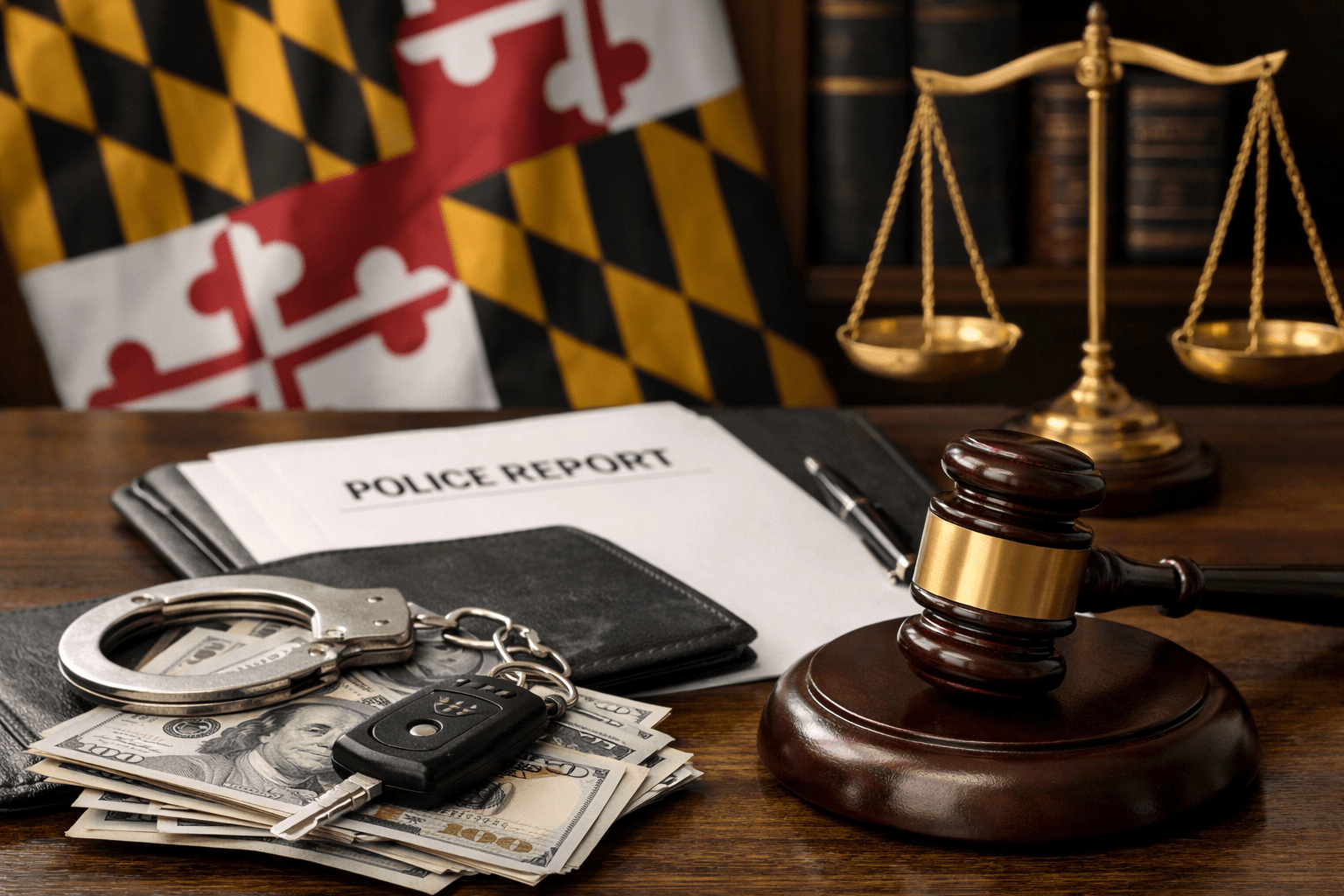
Theft offenses are among the most frequently prosecuted crimes in Maryland. These cases involve allegations that a person unlawfully took or used another individual’s property without permission. Depending on the value of the property and the circumstances surrounding the incident, theft charges can range from relatively minor misdemeanor offenses to serious felony crimes.
Maryland law treats theft broadly and covers a wide variety of conduct. A theft charge may arise from shoplifting in a retail store, taking property from another person, possessing items believed to be stolen, or participating in schemes involving financial or personal property. Law enforcement investigations in theft cases often rely on surveillance footage, witness statements, store security reports, and other forms of evidence.
Although some theft offenses may appear minor at first, the consequences of a conviction can still be significant. Individuals found guilty of theft may face fines, probation, possible incarceration, and a permanent criminal record. A theft conviction can also have lasting effects on employment opportunities and professional licensing, particularly in fields that involve financial responsibility or trust.
What Is Considered Theft in Maryland?
Under Maryland law, theft includes more than simply taking a physical item from a store or another person. The law is designed to address many types of conduct involving someone else’s property. In general, a theft charge is based on the claim that a person knowingly and willfully took, used, or kept property without the owner’s consent and with the intent to deprive the owner of it.
This broad definition means theft allegations can arise in many everyday situations. For example, a person may be accused of shoplifting clothing from a department store, taking tools from a job site, keeping a package that was delivered by mistake, or using another person’s financial information to obtain goods. In each of these situations, the facts matter, and the prosecution must still prove the required elements of the offense.
Common Types of Theft Charges
Maryland theft cases can involve a wide range of accusations. Some of the most common include the following:
Shoplifting
Shoplifting is one of the most common reasons people face theft charges in Maryland. These cases often involve allegations that someone concealed merchandise, changed price tags, or left a store without paying. Retail stores frequently use cameras, security personnel, and loss prevention reports to support these cases.
Theft of Property or Services
This category can include taking personal belongings, business property, money, or services without payment. For instance, a person might be accused of taking equipment from an employer, failing to pay for contracted services after obtaining them through deception, or removing property from a shared residence during a dispute.
Possession of Stolen Property
A person may face charges not only for taking property, but also for possessing property that law enforcement believes was stolen. In these cases, the issue often centers on whether the person knew or should have known the property was stolen. This can arise in situations involving secondhand purchases, online marketplace transactions, or items received from another person.
Identity and Financial Theft Allegations
Some theft cases involve the alleged use of another person’s credit card, bank information, or identifying details to obtain money, goods, or services. These cases may involve paper records, digital evidence, account activity, and communications between multiple parties.
How Maryland Classifies Theft Offenses
One of the most important factors in a theft case is the value of the property involved. In Maryland, the seriousness of the charge and the possible penalties often depend on how much the allegedly stolen property was worth. Lower value theft cases may be charged as misdemeanors, while higher value allegations can lead to felony charges and more severe consequences.
For example, taking a low cost item from a retail store may result in a less serious charge than allegations involving expensive electronics, large amounts of cash, or valuable business equipment. In some situations, prosecutors may also look at whether there were multiple incidents that can be combined for charging purposes.
The exact classification of a charge can affect the potential sentence, the court process, and the long term impact of a conviction. For that reason, anyone facing theft charges should understand that even a case involving seemingly minor property can still carry serious risks.
Evidence Commonly Used in Theft Cases
The prosecution in a theft case must prove its allegations with evidence. The type of evidence used often depends on where the incident happened and what kind of property is involved. In many Maryland theft cases, law enforcement and prosecutors rely on a combination of direct and circumstantial evidence.
Surveillance Video
Retail theft and other property crimes are often investigated using camera footage. Video may show a person’s movements, interactions with merchandise, or whether items were paid for before leaving a location. However, footage is not always clear, complete, or conclusive.
Witness Statements
Store employees, customers, property owners, and responding officers may all provide statements. Witness accounts can be important, but they are not always accurate. Stress, confusion, or limited visibility can affect how events are remembered and described.
Receipts, Records, and Digital Evidence
In some cases, records may be used to show ownership, transactions, or account activity. This can include receipts, inventory logs, banking records, phone messages, or online purchase history. Digital evidence can be especially important in cases involving financial allegations or identity related accusations.
Possible Penalties for a Theft Conviction
A conviction for theft charges in Maryland can lead to a range of penalties depending on the facts of the case. These may include fines, probation, restitution, and incarceration. Restitution is a court order requiring payment to compensate the alleged victim for financial loss.
Even when jail time is not imposed, the consequences can still be substantial. A criminal record for theft can create problems when applying for jobs, housing, educational opportunities, or professional licenses. Employers often view theft related convictions as offenses involving dishonesty, which can raise concerns in positions that involve money, records, or customer trust.
For a college student, a theft conviction might affect future internship opportunities. For a working professional, it could create obstacles in background checks. For someone who holds a professional license, it may trigger disciplinary concerns. These practical consequences are one reason theft charges should be taken seriously from the beginning.
Defending Against Theft Charges
Every theft case is different, and the right defense depends on the specific facts. In some situations, the issue may be whether the accused person actually intended to steal. In others, the central question may involve identity, ownership, consent, or the reliability of the evidence.
Lack of Intent
Intent is often a key part of a theft case. A person may leave a store absentmindedly while distracted, misunderstand ownership of property, or honestly believe they had permission to use an item. If there was no intent to deprive the owner of the property, that can be an important issue in the defense.
Mistaken Identity
In cases based on surveillance footage or witness observations, the wrong person may be accused. Poor video quality, brief observations, or assumptions by store staff can all contribute to misidentification.
Disputes Over Ownership or Permission
Some theft allegations arise out of personal or business conflicts. For example, one party may claim property was taken without consent, while the accused person maintains that the item was borrowed, jointly owned, or taken with permission. These cases often require a close review of communications and the relationship between the parties.
What To Do If You Are Charged With Theft in Maryland
If you are facing theft charges in Maryland, it is important to act carefully and protect your rights. Do not assume the case is minor simply because the value of the property appears low. A conviction can still have lasting consequences.
It is usually wise to avoid making detailed statements to law enforcement without legal guidance. Anything said can potentially be used in court. It can also be helpful to preserve receipts, messages, account records, or other information that may support your side of the story.
Speaking with a criminal defense attorney as early as possible can help you understand the charge, the possible penalties, and the options available in your case. Early legal representation may also make it easier to evaluate the evidence, identify weaknesses in the prosecution’s case, and work toward the best possible outcome.
Theft charges in Maryland can arise from many different situations, including shoplifting, possession of allegedly stolen property, and financial misconduct allegations. While some cases involve relatively low value property, the consequences of a conviction can still be serious and long lasting.
Because Maryland law defines theft broadly, these cases often turn on the details. Questions about intent, ownership, permission, and the strength of the evidence can all make a major difference. Anyone accused of theft should take the matter seriously and seek legal advice to better understand the charges and protect their future.