
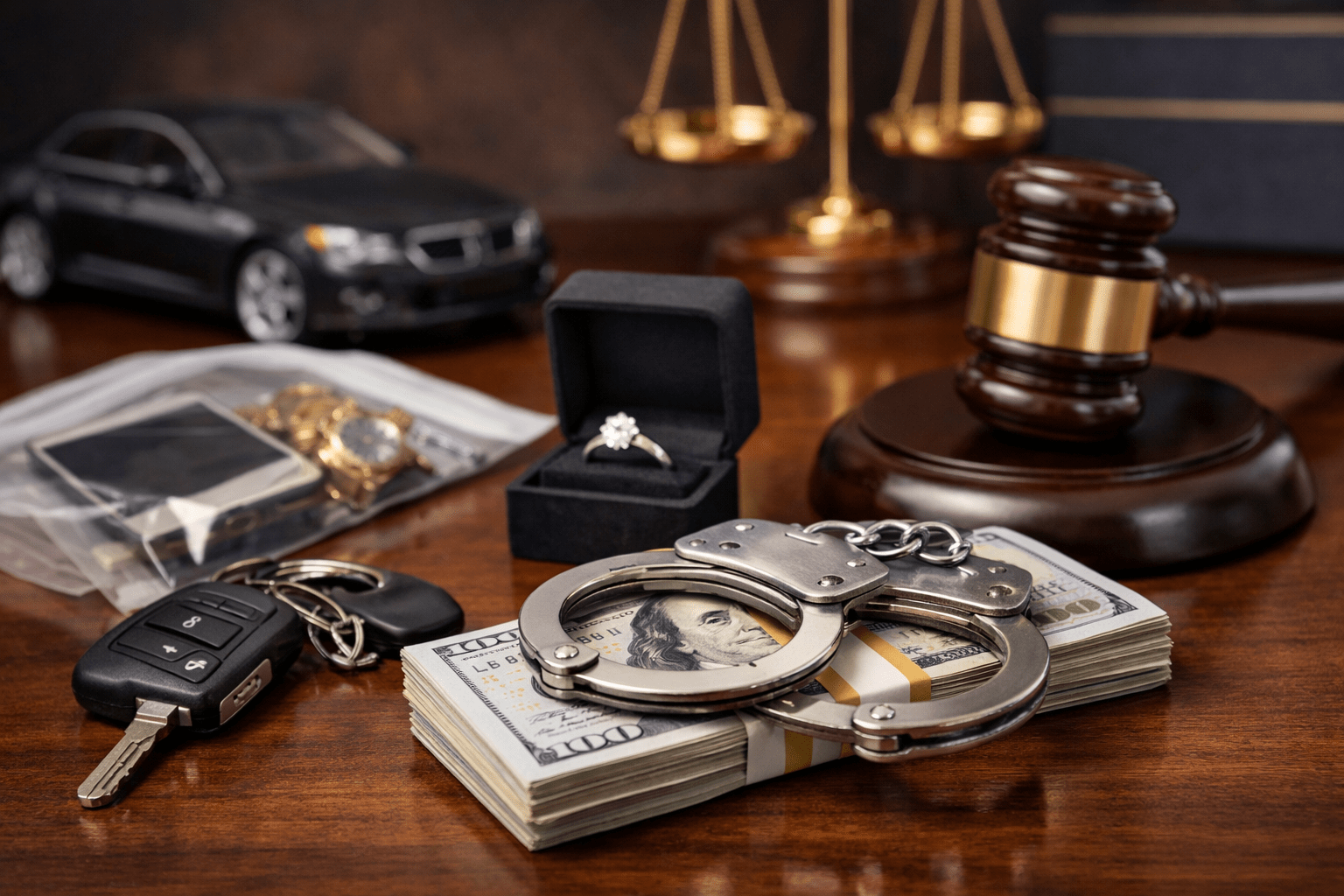
Grand theft charges in Maryland are serious allegations that can lead to life changing consequences. While Maryland law does not always use the exact phrase grand theft in the same way some other states do, theft offenses become more severe as the value of the property increases. When a person is accused of taking property of significant value, prosecutors may pursue harsh penalties that can include large fines, probation, and jail or prison time.
For many people, a theft accusation is confusing and stressful. They may not fully understand how the value of the property affects the case, what evidence investigators rely on, or what steps to take after an arrest or investigation begins. Understanding the basics can help individuals and families make informed decisions and respond appropriately.
What Grand Theft Charges Mean in Maryland
In Maryland, theft generally involves knowingly and willfully taking or controlling property that belongs to another person or business with the intent to deprive the owner of it. The seriousness of the offense often depends on the value of the property involved. As the alleged value rises, the possible penalties usually increase as well.
Grand theft charges involve allegations that property of significant value was unlawfully taken from another person or business. In Maryland, theft offenses become more serious as the value of the property increases, and higher value theft cases may be prosecuted as felony offenses.
These cases are not limited to one type of property. They can involve physical items, money, financial accounts, or valuable goods transferred in another way. Because the amount at issue is often substantial, law enforcement and prosecutors may devote significant attention to building the case.
Common Examples of High Value Theft Allegations
Grand theft cases may involve allegations related to expensive retail items, vehicles, financial assets, or other valuable property. In many situations, investigations rely on documentation such as purchase records, surveillance footage, financial records, and witness testimony.
Retail Theft Involving High Dollar Merchandise
A person may be accused of stealing multiple expensive electronics, jewelry, designer items, or tools from a store. In some cases, the allegation involves one incident. In others, investigators may claim that several smaller incidents were connected and should be treated as part of a larger theft amount.
Vehicle Theft
Cars, trucks, motorcycles, and other vehicles often involve significant value. An allegation involving the unlawful taking of a vehicle can quickly become a major criminal matter because of the property value and any related circumstances surrounding the incident.
Financial or Business Related Theft
Some cases involve accusations that money was taken through unauthorized transfers, forged checks, misuse of company funds, or access to financial accounts. These investigations may be document heavy and can involve bank statements, accounting records, and digital communications.
Theft of Valuable Personal Property
Antiques, collectibles, equipment, and other high value personal items can also lead to serious theft charges. For example, a dispute involving the removal of expensive construction equipment or valuable artwork may trigger a detailed investigation into ownership and intent.
How Prosecutors May Try to Prove the Case
The prosecution generally must prove more than the simple fact that property is missing. In most cases, the state will attempt to show that the accused knowingly took or controlled property and intended to deprive the owner of it. Evidence can vary depending on the facts.
Surveillance and Video Evidence
Stores, parking lots, office buildings, and residential areas often have cameras. Prosecutors may use video footage to argue that a person removed property, entered a restricted area, or acted in a way that suggests theft.
Receipts, Records, and Valuation Documents
Because property value matters in theft cases, records are often important. Purchase receipts, appraisals, repair estimates, and financial documents may be used to establish how much the property was allegedly worth at the time of the incident.
Witness Statements
Witnesses may include store employees, business owners, coworkers, customers, neighbors, or other individuals who claim to have seen relevant events. Their observations may become a major part of the state’s case, especially when there is a dispute about what happened.
Digital and Financial Evidence
In cases involving money or business assets, investigators may review emails, text messages, account logs, banking history, and transaction records. This type of evidence may be used to track funds or suggest that a person had access to certain property.
Why Value Matters in Maryland Theft Cases
The value of the property is often one of the most important factors in a Maryland theft case. Higher value allegations can expose a person to more serious charges and more severe penalties. Because of that, disagreements about value are not minor details. They can shape the direction of the entire case.
For example, the defense may question whether the property was actually worth the amount claimed by the prosecution. A used item may not have the same value as a new one, and an estimate may not reflect the true market value. In some situations, reducing the alleged value can make a significant difference in the level of offense and the possible outcome.
Potential Penalties After a Conviction
Because of the higher value involved, grand theft cases can carry substantial penalties if a conviction occurs. Courts may impose significant fines, probation, or incarceration depending on the circumstances surrounding the alleged offense and the individual’s prior criminal history.
In addition to direct criminal penalties, a conviction may lead to other lasting consequences. A person may face difficulty finding employment, problems with professional licensing, damage to personal and business relationships, and challenges related to housing opportunities. For non citizens, criminal charges may also create immigration concerns in some circumstances.
Judges may consider factors such as the amount of property involved, whether the accused has prior convictions, whether the allegation involved planning or repeated conduct, and whether restitution is possible. Every case is different, but the consequences can be serious enough that a prompt legal response is important.
Practical Scenarios That Help Explain These Cases
Scenario One: High Value Store Merchandise
A person is accused of leaving a retail store with several expensive electronic devices without paying. Investigators review surveillance footage, inventory records, and statements from loss prevention staff. The total claimed value of the items becomes a key issue in determining how serious the charge may be.
Scenario Two: Workplace Financial Allegation
An employee is accused of moving company funds into a personal account over several months. The case may involve spreadsheets, bank records, and internal business emails. The employee may argue that the transfers were authorized or that the records have been misunderstood.
Scenario Three: Vehicle Related Dispute
One person takes a vehicle during a heated disagreement and claims there was permission to use it. The owner says the vehicle was taken without consent. In a case like this, intent, communication between the parties, and the circumstances of possession may all matter.
Possible Defense Issues in Grand Theft Cases
Not every accusation leads to a conviction. The facts, evidence, and context matter. Depending on the case, several issues may need to be examined closely.
Lack of Intent
Theft cases often involve questions about intent. If a person believed they had a right to the property, intended to return it, or did not knowingly take it, that may affect the case.
Ownership or Permission Disputes
Some allegations arise from misunderstandings between family members, business partners, coworkers, or acquaintances. A dispute over ownership or consent can complicate the prosecution’s theory.
Incorrect Value Assessment
If the state overstates the value of the property, that can have a major impact on the level of the charge. A careful review of valuation evidence may be essential.
Weak or Incomplete Evidence
Witnesses can be mistaken, video footage can be unclear, and financial records can be interpreted in different ways. In some cases, the prosecution’s evidence may leave important questions unanswered.
What to Do After a Theft Arrest or Investigation
If you learn that you are under investigation or have been charged with grand theft in Maryland, it is important to take the matter seriously. Avoid discussing the allegations with police or investigators before obtaining legal advice. Statements made early in a case can later be used by the prosecution.
It is also wise to preserve documents, messages, receipts, and other materials that may help explain your side of the story. A lawyer can review the facts, assess the evidence, identify weaknesses in the case, and work to protect your rights at every stage.
Grand theft charges in Maryland involve allegations tied to property of significant value, and the stakes can be high from the very beginning. Whether the case involves retail merchandise, a vehicle, business funds, or other valuable property, prosecutors often rely on records, surveillance, and witness testimony to support the allegations.
Because the potential consequences may include substantial fines, probation, incarceration, and a permanent criminal record, it is important to understand the nature of the charges and respond carefully. Anyone facing grand theft charges in Maryland should seek legal guidance as soon as possible to evaluate the facts, protect their rights, and explore the strongest path forward.