
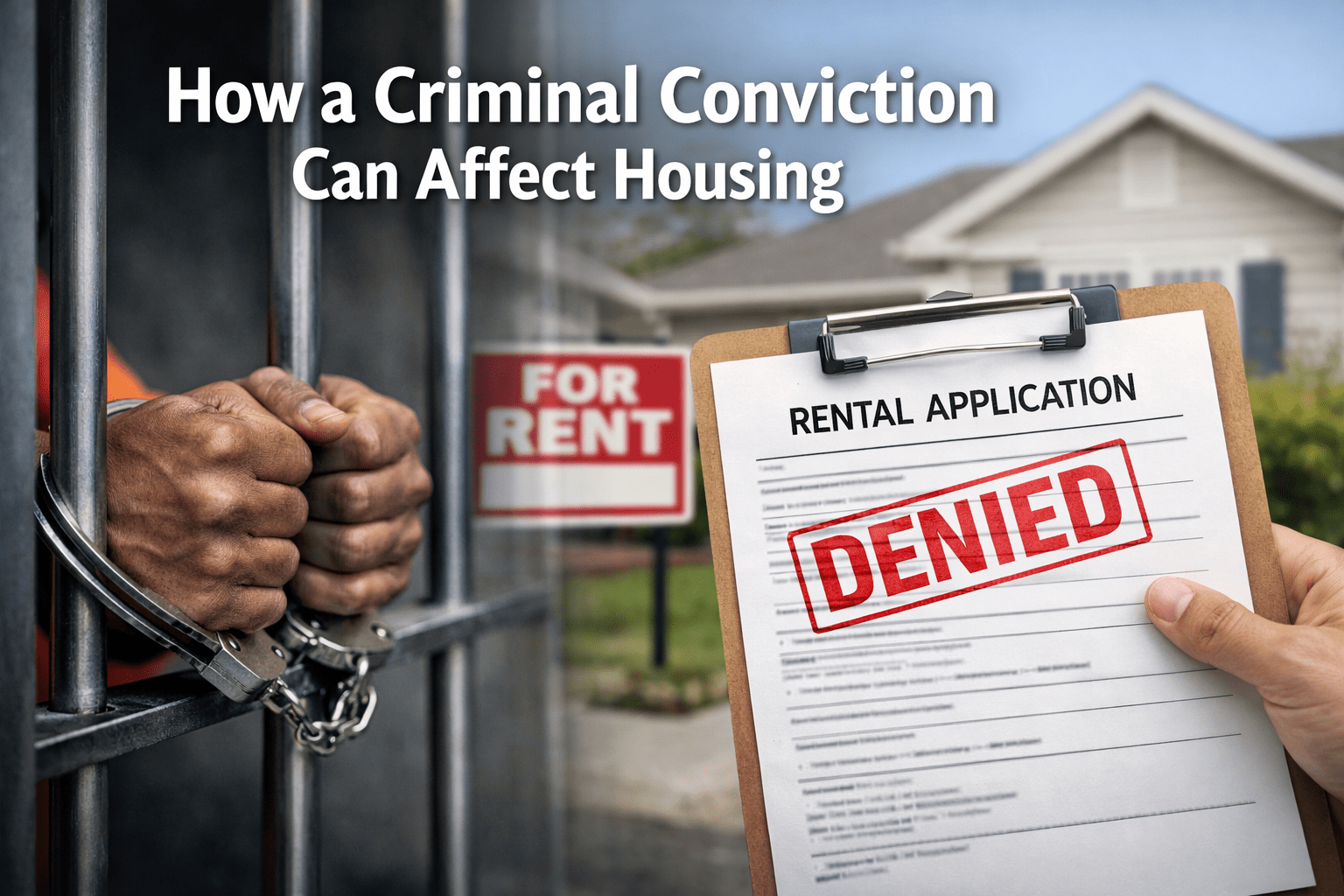
A criminal conviction can create problems that continue long after a sentence is complete. For many people, one of the most immediate and stressful issues is finding or keeping a place to live. Landlords, property managers, public housing authorities, and even condominium associations may review criminal history during the application process. In some cases, a past conviction can lead to a denied rental application, eviction concerns, or limits on where a person is allowed to live.
Understanding how a criminal conviction can affect housing is important for anyone facing charges, dealing with a past record, or trying to protect a family member’s housing options. While the exact rules vary by state, city, and housing program, there are several common issues that appear across the country. This article explains the practical consequences, common legal concerns, and why early legal advice can make a meaningful difference.
Why Housing Problems Often Follow a Conviction
Housing providers often view criminal history as a risk factor. A private landlord may worry about safety, property damage, insurance concerns, or complaints from other tenants. Public housing agencies may have their own rules tied to federal and local law. Because of this, a criminal conviction may become a major obstacle even if the offense had nothing to do with housing.
For example, a person convicted of drug possession several years ago may believe the matter is over after paying fines, completing probation, or serving a sentence. But when that person applies for an apartment, the landlord may run a background check and reject the application based on the record alone. In another situation, one household member’s criminal case may place an entire family at risk if they live in subsidized housing.
These outcomes are often called collateral consequences. That term refers to the indirect penalties that come with a conviction, apart from jail, probation, or fines. Housing restrictions are among the most serious because they affect stability, employment, child custody, education, and overall quality of life.
Private Rental Housing and Criminal Background Checks
Many private landlords use tenant screening companies to review an applicant’s criminal record. A background check may show arrests, pending charges, convictions, or older cases that should no longer be considered under local law. Even when a landlord is legally allowed to review criminal history, the way that information is used may matter.
Blanket Policies Can Create Legal Issues
Some landlords try to deny any applicant with any criminal record. That kind of blanket policy can create problems. In some jurisdictions, housing laws or fair housing guidance discourage broad automatic exclusions, especially when they fail to consider the nature of the offense, how long ago it occurred, and whether the applicant presents a current risk.
For instance, a single misdemeanor conviction from ten years ago may not say much about whether someone will be a good tenant today. A more careful review may be legally safer for a landlord and fairer to an applicant.
Arrests Are Not the Same as Convictions
An arrest does not prove guilt. Yet some screening reports include arrest information, and some landlords rely on it without understanding the difference. This can be especially damaging for people whose charges were dismissed or who were found not guilty. In many cases, using mere arrest history as the basis for denial can raise serious legal concerns.
If a housing application is denied because of incorrect or misleading criminal background information, the applicant may have options to dispute the report and seek correction.
Public Housing and Subsidized Housing Consequences
Public housing and other subsidized programs often involve stricter rules. Housing authorities may deny admission or begin termination proceedings when a tenant or household member has certain criminal activity. However, the rules are not always as simple as people think.
Some Offenses Trigger Mandatory or Strong Restrictions
Certain convictions can lead to especially severe housing consequences. Depending on the program and governing law, offenses involving drug manufacturing in federally assisted housing, certain sex offense registration issues, or violent criminal activity may create mandatory bars or very serious eligibility problems.
Even when a denial is not strictly mandatory, housing authorities may have broad discretion. They may review police reports, court records, rehabilitation efforts, and the length of time since the incident.
One Person’s Conduct Can Affect the Whole Household
A common and painful issue arises when the person with the criminal case is not the leaseholder. In subsidized housing, the conduct of a guest, child, spouse, or other household member may still affect the entire family. A parent may face eviction risk because of allegations involving an adult child. A spouse’s conviction could create problems for renewal or continued eligibility.
This is one reason criminal charges can have wide consequences beyond the individual defendant. Families should take these risks seriously and seek advice quickly when housing is involved.
Sex Offense Convictions and Residency Limits
Among the most severe housing consequences are those tied to sex offense convictions. Many states and local governments impose residency restrictions that limit where a person may live. These laws may prohibit residence near schools, parks, daycare centers, or other places where children gather.
In practice, these rules can make legal housing extremely difficult to find. In densely populated areas, the restricted zones may overlap so much that very few lawful options remain. People may struggle to secure stable housing, comply with registration rules, and avoid new criminal charges based on where they stay.
Consider a person who is released from custody and wants to live with a relative. If the relative’s home is within a prohibited distance of a school or daycare, moving in could violate supervision or registration rules. That can trigger new legal trouble, even if the person is otherwise trying to rebuild their life.
Convictions, Eviction, and Lease Violations
A criminal conviction does not only affect new housing applications. It can also threaten current housing. Some leases contain provisions allowing termination if a tenant engages in criminal activity, disturbs neighbors, or uses the property for unlawful purposes. In public or subsidized housing, these clauses are often enforced aggressively.
Not Every Criminal Allegation Leads to Lawful Eviction
Landlords still generally must follow proper legal procedures. They may need to provide notice, cite the lease basis for termination, and prove grounds for eviction in court if the tenant contests the case. A mere accusation may not always be enough. The details matter, including whether the alleged conduct occurred on the property, who was involved, and what the lease actually says.
For example, if a tenant is charged with an offense unrelated to the rental property, the landlord may not automatically have the right to evict. On the other hand, an offense involving violence, drugs, or repeated disturbances at the property may create a stronger basis for removal.
How Expungement or Record Sealing May Help
In some cases, a person may reduce housing barriers by clearing an eligible criminal record through expungement, sealing, or a similar legal process. The availability of relief depends on state law, the type of offense, the outcome of the case, and whether the person completed all court requirements.
When a record is sealed or expunged, it may become harder for private landlords or screening companies to use that information against the applicant. This does not erase every consequence in every setting, but it can improve access to housing and reduce the chance that old cases continue to appear during tenant screening.
People are often surprised to learn they may qualify for record relief after a dismissal, diversion program, or certain nonviolent convictions. Because housing decisions can be made quickly, starting this process early may be important.
Practical Steps to Take if a Conviction Is Affecting Housing
Review the Background Report
If a landlord denies your application, ask whether a screening report was used. Review it carefully for errors, outdated cases, duplicate entries, or dismissed charges reported as convictions.
Gather Evidence of Rehabilitation
Letters of recommendation, proof of employment, completion of treatment or counseling, educational records, and evidence of stable income may help show that you are a responsible applicant.
Learn Local Fair Housing Rules
Some cities and states place limits on when and how landlords can consider criminal history. Local rules may provide stronger protections than federal law.
Act Quickly in Eviction Situations
If your current housing is at risk, do not wait to respond. Deadlines in eviction matters can be short, and failing to act may result in a judgment that is difficult to undo.
Speak With a Criminal Defense Attorney
A defense attorney may help minimize long term housing consequences by negotiating charges, seeking alternatives to conviction, advising on plea decisions, or assisting with record clearing options after the case ends.
Why Early Legal Advice Matters
Many people focus only on the immediate criminal penalties when deciding how to handle a case. But a plea that appears manageable in court can create unexpected housing consequences for years. A conviction may affect not just where someone can live, but whether their children can remain in stable housing or whether a family can keep rental assistance.
That is why it is important to evaluate the full picture before making decisions in a criminal case. An experienced attorney can identify hidden consequences, explain available options, and work toward outcomes that protect both legal rights and everyday stability.
If you or a loved one is facing criminal charges and are concerned about how a conviction could affect housing, obtaining legal guidance as early as possible can help you make informed choices and protect your future.