
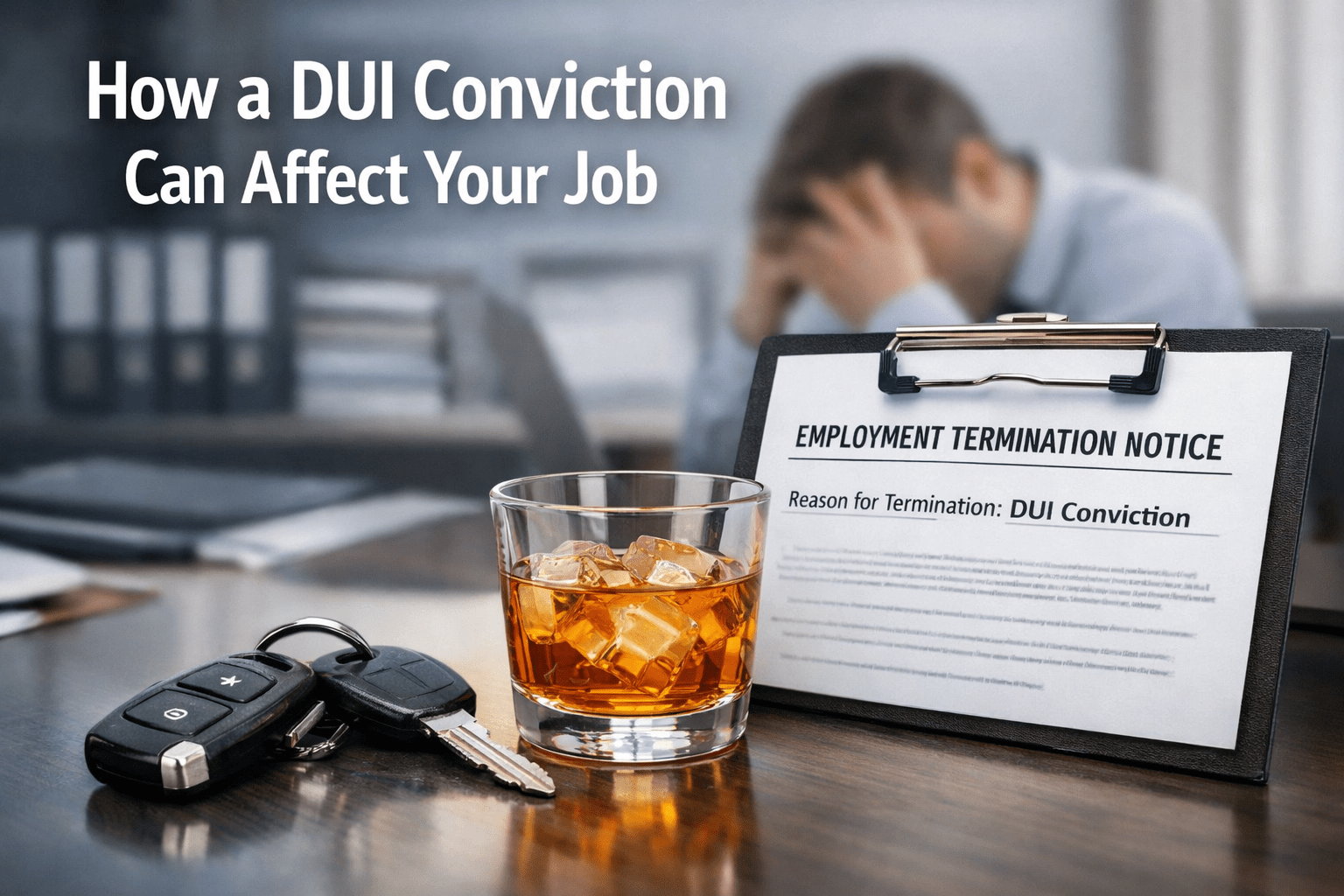
A DUI conviction can create problems that go far beyond fines, court appearances, and license restrictions. Many people are surprised to learn that a single criminal conviction may affect job opportunities, professional licenses, background checks, and even day to day responsibilities at work. For employees and job seekers, understanding these risks is an important step in protecting both legal rights and long term career prospects.
In criminal law, the consequences of criminal convictions often continue long after the court case is over. A DUI conviction is a clear example. While the immediate penalties may include probation, classes, or a suspended license, the collateral effects can follow a person for years. Employers may raise concerns about reliability, trust, judgment, or insurance costs, depending on the nature of the job.
This article explains how a DUI conviction can affect your job, what employers may look for, and why early legal advice can make a meaningful difference.
Why employment consequences matter after a DUI conviction
When people think about a DUI case, they often focus on criminal penalties. That makes sense, because the threat of jail time, fines, and driving restrictions is immediate and stressful. However, the employment impact can be just as serious. A conviction may limit where you can work, whether you can keep a current position, and how easily you can move forward in your career.
Many employers conduct criminal background checks before hiring. Some also perform ongoing checks for current employees, especially in regulated industries or jobs involving driving, security, childcare, healthcare, education, or financial responsibility. If a DUI appears on a record, the employer may decide that the conviction creates too much risk.
Even when a company does not have a strict rule against hiring someone with a DUI, practical issues can still arise. For example, if your role requires travel, client visits, or use of a company vehicle, a license suspension or increased insurance costs may become a major concern.
Can you lose your current job because of a DUI conviction?
The answer depends on your employer, your employment contract, your job duties, and state law. In many situations, a DUI conviction does not automatically mean termination. Still, some employees do lose their jobs because the conviction interferes with company policies or essential work responsibilities.
Jobs that require driving
If driving is a core part of your position, a DUI conviction can be especially damaging. Delivery drivers, commercial drivers, sales representatives, field technicians, and home healthcare workers may all face employment problems if their licenses are suspended or restricted. An employer may not be able to keep an employee in a role that legally requires valid driving privileges.
Consider a technician who must travel to customer homes each day. If that worker loses driving privileges for several months, the employer may have no practical way to accommodate the job. Even if the employer wants to help, business needs may make continued employment difficult.
Positions involving trust or public image
Some employers view a DUI conviction as a reflection of judgment and reliability. This is particularly common in positions of leadership, public visibility, or high responsibility. A company may worry about its reputation if a manager, executive, or public facing employee has a recent criminal conviction.
For example, a financial services firm may be concerned if a client facing advisor receives a DUI conviction that becomes publicly known. While the offense may not directly involve dishonesty, the employer may still fear reputational harm.
Workplace policy violations
Some employers have policies requiring workers to report arrests or convictions. Others have rules specifically addressing drug or alcohol related conduct, especially if the conduct affects safety. Failing to report a DUI when required may create separate employment issues beyond the conviction itself.
Employees should review workplace handbooks, contracts, and licensing requirements carefully. In some cases, the employer’s concern is less about the conviction alone and more about whether the employee followed internal reporting rules.
How a DUI conviction can affect future job opportunities
A DUI conviction can also make it harder to find new employment. During the hiring process, employers may ask about criminal history, conduct background screenings, or request driving records for certain roles. While laws in some states limit when and how employers can ask about convictions, a DUI may still become part of the discussion later in the process.
Background check concerns
When a conviction appears on a background check, an employer may compare the offense to the job duties. If the position involves operating vehicles, supervising vulnerable people, handling sensitive information, or maintaining security standards, the employer may decide not to move forward.
That does not mean every applicant with a DUI conviction will be rejected. Some employers consider factors such as how long ago the offense occurred, whether it was a first offense, whether anyone was injured, and what the applicant has done since then.
Professional licensing issues
Many careers require a professional license or certification. Nurses, doctors, teachers, lawyers, real estate agents, accountants, and other licensed professionals may have to report criminal convictions to a licensing board. In some cases, the board may investigate whether the conviction affects the person’s fitness to practice.
A single DUI conviction does not always lead to suspension or revocation of a professional license. Still, it may trigger disclosure requirements, disciplinary review, or additional conditions. This can affect both current employment and future advancement.
For instance, a nurse applying for license renewal may need to explain the circumstances of a DUI conviction and provide proof of compliance with court ordered conditions. Delays or disciplinary findings could impact the ability to continue working.
Indirect job consequences people often overlook
Some of the most serious employment related effects of a DUI conviction are indirect. These problems are easy to miss at first, but they can make work much harder.
Transportation problems
If your license is suspended, getting to work may become a daily challenge. Public transportation is not available in every area, and rideshare costs can add up quickly. Missing work, arriving late, or becoming unreliable due to transportation issues may put employment at risk even if the employer never objects to the conviction itself.
Insurance and company vehicle restrictions
Employers that insure workers to operate company vehicles may face higher premiums after a DUI conviction. Some insurance carriers may refuse coverage for certain drivers altogether. This can make an employee ineligible for assignments that require driving, even after a license is reinstated.
Promotion and advancement barriers
A conviction may also affect promotions. Employers choosing between candidates for management or sensitive roles may favor the person without a recent criminal record. Even where no formal rule exists, concerns about judgment and dependability can influence decision making.
Does the type of DUI case matter?
Yes. Employers and licensing boards may look at the specific facts of the case, not just the name of the offense. Several factors can make a DUI conviction appear more serious.
Aggravating circumstances
A case involving a very high blood alcohol level, an accident, injuries, a child passenger, or repeat offenses may create greater concern for employers. These facts can suggest a higher level of risk and may lead to more severe penalties, which in turn can increase employment problems.
First offense versus repeat offense
A first offense may be easier to explain, especially if many years have passed and there have been no further incidents. A repeat offense is more likely to raise concerns about ongoing substance use, safety, or compliance with the law.
What can you do to protect your career?
If you are facing DUI charges or dealing with a recent conviction, taking action early can help reduce damage to your employment situation.
Speak with a criminal defense lawyer promptly
Legal advice is important not only for the court case itself but also for understanding collateral consequences. A defense lawyer can evaluate whether there are options to challenge the charges, negotiate for reduced penalties, or pursue outcomes that may better protect employment interests.
Understand your reporting obligations
Check your employee handbook, contract, union agreement, or licensing rules to determine whether you must report an arrest or conviction. If disclosure is required, it is important to handle that process carefully and honestly.
Document rehabilitation and compliance
Completing court requirements, attending recommended treatment, maintaining a clean record, and showing stability can make a difference with employers and licensing boards. In some cases, these efforts may support a stronger explanation during background check reviews.
Explore record clearing options if available
Depending on state law and the outcome of the case, some people may qualify for expungement, sealing, or other forms of record relief. Not every DUI conviction is eligible, but it is worth asking an attorney about possible options that could improve future employment prospects.
Final thoughts
A DUI conviction can affect your job in ways that are not always obvious at the start of a criminal case. The impact may include job loss, hiring difficulties, professional licensing concerns, transportation problems, and reduced advancement opportunities. These consequences of criminal convictions can be long lasting, especially for people in careers that depend on driving, trust, or professional credentials.
If you are facing a DUI charge or worried about how a conviction may affect your employment, speaking with an experienced criminal defense attorney can help you understand your options. The right legal strategy may not only address the criminal case but also help protect your livelihood and future career path.