
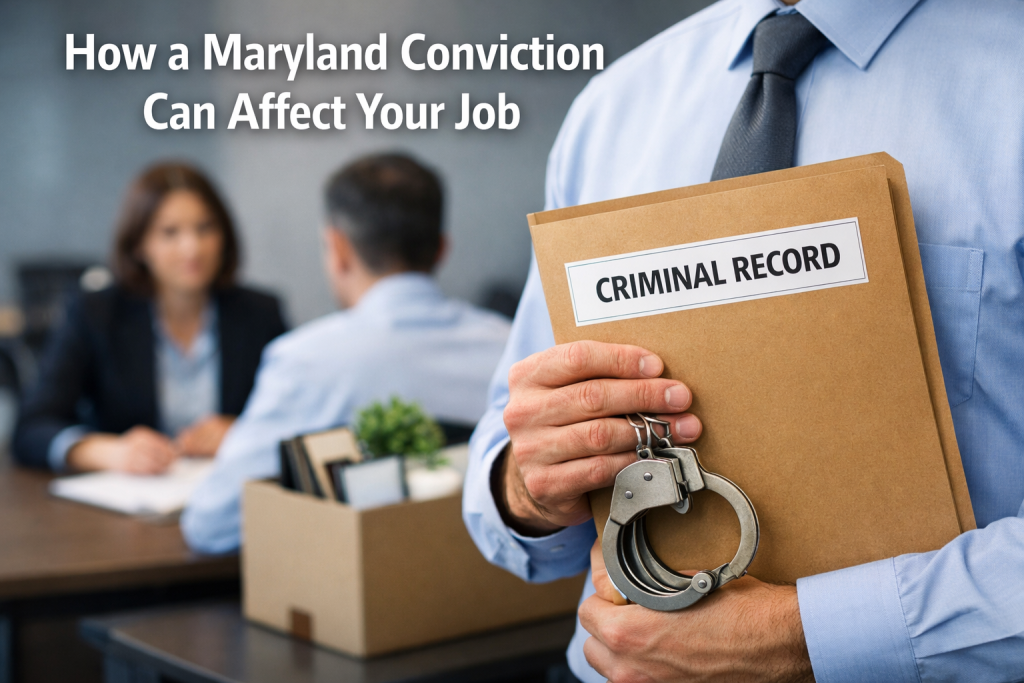
How a Maryland Criminal Conviction Can Impact Employment
A criminal conviction can create problems that go far beyond fines, probation, or jail time. For many people, one of the most immediate and lasting concerns is how a conviction may affect current employment or future job opportunities. In Maryland, employers often conduct background checks, ask about criminal history at certain stages of hiring, and evaluate whether an applicant poses a risk based on the nature of the offense. Even when a person has completed all court requirements, the consequences of a criminal conviction can continue to follow them for years.
This issue is especially important for individuals charged with theft offenses, assault, drug crimes, DUI, and other misdemeanor or felony offenses. A conviction in Maryland may raise concerns for private employers, government agencies, professional licensing boards, and companies that require trust, driving, access to financial information, or interaction with vulnerable populations. Understanding these risks can help individuals make informed decisions when facing criminal charges.
Why Employers Care About Criminal Records in Maryland
Many employers view a criminal record as a sign of possible risk. They may worry about workplace safety, company reputation, insurance issues, or potential liability. For example, a business hiring someone to handle cash may be especially concerned about a theft conviction. A transportation company may be troubled by a DUI conviction. A healthcare employer may be cautious about certain assault or drug-related offenses.
In Maryland, a conviction does not automatically disqualify someone from every job. However, it can influence how employers assess a candidate. Some employers focus on whether the offense is related to the job duties. Others may place significant weight on the age of the case, whether there were multiple offenses, and what the person has done since the conviction.
For someone already employed, a conviction may also create workplace issues. Certain employers have policies requiring employees to report arrests or convictions. Others may take disciplinary action if the offense affects job performance, security clearance, driving privileges, or professional licensing.
Types of Convictions That Commonly Affect Employment
Theft and Fraud Offenses
Convictions involving theft, embezzlement, credit card fraud, shoplifting, or forgery can be particularly damaging for people seeking jobs that involve money, financial records, inventory, or customer transactions. Employers may question whether they can trust the applicant with valuable property or sensitive information.
Drug Convictions
Drug convictions can affect hiring in industries that require drug testing, safety-sensitive tasks, or compliance with strict regulations. Jobs in healthcare, transportation, education, and government may be especially difficult to obtain after a drug-related conviction.
Assault and Violent Offenses
An assault conviction may create barriers for jobs that involve public interaction, teamwork, security responsibilities, or working with children, elderly adults, or other vulnerable individuals. Employers may be concerned about safety and workplace conflict.
DUI and Driving-Related Offenses
For anyone whose work depends on driving, a DUI conviction can be a major obstacle. Delivery drivers, commercial drivers, sales professionals, and workers who travel regularly may face reduced job options if they lose driving privileges or appear too risky to insure.
Background Checks and Hiring Rules
Maryland has rules that affect how and when some employers may ask about criminal history. In some situations, employers are limited in asking about an applicant’s record at the earliest stage of the application process. Even so, background checks remain common later in the hiring process.
When a conviction appears on a background check, the employer may look at several factors, including:
The seriousness of the offense, how long ago it occurred, whether it relates to the job, and whether the applicant has shown rehabilitation. A single misdemeanor from many years ago may be viewed differently from a recent felony conviction or a pattern of repeated offenses.
Applicants are often in a stronger position when they are prepared to explain the circumstances honestly and briefly, while also showing evidence of stability, work history, training, and personal improvement.
Professional Licenses and Career Paths
One of the most serious hidden consequences of a Maryland conviction is the effect on professional licensing. Nurses, teachers, real estate professionals, security personnel, commercial drivers, and many other workers may need a license or certification to keep working. A conviction can trigger an investigation by a licensing board, delay an application, or result in suspension or denial.
For example, someone studying to become a nurse may discover that a conviction for drug possession or theft creates problems when applying for a license. A person with a commercial driver’s license may face serious consequences after a DUI. A government contractor may struggle if the conviction affects security clearance or trustworthiness standards.
Example Scenario
A Maryland resident pleads guilty to a misdemeanor theft charge, believing the case is minor because no jail time is imposed. Months later, that person applies for an office management job involving company purchasing and access to financial accounts. During the background check, the employer sees the conviction and decides to hire another candidate. The legal case may be over, but the employment impact continues.
Current Employees and Workplace Consequences
People often assume employment concerns only matter when applying for a new job. In reality, a conviction can also affect someone who is already working. An employer may review whether the offense violates company policy, harms the business’s reputation, affects insurability, or limits the employee’s ability to perform essential duties.
Consider a delivery driver convicted of DUI in Maryland. Even if the person avoids jail, a license suspension may prevent them from doing their job. Or imagine a school employee convicted of a violent offense. The employer may determine that continued employment is not appropriate based on the nature of the work.
Can a Conviction Be Removed From Public View?
In some cases, Maryland law may allow certain criminal records to be shielded or cleared through expungement. Eligibility depends on the type of offense, the outcome of the case, and how much time has passed. Not every conviction qualifies, and some offenses are excluded. Still, expungement can be an important tool for reducing the long-term harm caused by a criminal record.
Because these rules are fact-specific, it is important to review the case carefully. A person who assumes nothing can be done may miss an opportunity to improve future employment prospects.
Why Early Criminal Defense Strategy Matters
When people think about criminal charges, they often focus on immediate penalties such as jail, probation, or fines. But avoiding a conviction, reducing the charge, or seeking a resolution that protects a clean record can be just as important. A strong defense strategy may help reduce the long-term consequences of criminal convictions, especially when employment is at stake.
For example, a favorable outcome might preserve professional licensing, protect a security clearance, avoid mandatory disclosure issues, or make future background checks less damaging. This is one reason many people choose to speak with a criminal defense lawyer as early as possible after an arrest or charge.
Questions to Discuss With a Lawyer
If you are facing charges in Maryland, it may help to ask how a possible conviction could affect your current job, whether your profession has licensing rules, whether alternative resolutions may be available, and whether you could later seek expungement. These practical questions often matter just as much as the immediate sentence.
Final Thoughts on Employment Consequences in Maryland
The consequences of criminal convictions are often broader than people expect. In Maryland, a conviction can interfere with job applications, promotions, professional licenses, driving-based work, and long-term career goals. Even a case that seems minor in court can have serious effects in the workplace.
If you are under investigation or have been charged with a crime, it is important to understand not only the direct penalties but also the collateral consequences that may affect your future. A careful legal strategy can make a real difference in protecting your record, your reputation, and your ability to earn a living in Maryland.