
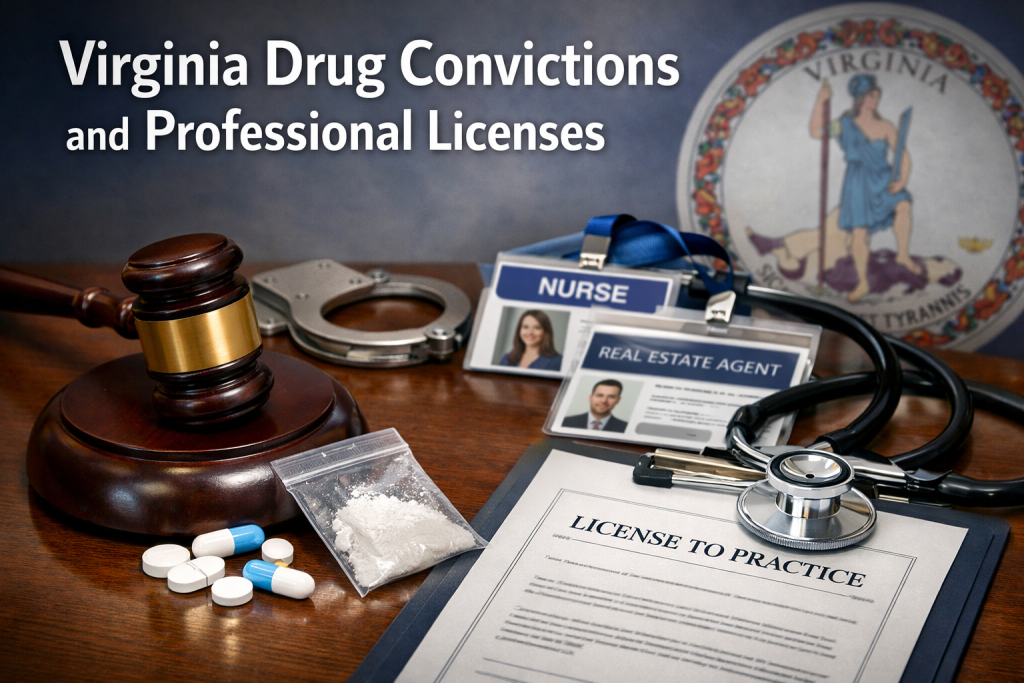
How a Virginia Drug Conviction Can Affect Your Professional License
A criminal conviction can create problems that go far beyond fines, probation, or jail time. For many working professionals in Virginia, one of the most serious hidden consequences is the risk to a professional license. Nurses, teachers, commercial drivers, real estate agents, contractors, pharmacists, and other licensed workers may face disciplinary action after a drug related arrest or conviction. In some cases, the licensing issue can be even more damaging than the criminal sentence itself.
If you hold a professional license, or plan to apply for one, it is important to understand how a Virginia drug conviction may affect your career. Licensing boards often review criminal history when deciding whether to grant, suspend, or revoke a license. Even a misdemeanor drug offense can trigger an investigation, while felony convictions often create even greater risks.
This article explains how professional licensing boards may respond, what types of drug convictions create problems, and why early legal guidance matters.
Why Professional Licenses Are at Risk After a Drug Conviction in Virginia
Many people assume that if a criminal offense happened outside the workplace, it should not affect their job credentials. Unfortunately, that is not how most licensing systems work. Virginia licensing boards are generally charged with protecting the public. That means they often examine whether a conviction suggests impaired judgment, substance abuse concerns, dishonesty, or conduct that could affect public trust.
Drug convictions can raise several red flags for licensing authorities. A board may worry that the person has a substance abuse issue, may not be able to safely perform job duties, or may have engaged in conduct inconsistent with professional standards. In some fields, such as healthcare or commercial transportation, a board may treat drug offenses especially seriously because of public safety concerns.
Boards may also require self reporting. If a license holder fails to disclose an arrest or conviction when required, that failure can become a separate basis for discipline.
Common licensed professions affected
Drug related convictions can impact many occupations in Virginia, including:
nurses and other healthcare professionals
physicians and pharmacists
teachers and school employees
commercial driver license holders
real estate professionals
accountants
contractors and tradespeople
security clearance related professionals
social workers and counselors
Each board has its own rules, but the overall issue is the same: a conviction can put your livelihood at risk.
Which Drug Convictions Can Trigger Licensing Problems
Not every case leads to the same result, but a wide range of offenses can create licensing concerns. In Virginia, professional boards may review convictions involving possession, distribution, prescription fraud, or offenses connected to controlled substances.
Misdemeanor possession offenses
Some people are surprised to learn that even a misdemeanor possession conviction may create serious professional consequences. A board may view the offense as evidence of poor judgment or a possible substance misuse problem. If the job involves patient care, driving, access to medication, or supervision of vulnerable people, the board may react more aggressively.
Felony drug convictions
Felony convictions typically create greater risk. A felony drug conviction may lead to suspension, revocation, denial of a license renewal, or denial of a new application. It may also affect background checks for future employment, making it harder to recover professionally even after the criminal case ends.
Prescription and medication related offenses
Cases involving forged prescriptions, unlawful possession of medication, or improper handling of controlled substances can be especially damaging for healthcare professionals. A pharmacist, nurse, or doctor may face close scrutiny because the conduct directly relates to the responsibilities of the profession.
How Virginia Licensing Boards Evaluate Criminal Convictions
Licensing boards do not always impose automatic discipline. In many situations, they look at the full circumstances before deciding what to do. That review may include:
the nature of the offense
whether the conviction was a misdemeanor or felony
how recent the offense was
whether the conduct relates to professional duties
whether there were multiple offenses
evidence of rehabilitation
compliance with treatment or counseling
whether the person self reported as required
For example, a first time simple possession case from several years ago may be treated differently from a recent felony distribution conviction. Likewise, a board may consider whether the person completed substance abuse treatment, maintained a clean record afterward, and can show stability in work and personal life.
Example scenario
Imagine a registered nurse in Northern Virginia is convicted of possession of a controlled substance after a traffic stop. The court imposes probation and a fine. The nurse may think the case is over once the criminal sentence is complete. However, the nursing board may open a separate investigation, ask for records, require explanations, and consider whether the nurse can safely practice. The outcome could include no action, monitoring, treatment requirements, suspension, or other discipline depending on the facts.
This is why the consequences of criminal convictions often continue long after the courtroom process ends.
Collateral Consequences Beyond the License Itself
Losing or restricting a professional license can affect nearly every part of a person’s life. These are often called collateral consequences, meaning penalties that happen outside the direct criminal sentence.
Loss of income and career disruption
If your license is suspended or revoked, you may be unable to work in your field. That can lead to lost wages, difficulty paying bills, and pressure on your family. Rebuilding a career in a different profession can be difficult, especially after a conviction appears on background checks.
Damage to professional reputation
Even if a license is not revoked, a public disciplinary action can harm your professional standing. Employers, clients, and colleagues may learn about the issue. In competitive industries, reputational harm can affect promotions, referrals, and future opportunities.
Problems with renewal or future applications
Some people avoid immediate discipline but later face problems when renewing a license or applying in another state. Many licensing applications ask detailed questions about criminal history, and incomplete answers can create additional legal and professional trouble.
What To Do if You Hold a License and Face Drug Charges in Virginia
If you are a licensed professional facing a drug charge in Virginia, it is important to think beyond the criminal court date. The decision you make early in the case can affect your record, your reporting duties, and your ability to keep working.
Understand reporting requirements
Some boards require prompt disclosure of arrests, charges, or convictions. Others require reporting only at renewal. Because the rules vary, you should not assume that waiting is safe. Failing to report when required can make matters worse.
Take the criminal charge seriously
A plea that seems minor in criminal court may still create major licensing consequences. Before accepting any plea offer, it is wise to consider how the result may be viewed by your licensing board. In some cases, pursuing a dismissal, reduction, or alternative outcome may be critical for protecting your career.
Gather evidence of rehabilitation
If substance use is part of the situation, proactive treatment and counseling may help both in court and before a licensing board. Character references, proof of compliance, and evidence of stability can also matter.
Why Legal Strategy Matters in Consequences of Criminal Convictions Cases
When professionals think about criminal defense, they often focus on avoiding jail or minimizing court penalties. But in many cases involving consequences of criminal convictions, the bigger issue is protecting the future. For a licensed worker in Virginia, that future may depend on avoiding a conviction where possible, understanding board procedures, and preparing a strong response if disciplinary action begins.
A defense strategy should consider all consequences, not just the immediate sentence. That includes employment issues, licensing exposure, immigration risks where relevant, and background check consequences. A well planned approach can make a major difference in the final outcome.
Conclusion
A Virginia drug conviction can do far more than resolve a criminal case. It can threaten the professional license you worked hard to earn and put your long term career at risk. Whether you are a healthcare provider, teacher, commercial driver, or another licensed professional, it is important to understand that licensing boards may act independently from the criminal court.
If you are facing drug charges in Virginia and hold a professional license, early legal advice can help you evaluate both the criminal case and the professional consequences. The right strategy may help protect your record, your reputation, and your ability to continue working in your field.