
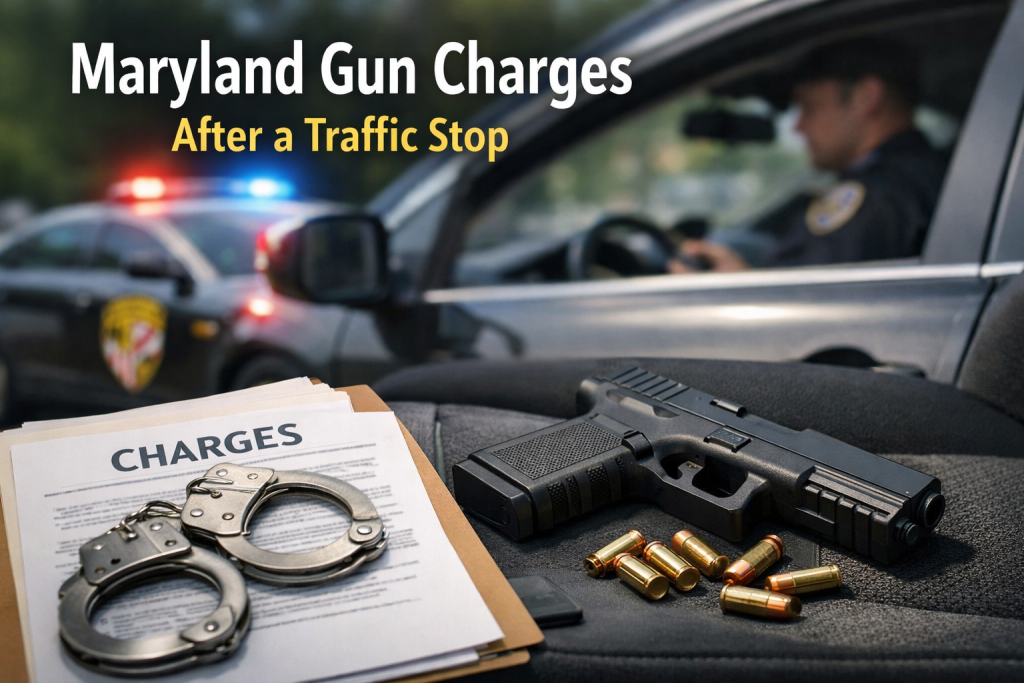
Maryland Gun Charges After a Traffic Stop: What Drivers Should Know
A routine traffic stop can quickly become a serious criminal matter when police discover a firearm in a vehicle. In Maryland, gun laws are strict, and many drivers are surprised to learn that owning a firearm does not automatically mean they can legally carry or transport it in a car. A misunderstanding about storage, permits, or accessibility can lead to criminal charges, arrest, and the risk of a permanent record.
For people searching for answers after an arrest or investigation, understanding how Maryland law treats firearms in vehicles is essential. Whether the stop happened on the way to work, after a late night errand, or during a trip to a shooting range, the details matter. This article explains common Maryland criminal charges related to guns found during traffic stops, possible defenses, and the practical steps to take after an arrest.
Why firearm charges often begin with a traffic stop in Maryland
Traffic stops are one of the most common ways criminal charges begin. An officer may stop a vehicle for speeding, a broken taillight, expired registration, or another traffic issue. During the stop, the officer may claim to smell marijuana, see a weapon in plain view, ask questions about items in the car, or request consent to search the vehicle. If a firearm is found, what started as a traffic matter can become a criminal case.
In Maryland, the legal issue is often not simply whether the person owns the firearm. The key questions may include where the gun was located, whether it was loaded, whether it was easily accessible, whether the person had a valid permit, and whether the transportation fell within a legal exception.
Common scenario
A driver is pulled over in Montgomery County for rolling through a stop sign. The officer asks whether there is anything illegal in the car. The driver mentions a handgun in the glove compartment because they believe lawful ownership is enough. The officer then determines the driver does not have the required permit to carry the handgun in that manner. The driver may be arrested even if they had no intent to use the weapon unlawfully.
Common Maryland criminal charges involving guns in vehicles
Several criminal charges may apply when police find a firearm during a traffic stop in Maryland. The exact charge depends on the facts, criminal history, and type of weapon involved.
Unlawful wearing, carrying, or transporting a handgun
One of the most common charges is unlawfully wearing, carrying, or transporting a handgun. Maryland law generally restricts carrying a handgun on or about the person and transporting a handgun in a vehicle unless the person fits within a legal exception or has a valid permit. Even if the gun is lawfully owned, carrying it in a center console, glove box, under a seat, or another accessible area may create criminal exposure.
Loaded handgun in a vehicle
A loaded firearm found in a vehicle can create even greater concern for law enforcement and prosecutors. The location of the ammunition, whether the firearm was chambered, and whether the gun was readily accessible may become important facts in the case.
Possession of a firearm by a prohibited person
If the driver or passenger has a prior disqualifying conviction, a pending protective issue, or another legal restriction, the charge may be much more serious. In these cases, the government may pursue allegations that the person was prohibited from possessing a firearm at all.
Related charges
Gun cases arising from traffic stops may also involve additional allegations, such as possession of controlled substances, DUI related offenses, resisting arrest, or outstanding warrants. When multiple charges are filed together, the defense strategy must account for how each allegation affects the others.
When transporting a firearm may be legal in Maryland
Maryland law recognizes limited situations where transporting a handgun may be lawful. These exceptions can be highly fact specific. In general, lawful transportation may apply in certain situations such as traveling to or from a shooting range, hunting location, gun repair shop, firearms training, place of legal purchase or sale, or between residences in some circumstances.
However, simply saying you were on the way to an allowed destination may not end the issue. How the firearm was stored matters. In many situations, the handgun should be unloaded and kept in an enclosed case or holster, and the trip should be direct and consistent with the claimed purpose. Unnecessary stops may create problems for the defense if the prosecution argues the transportation did not fit the exception.
Example of a possible lawful transport issue
A Baltimore County resident places an unloaded handgun in a locked case in the trunk while driving directly to a licensed range. That fact pattern may fit a legal exception more closely than a case involving a loaded handgun in the glove compartment during unrelated errands.
Key legal issues that can affect the defense
Every criminal case depends on its facts. In Maryland firearm cases stemming from vehicle stops, several legal issues often shape the defense.
Was the traffic stop lawful?
If police lacked a valid reason to stop the vehicle, the defense may challenge the stop itself. An unlawful stop can affect whether evidence should be excluded from court.
Was the search legal?
Police do not always have unlimited authority to search a car. The government may argue there was consent, probable cause, or another legal basis for the search. A defense attorney may examine body camera footage, officer reports, dispatch records, and witness statements to test those claims.
Who possessed the firearm?
In a car with multiple occupants, possession is not always obvious. The prosecution must prove a legal connection between the accused person and the firearm. If the gun was found under a passenger seat, in a shared vehicle, or in property belonging to someone else, that issue may be contested.
Did a statutory exception apply?
Even when a gun is present in the vehicle, the defense may argue the transportation was lawful under a recognized exception. Receipts, range memberships, repair records, route details, and other supporting evidence may become important.
What happens after an arrest for a gun charge in Maryland?
After an arrest, the accused person may be taken before a commissioner or judge for an initial appearance. Conditions of release can vary depending on the alleged facts, prior record, and whether the government claims the person poses a risk to public safety. The case may then move through district or circuit court, depending on the charges.
Early decisions can matter a great deal. Statements made to police, attempts to explain the situation, or informal comments that seem harmless may later be used by prosecutors. Preserving documents and identifying witnesses right away may also help build the defense.
Practical steps to take
If you were charged after a Maryland traffic stop involving a firearm, consider these steps:
First, do not discuss the facts of the case with police beyond identifying information and invoking your right to counsel.
Second, save any documents that may support lawful ownership or lawful transportation, such as purchase records, range confirmations, repair receipts, or permit information.
Third, write down what happened as soon as possible, including why you were driving, where the firearm was located, what the officer said, and whether consent to search was requested.
Fourth, speak with a criminal defense lawyer promptly so potential search and seizure issues can be evaluated early.
Potential consequences of a conviction
A conviction for a Maryland gun offense can carry serious consequences beyond fines or jail exposure. A criminal record can affect employment, professional licensing, housing opportunities, educational plans, and future firearm rights. For non citizens, criminal charges may also create immigration concerns. Because these effects can last long after the court case ends, it is important to treat the matter seriously from the beginning.
How a Maryland criminal defense attorney can help
A lawyer handling firearm related criminal charges can review whether the stop and search were lawful, analyze whether the prosecution can prove possession, determine whether a transportation exception may apply, and identify weaknesses in the state’s evidence. In some cases, the focus may be on seeking dismissal or suppression of evidence. In others, the strategy may involve negotiating for a reduction, avoiding incarceration, or preparing for trial.
Gun cases that arise from traffic stops often look simple at first, but they rarely are. Small details about where the firearm was stored, where the driver was headed, and what the officer observed can make a major difference.
Get legal help after Maryland gun charges in a vehicle case
If you were arrested after a traffic stop in Maryland and police found a firearm in your car, do not assume the case is hopeless or that lawful ownership alone resolves the issue. Maryland firearm laws are technical, and the outcome may depend on facts that are not obvious from the charging papers.
Speaking with an experienced criminal defense attorney as soon as possible can help you understand your rights, evaluate possible defenses, and make informed decisions about the next steps. For many clients, early legal guidance is the best way to protect both their immediate future and their long term record.