
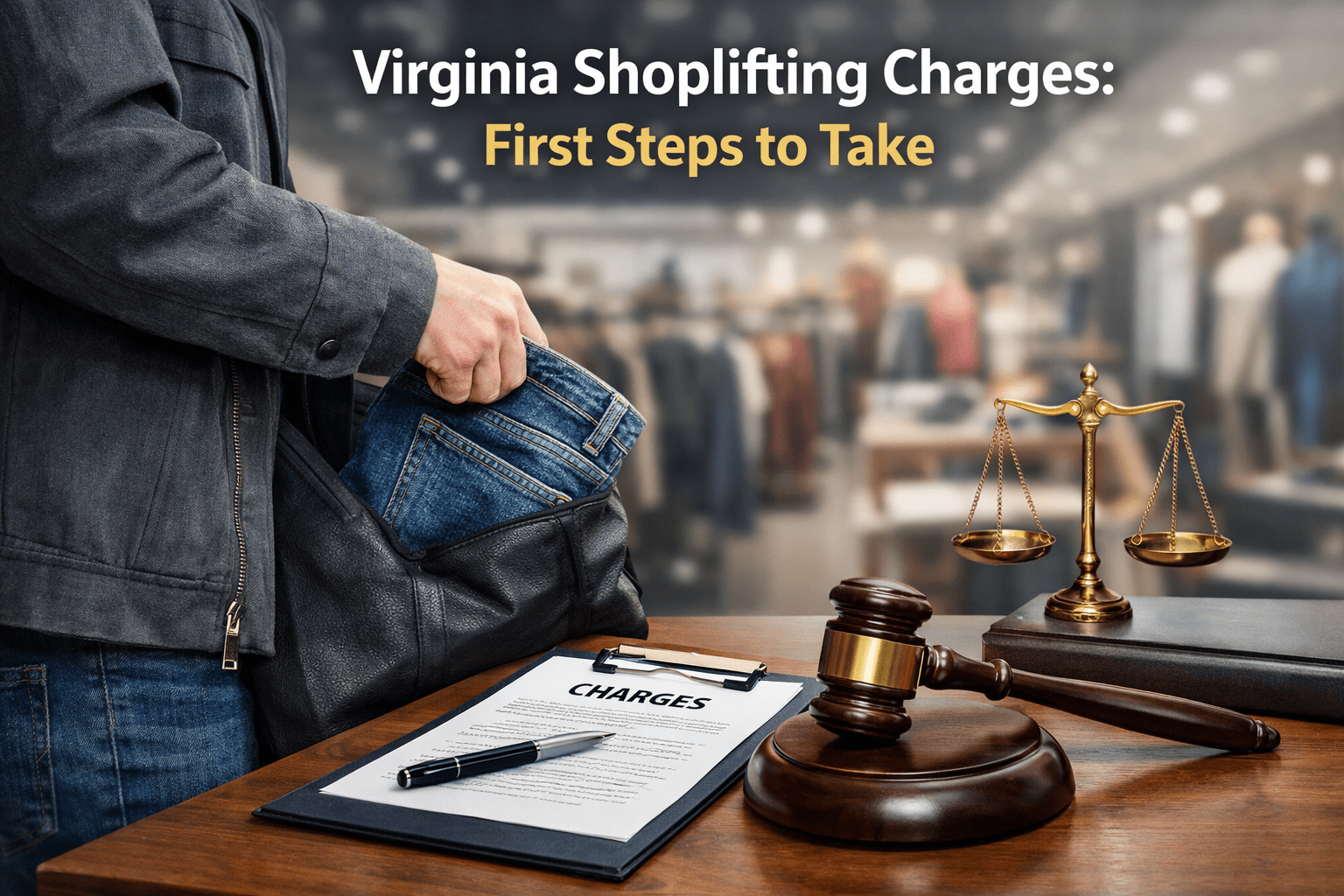
Understanding Virginia Shoplifting Charges
Being accused of shoplifting can be upsetting, embarrassing, and confusing. In Virginia, a retail theft accusation can quickly become a criminal charge with consequences that reach far beyond a single court date. A conviction may affect employment, professional licensing, security clearances, school opportunities, and immigration status. For many people, the most important question is simple: what should I do now?
If you were stopped by store security, received a summons, or were arrested for alleged shoplifting in Virginia, it is important to understand what the charge means and what steps may help protect your rights. While every case is different, early decisions often matter.
What Counts as Shoplifting in Virginia?
Virginia law generally treats shoplifting as a form of larceny. In practical terms, prosecutors often claim that a person took merchandise, altered a price tag, transferred items into different packaging, or attempted to leave a store without paying the full value.
Shoplifting allegations can arise from many situations, including:
- Leaving a store with unpaid merchandise
- Scanning some items but not others at self checkout
- Switching price tags
- Concealing merchandise in a bag, stroller, or clothing
- Returning items for store credit when the store claims the item was not actually purchased
Not every accusation involves intentional theft. In some cases, a customer may be distracted, may misunderstand a self checkout system, or may be wrongly identified by store staff. Even so, stores frequently push these cases forward, and law enforcement may rely heavily on store reports and surveillance footage.
Is Shoplifting a Misdemeanor or Felony in Virginia?
Whether a shoplifting case is charged as a misdemeanor or felony often depends on the value of the property involved and the specific facts of the case. In Virginia, lower value theft offenses are commonly charged as misdemeanors, while higher value allegations may lead to felony charges. The exact threshold and possible penalties should be reviewed carefully with a criminal defense lawyer because charging decisions can have a major impact on the outcome of the case.
A misdemeanor shoplifting conviction can still be serious. It may lead to jail exposure, fines, probation, suspended sentences, and a permanent criminal record. A felony charge is even more significant and may carry the risk of substantial incarceration and long term collateral consequences.
First Steps to Take After a Virginia Shoplifting Accusation
1. Do Not Make Detailed Statements
One of the most common mistakes people make is trying to explain everything to store security, police, or investigators on the spot. You may feel pressure to apologize, justify what happened, or say it was all a misunderstanding. Unfortunately, those statements can later be used against you.
You should be respectful, but you do not need to give a detailed explanation without legal advice. A short, calm response is usually better than a long statement made under stress.
2. Keep All Paperwork and Evidence
Save your summons, arrest paperwork, bond documents, civil demand letters, receipts, and any communication from the store. If you have text messages, bank records, or other information that may help explain the situation, keep those as well. These details can be important for your attorney when reviewing defenses and preparing for court.
3. Write Down What Happened
As soon as possible, write a private timeline of the incident while your memory is fresh. Include where you were, who was with you, what items were involved, whether you used self checkout, what store employees said, and whether any merchandise was recovered. Small facts can make a difference later.
4. Stay Off Social Media
Do not post about the accusation online. Even a casual comment or joke can create problems. Prosecutors and investigators may review social media accounts, and posts can easily be misunderstood.
5. Speak With a Virginia Criminal Defense Lawyer Quickly
Early legal advice can help you understand the charge, possible penalties, and strategic options. In some cases, a lawyer may be able to identify weaknesses in the evidence, challenge the store’s version of events, or work toward a resolution that reduces the long term impact of the charge.
How These Cases Are Commonly Proven
In many Virginia shoplifting cases, the prosecution relies on a combination of surveillance video, witness statements from loss prevention staff, receipts, inventory records, and statements allegedly made by the accused person. However, store employees can make mistakes. Camera angles may be incomplete. Self checkout technology may not tell the full story. A person may place an item in a bag or cart for a temporary reason without intending to steal it.
Intent is often a key issue. Just because merchandise was not paid for does not automatically mean the person intended to commit theft. This is one reason why the facts should be reviewed carefully rather than assuming the case is open and shut.
Possible Defenses to a Shoplifting Charge
The right defense depends on the evidence, but some common issues may include:
- Lack of intent to steal
- Mistaken identity
- Inaccurate valuation of the items
- Incomplete or unclear surveillance footage
- Unreliable witness observations
- Problems with how evidence was collected or presented
For example, a customer at a busy Northern Virginia store may use self checkout while handling a phone call and a child at the same time. An item might remain under the cart or fail to scan without the customer noticing. In another case, store staff may accuse the wrong person after losing sight of a suspect on video. These are not excuses in every case, but they show why a detailed legal review matters.
What About a Civil Demand Letter?
Some stores or recovery companies send civil demand letters after an alleged shoplifting incident. These letters typically request payment separate from the criminal case. Receiving a civil demand does not mean you have been convicted, and paying it does not automatically make the criminal charge go away.
Because these letters can affect strategy, it is wise to discuss them with an attorney before responding. People sometimes assume that paying the demand will end the matter, only to learn that the criminal case is still moving forward in court.
Can a First Offense Be Dismissed?
Many people charged with shoplifting in Virginia have never been arrested before. A first offense may open the door to more favorable outcomes in some cases, but there is no universal result. Much depends on the court, the facts, the value of the merchandise, the person’s record, and the available legal arguments.
Some cases may be positioned for dismissal, reduction, deferred disposition, or another outcome that avoids the worst consequences. Others may require a more aggressive defense because the evidence is disputed or the charge is more serious than it first appears. The key point is that a first charge should still be treated seriously.
Why Early Action Matters in Virginia
In Virginia criminal cases, waiting too long can limit your options. Witness memories fade, surveillance footage may not be preserved indefinitely, and important documents can be lost. Prompt action gives your defense attorney more time to investigate the facts, advise you about court expectations, and build the strongest strategy possible.
This is especially important for professionals, students, government employees, and individuals with security clearance concerns. Even a misdemeanor theft related offense can trigger questions from employers and licensing boards. Addressing the case carefully from the start may help reduce long term damage.
When to Seek Legal Help for Shoplifting Charges in Virginia
If you are facing shoplifting charges in Virginia, do not assume the case is minor just because the store recovered the items or because you were released with a court date. Theft related allegations are crimes of dishonesty, and that label can follow you for years if the case is not handled properly.
An experienced defense lawyer can review the evidence, explain what to expect in court, identify possible defenses, and work toward the best available result. For many people, the first and most important step is getting reliable legal advice before making statements or decisions that may affect the case.
If you or a loved one has been accused of retail theft in Virginia, speaking with counsel as soon as possible can make a meaningful difference in how the matter is resolved.