
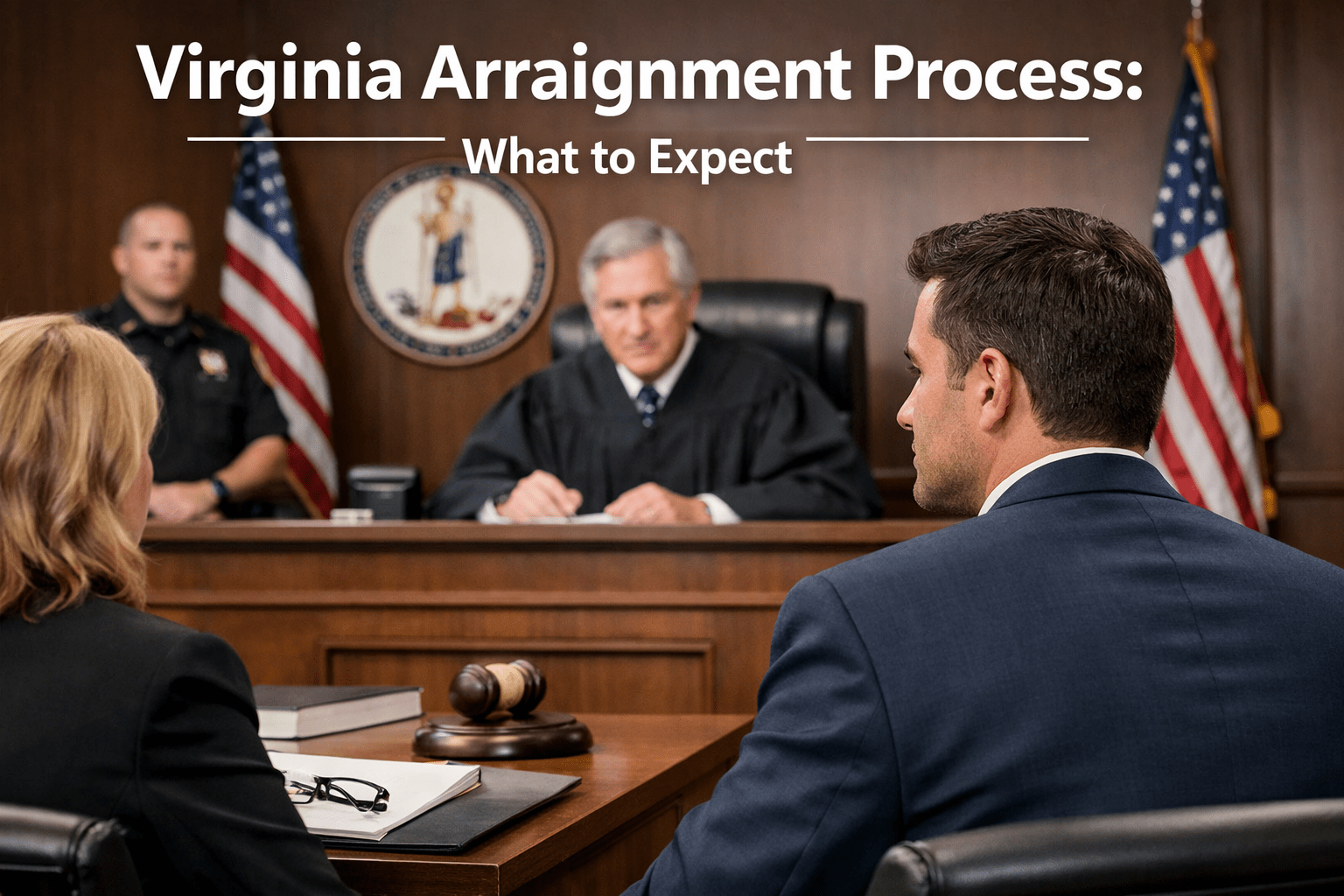
Understanding the Arraignment Process in Virginia
If you have been charged with a crime, one of the first court appearances you may face is an arraignment. For many people, this is also their first direct experience with the criminal justice system. That can make the process stressful, confusing, and intimidating. Understanding what happens at an arraignment in Virginia can help you feel more prepared and avoid mistakes that may affect your case later.
In Virginia, an arraignment is not a trial, and it is not the stage where the court decides whether you are guilty. Instead, it is a procedural hearing where the court formally advises you of the charge or charges against you and addresses certain next steps. Even though it may seem brief or routine, the arraignment can still be an important part of your criminal defense process.
If you are facing charges in Northern Virginia or elsewhere in the Commonwealth, knowing what to expect at an arraignment can help you protect your rights and make informed decisions from the beginning.
What Is an Arraignment?
An arraignment is typically one of the earliest court hearings in a criminal case. During this hearing, the judge informs the defendant of the charge, explains certain rights, and may address whether the defendant has or wants legal representation. In many Virginia courts, especially for misdemeanor cases, the arraignment may be brief and focused mainly on scheduling and procedural matters.
For many people, the arraignment happens after an arrest, release on a summons, or service of a criminal complaint. The exact process may vary depending on whether the charge is a misdemeanor or felony and which Virginia court is handling the case.
Why the Arraignment Matters
Although the arraignment is often not the stage where major evidence is presented, it still matters for several reasons. First, it confirms that the court has notified you of the allegations against you. Second, it gives you the opportunity to address legal representation. Third, it may set future court dates that shape the timeline of your defense.
What you do before and after the arraignment can influence your case. Missing the hearing, appearing unprepared, or speaking too freely in court can create avoidable problems.
What Happens at a Virginia Arraignment?
At a typical Virginia arraignment, the judge may call your case, identify the charge, and ask whether you have received a copy of the complaint or warrant. The court may also ask whether you intend to hire a lawyer or whether you want to request a court appointed attorney if you qualify financially.
In some cases, the judge may also discuss the next hearing date, including a trial date, preliminary hearing, or other scheduling matter. If bail or bond issues remain unresolved, those matters may also be addressed separately or in connection with the arraignment.
Common Issues Covered at Arraignment
Depending on the court and the nature of the case, an arraignment in Virginia may involve:
Notice of the criminal charge
Advice regarding the right to an attorney
Discussion of whether counsel has been retained
Scheduling of the next court appearance
Information about applying for a court appointed lawyer
Possible bond or release related issues
In many misdemeanor cases, especially traffic related criminal charges or lower level offenses, the arraignment may move quickly. Still, defendants should take it seriously and follow all court instructions carefully.
Do You Have to Enter a Plea at Arraignment?
One question many people ask is whether they must plead guilty or not guilty at arraignment. In Virginia, the answer depends on the type of case and the court, but many arraignments do not require a final plea decision at that moment. Often, the hearing is more about formally advising you of the charge and setting the case for a later date.
That said, every case is different. You should never assume that a quick guilty plea is the easiest way to move on. A criminal conviction can carry serious consequences, including jail exposure, fines, probation, license issues, immigration concerns, and a permanent record. Before making decisions that affect your future, it is wise to speak with a criminal defense attorney.
A Practical Example
Imagine a person in Fairfax County, Virginia receives a summons for misdemeanor assault after a dispute. They appear at arraignment thinking they can simply explain their side to the judge and have the case dismissed. But the arraignment is usually not the time to argue the facts. If they speak impulsively, their statements could create problems later. A better approach is to understand the purpose of the hearing, preserve defenses, and prepare with counsel for the next stage of the case.
Your Right to a Lawyer in Virginia Criminal Cases
One of the most important parts of the arraignment process is the issue of legal representation. In Virginia, defendants have the right to be represented by counsel in criminal cases, and those who qualify may request a court appointed attorney in eligible matters.
If you plan to hire a lawyer, it is often beneficial to do so before the arraignment whenever possible. An attorney may be able to advise you on what to expect, appear with you in court, and begin evaluating defenses early. Early legal intervention can be especially important in cases involving assault, theft, DUI, drug charges, probation violations, or domestic allegations.
Should You Talk About the Facts of the Case?
In most situations, no. The arraignment is generally not the time to explain your version of events in open court. Anything you say may be heard by the prosecutor, court personnel, and others. Even statements you believe are harmless can later be misunderstood or used against you.
It is usually best to answer the judge respectfully, respond only to the questions asked, and save case discussions for confidential communications with your attorney.
What Happens After the Arraignment?
After the arraignment, your case may proceed in different ways depending on the charge. For a misdemeanor, the court may set a trial date in General District Court or Juvenile and Domestic Relations District Court if the case falls within that court’s jurisdiction. For felony matters, the next step may include a preliminary hearing to determine whether there is enough evidence to send the case to a grand jury.
This period after arraignment is often when defense preparation becomes especially important. Your attorney may review the charging documents, examine possible constitutional issues, evaluate witness credibility, identify weaknesses in the prosecution’s case, and discuss whether diversion, reduction, or dismissal strategies may be available.
Steps You Can Take After Arraignment
Once the arraignment is over, there are several practical steps that can help you protect your case:
Write down all upcoming court dates
Follow every bond or release condition carefully
Do not contact alleged victims or witnesses if prohibited
Gather documents, names, and other information for your lawyer
Avoid posting about the incident on social media
Appear on time and dressed appropriately for every court date
These basic actions may seem small, but they can make a meaningful difference as your defense develops.
Consequences of Missing an Arraignment in Virginia
Failing to appear for an arraignment can create serious problems. If you miss your scheduled court date, the judge may issue a capias or bench warrant for your arrest. In some situations, missing court can also lead to additional criminal charges or bond complications.
If you realize you missed an arraignment or may not be able to attend, contact an attorney immediately. Acting quickly may help reduce further consequences and allow counsel to advise you on the best next step.
How a Virginia Criminal Defense Lawyer Can Help
Even a short arraignment can affect the direction of your case. A Virginia criminal defense lawyer can help you understand the charge, protect your rights, and avoid early mistakes. Counsel can also explain local court procedures, communicate with the prosecutor when appropriate, and begin building a defense strategy tailored to the facts of your case.
For someone unfamiliar with the criminal defense process, having legal guidance early can provide clarity and confidence. Whether you are facing a misdemeanor in Arlington, a felony in Alexandria, or another criminal charge anywhere in Virginia, the first court appearance is an important moment to take seriously.
Final Thoughts on the Virginia Arraignment Process
The arraignment is often the first formal step in a criminal case, but it should not be treated as a minor formality. It is your introduction to the court process, your opportunity to address legal representation, and the point where your case begins moving toward the next stage.
If you are dealing with criminal charges in Virginia, learning what to expect at arraignment can help reduce uncertainty. More importantly, getting legal advice as early as possible can help you make informed choices and protect your future throughout the criminal defense process.