
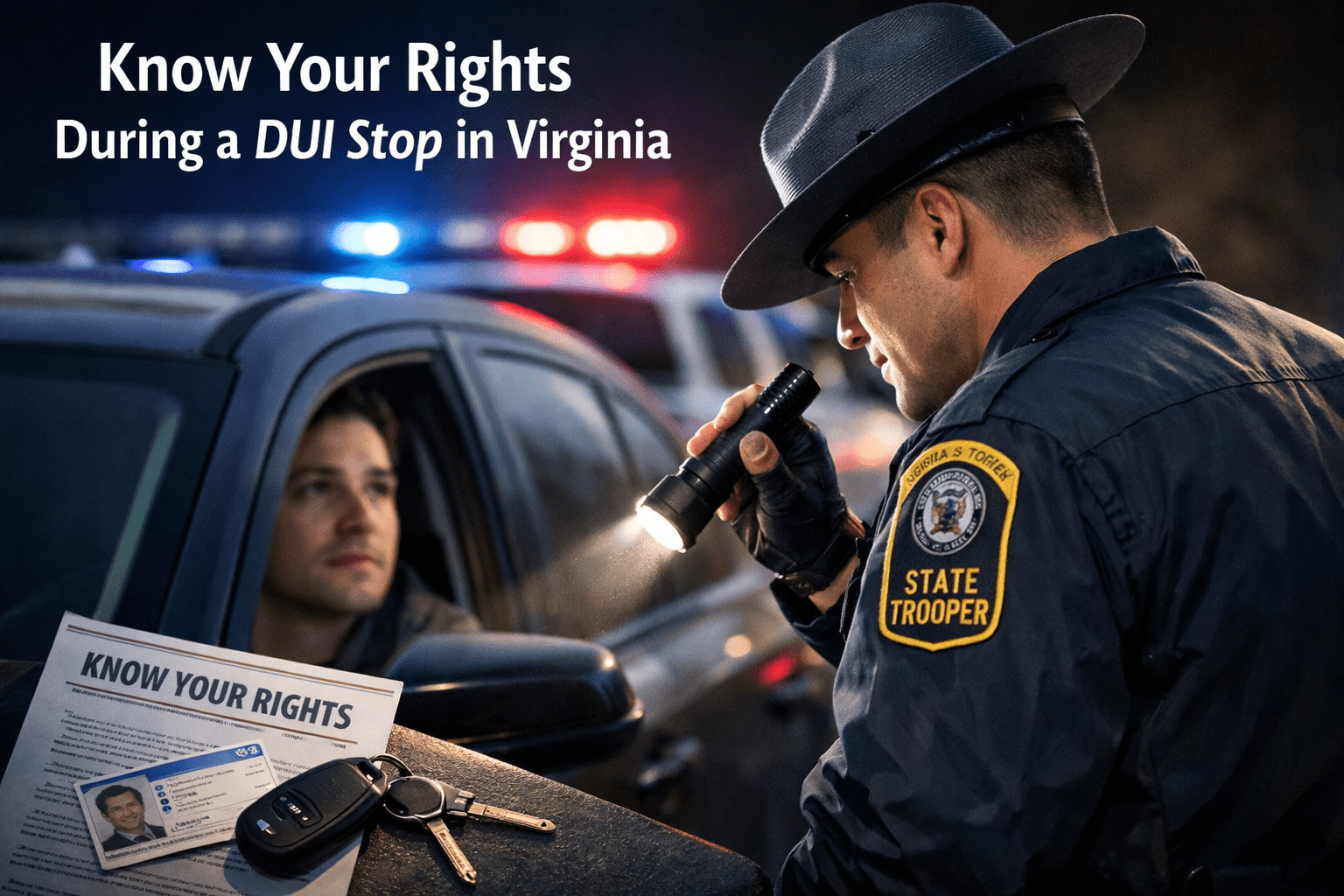
Know Your Rights During a DUI Stop in Virginia
Being stopped by police on suspicion of driving under the influence can be stressful and confusing. Many people are not sure what they must do, what they should avoid saying, and when they should ask for a lawyer. If you are pulled over in Virginia for a possible DUI, knowing your rights can help you protect yourself and avoid making the situation worse. This article explains the basics in clear terms and highlights practical steps you can take during and after a traffic stop.
Virginia DUI cases can move quickly from a roadside stop to an arrest, a court date, a license issue, and potentially long term consequences. What you say and do in the first few minutes often matters. While every case is different, understanding your rights is an important first step.
What Happens During a DUI Stop in Virginia
A DUI stop often begins when an officer notices something that appears unusual, such as weaving, speeding, braking abruptly, or driving without headlights at night. In other situations, a stop may happen at a checkpoint or after a minor traffic violation.
Once the officer approaches your vehicle, they may ask for your license and registration, observe your speech and movements, and look for signs of alcohol or drug use. They may also ask where you have been, whether you have been drinking, or whether you have taken any medication. These early interactions are important because officers often use them to build the basis for further investigation.
You Must Identify Yourself and Provide Basic Documents
In Virginia, you generally must provide your driver’s license and registration when lawfully stopped. You should remain calm, keep your hands visible, and comply with basic instructions such as staying in the vehicle if directed. Refusing to provide identification or becoming argumentative can create additional problems.
You Do Not Have to Answer Incriminating Questions
Although you must identify yourself, you do not have to answer questions that may incriminate you. For example, if an officer asks, “How much have you had to drink tonight?” you do not have to give details that could be used against you later. A polite response such as, “I would prefer not to answer questions,” may be appropriate.
This is one of the most important rights in a Virginia DUI investigation. Many people try to talk their way out of an arrest, but in practice, their statements often end up being used in court.
Your Rights During Field Sobriety Testing
Officers often ask drivers to perform field sobriety tests on the roadside. These may include standing on one leg, walking heel to toe, or following an object with the eyes. These tests are meant to give officers more evidence about possible impairment, but they are not always as simple or reliable as people assume.
Field Sobriety Tests Can Be Affected by Many Factors
Balance problems, fatigue, anxiety, age, injuries, uneven pavement, poor lighting, and certain medical conditions can affect performance. Someone may appear unsteady for reasons that have nothing to do with alcohol or drugs.
Imagine a driver leaving a late shift in Arlington, Virginia after working for 12 hours. The driver is tired, wearing dress shoes, and pulled onto the shoulder of a busy road. Even if that driver has not consumed enough alcohol to be legally impaired, the roadside conditions may make these tests difficult.
Be Careful About Voluntary Roadside Testing
In many situations, roadside field sobriety tests are voluntary. However, the legal and practical consequences of refusing or participating can be complex. The key point is that you should not assume these tests will clear you. Often, they give the officer more observations to cite in a report.
If you are unsure what to do, remain respectful and avoid arguing with the officer. A criminal defense lawyer can later review whether the stop, investigation, and arrest were handled lawfully.
Breath Testing and Virginia Implied Consent Laws
One of the most misunderstood parts of a Virginia DUI case is chemical testing. Many drivers have heard that they can simply refuse a breath test. In reality, the law is more complicated.
Preliminary Breath Tests at the Roadside
An officer may ask you to blow into a handheld device before arrest. This roadside test is different from the formal chemical test that may be required later. The legal effect of refusing a preliminary roadside breath test may differ from refusing a post arrest test, and the details matter.
Post Arrest Testing Can Carry Serious Consequences if Refused
Under Virginia implied consent law, a driver who has been lawfully arrested for DUI may be required to submit to a breath or blood test. Refusing a required post arrest test can lead to additional penalties, separate from the DUI charge itself. Those consequences may include license suspension and other legal issues.
This is why it is important not to rely on general advice from friends or social media. The decision to submit to or refuse testing can have lasting effects, and what applies in another state may not apply in Virginia.
Your Right to Remain Silent and Ask for a Lawyer
If you are arrested, remember that you still have rights. You have the right to remain silent and the right to legal counsel. After providing basic identifying information, you can clearly state that you wish to remain silent and want to speak with a lawyer.
Do Not Try to Explain Everything
People often feel pressure to explain that they were just tired, only had one drink, or were coming from dinner. These statements may seem harmless, but prosecutors can use them to support the government’s case. Even partial admissions can become damaging when combined with officer observations, body camera footage, and test results.
Be Respectful but Firm
A respectful tone can help prevent unnecessary conflict. You do not need to be confrontational to protect your rights. A simple statement such as, “I want to remain silent and speak with an attorney,” is often the best approach once you are under arrest.
Common Mistakes People Make During a Virginia DUI Stop
Many DUI cases become harder to defend because of avoidable mistakes at the roadside. Knowing what not to do is just as important as knowing your rights.
Admitting to Drinking
Even saying, “I only had two beers,” can be used as evidence. Officers may include that statement in their report and testify about it later.
Consenting to Searches Without Thinking
In some situations, officers may ask to search your car. Whether a search is lawful can depend on the facts. You generally do not have to consent to a search, and politely declining may help preserve important issues for your defense.
Arguing or Resisting
Arguing with police or physically resisting can lead to more charges and create a worse outcome. Protect your rights calmly and let your attorney challenge the legality of the stop or arrest later in court.
Why Early Legal Advice Matters in Virginia DUI Cases
A DUI arrest in Virginia can affect your driver’s license, job, professional reputation, and insurance costs. In some cases, it can also create immigration or security clearance concerns. Early legal advice matters because an attorney can examine whether the officer had a valid reason to stop you, whether the field tests were administered properly, whether body camera footage supports the report, and whether chemical testing rules were followed.
A lawyer may also identify procedural issues, negotiate with prosecutors, and help you prepare for court. In some cases, the facts may support a reduction or dismissal. In others, the focus may be on limiting the damage and protecting your future.
What to Do After a DUI Arrest in Virginia
If you have been arrested for DUI in Fairfax, Arlington, Alexandria, or elsewhere in Virginia, take action promptly. Write down everything you remember about the stop, including where it happened, what the officer said, whether field sobriety tests were requested, and whether any passengers were present. Save paperwork, bond documents, and court notices. Do not post details about the arrest on social media.
Practical Next Steps
Contact a criminal defense attorney as soon as possible. Bring all documents to your consultation. Be honest with your lawyer so they can properly evaluate the case. If your license or court date is at issue, time may be important.
Most importantly, remember that an arrest is not a conviction. Knowing your rights during a DUI stop in Virginia can make a real difference, and getting legal guidance early can help you make informed decisions from the very start.