
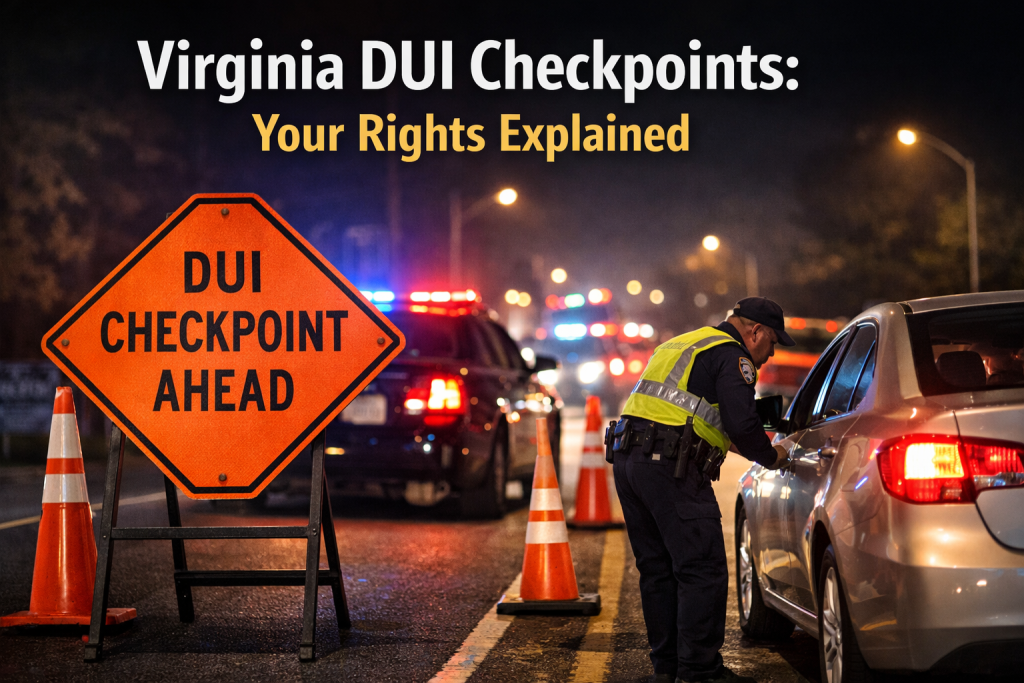
Virginia DUI Checkpoints: What Drivers Need to Know
DUI checkpoints can be stressful, even for drivers who have done nothing wrong. If you are stopped at a checkpoint in Virginia, it is important to understand what law enforcement can and cannot do, what your rights are, and how a stop could lead to serious criminal charges. Many people search for answers after a confusing encounter with police, especially if they were asked to perform field sobriety tests, provide identification, or submit to a breath test.
This article explains how DUI checkpoints work in Virginia, what happens during a checkpoint stop, and when you should speak with a criminal defense lawyer. While every case is different, knowing the basics can help you make informed decisions and protect your rights.
Are DUI Checkpoints Legal in Virginia?
Yes. DUI checkpoints, sometimes called sobriety checkpoints, are generally legal in Virginia if they are conducted in a way that follows constitutional rules. Police cannot simply stop drivers at random without a plan. In most cases, a checkpoint must be set up according to clear procedures that limit officer discretion. That means law enforcement agencies usually need to decide in advance where the checkpoint will be, how vehicles will be selected for screening, and how the stop will be conducted.
The reason for these rules is simple. The Fourth Amendment protects people from unreasonable searches and seizures. A checkpoint stop is considered a seizure, even if it is brief. Courts have allowed these stops in certain circumstances because they are aimed at public safety, but only when police follow proper guidelines.
If officers fail to follow those rules, the legality of the stop may be challenged. That can matter in cases involving DUI charges, license suspension issues, or other criminal charges that arise from the encounter.
How a Virginia DUI Checkpoint Usually Works
At a DUI checkpoint in Virginia, police typically stop vehicles according to a preset formula. For example, they may stop every car or every third car. An officer may ask for your driver’s license and registration, observe your behavior, and look for signs of impairment such as the odor of alcohol, slurred speech, bloodshot eyes, or open containers in the vehicle.
Most checkpoint stops are brief if there are no signs of a problem. If the officer believes there may be impairment, you may be directed to a secondary screening area for further investigation.
What Officers May Look For
During a checkpoint stop, officers are often trained to watch for indicators of intoxication or drug impairment, including:
Alcohol odor coming from the driver or vehicle
Difficulty answering basic questions
Confusion or delayed responses
Visible containers of alcohol or drugs
Unsteady movements
Statements admitting alcohol or drug use
Even a short interaction can become the basis for further investigation. That is why drivers should stay calm, polite, and aware of their rights.
Your Rights at a DUI Checkpoint in Virginia
Many drivers are unsure what they are legally required to do at a checkpoint. In Virginia, you are generally required to provide your license and registration when lawfully stopped. You should not refuse basic identification requests. However, that does not mean you must answer every question in detail or volunteer information that could be used against you.
You Have the Right to Remain Silent
You can politely decline to answer questions such as whether you have been drinking or where you are coming from. A respectful response such as, I prefer not to answer questions, may be appropriate. Staying silent is often safer than making statements that could later be misunderstood or used as evidence.
You Do Not Have to Consent to a Vehicle Search
If an officer asks for permission to search your car, you can refuse consent. If police have legal grounds to search anyway, they may do so, but you do not have to make it easier for them by agreeing. A clear and polite statement such as, I do not consent to any searches, may help preserve your rights.
Field Sobriety Tests Are Different From Chemical Tests
Field sobriety tests, such as walking in a straight line or standing on one leg, are often voluntary. These tests are subjective and can be affected by nerves, medical conditions, uneven pavement, poor lighting, or fatigue. Many drivers do poorly even when they are not intoxicated.
Chemical testing raises separate issues. Under Virginia’s implied consent law, drivers who are lawfully arrested for DUI may face consequences for refusing certain post arrest breath or blood tests. Refusal can lead to additional penalties and can complicate your defense. Because the rules are fact specific, anyone facing a refusal allegation should speak with a Virginia criminal defense attorney as soon as possible.
What Can Lead to DUI Charges After a Checkpoint Stop?
A checkpoint itself does not mean you will be arrested. However, if an officer believes there is probable cause to investigate further, a simple stop can quickly turn into criminal charges. DUI charges may result from:
Observed signs of alcohol impairment
Admission of drinking
Poor performance on field sobriety tests
Preliminary breath test results
Discovery of drugs or drug paraphernalia
Evidence of driving under the influence of prescription medication
In some cases, a driver stopped at a checkpoint may also face related criminal charges such as driving on a suspended license, possession of a controlled substance, open container violations, or obstruction allegations.
A Common Example
Imagine a driver in Northern Virginia is stopped at a checkpoint after having one or two drinks at dinner. The officer claims to smell alcohol and asks whether the driver has been drinking. Nervous, the driver admits to having drinks, steps out of the car, and performs field sobriety tests poorly due to anxiety and uneven road conditions. What started as a brief stop now becomes a DUI arrest. In a situation like this, the details matter. A defense lawyer may review whether the checkpoint was properly established, whether the officer had legal grounds to extend the stop, and whether the tests were fairly administered.
Can You Turn Around to Avoid a Checkpoint?
This is a common question. In some situations, a driver may legally avoid a checkpoint by making a lawful turn before reaching it. But if you commit a traffic violation while turning away, or if officers believe your actions create reasonable suspicion of wrongdoing, you may still be stopped. Abrupt maneuvers, illegal U turns, or unsafe driving can draw police attention.
In other words, avoiding a checkpoint is not automatically illegal, but how you do it matters. Drivers should never assume that turning away guarantees they cannot be stopped.
How a Defense Lawyer May Challenge a Virginia Checkpoint Arrest
If you were arrested after a DUI checkpoint in Virginia, a criminal defense attorney may evaluate several important issues:
Whether the checkpoint followed constitutional and procedural requirements
Whether police stopped vehicles according to a neutral formula
Whether the initial detention lasted longer than allowed
Whether officers had a valid basis for secondary screening
Whether field sobriety testing was reliable
Whether breath or blood testing procedures were properly followed
A strong defense often starts with the stop itself. If the checkpoint was not lawfully conducted, that may affect what evidence can be used in court.
Why Early Legal Advice Matters in Virginia
DUI charges in Virginia can carry serious consequences, including jail exposure, fines, license suspension, ignition interlock requirements, and a criminal record. Even a first offense can affect employment, professional licensing, security clearances, and insurance costs. That is why it is important to act quickly after an arrest or charge.
Early legal representation can help preserve evidence, identify weaknesses in the prosecution’s case, and guide you through court appearances and DMV related issues. It can also help you avoid mistakes, such as making damaging statements or missing important deadlines.
What to Do If You Were Stopped at a DUI Checkpoint in Virginia
If you were stopped or arrested at a Virginia DUI checkpoint, try to write down what happened as soon as possible. Note where the checkpoint was located, what officers said, whether all cars were being stopped, how long you were detained, and what tests were requested. These details may be useful to your attorney later.
You should also avoid discussing the incident on social media or with anyone other than your lawyer. Statements made casually can sometimes be used against you.
Speak With a Virginia Criminal Defense Lawyer
A DUI checkpoint arrest is not the same as a conviction. The facts, the police procedures, and the evidence all matter. If you are facing DUI or related criminal charges in Virginia, speaking with an experienced defense attorney can help you understand your options and protect your future.
Legal guidance is especially important when a case involves checkpoint procedures, refusal allegations, prior offenses, or drug related impairment claims. A knowledgeable lawyer can review the circumstances of your stop and build a strategy based on the specific facts of your case in Virginia.