
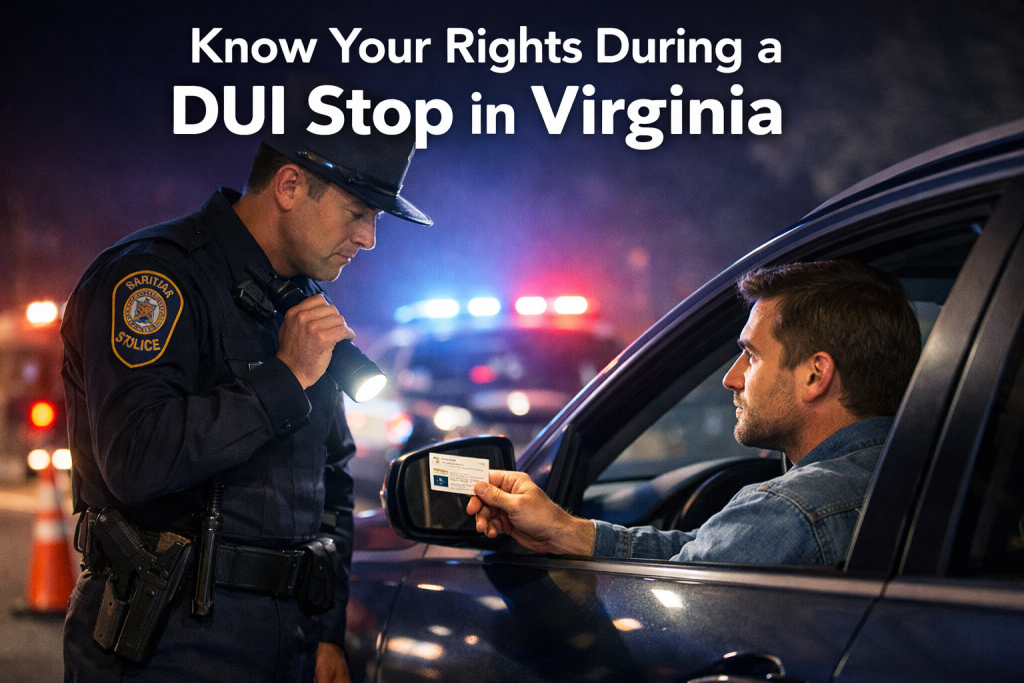
Know Your Rights During a DUI Stop in Virginia
Being stopped by police on suspicion of driving under the influence can be stressful and confusing. Many people do not know what they are legally required to do, what they can refuse, and how their words or actions may affect a criminal case. If you are pulled over in Virginia for suspected DUI, understanding your rights can help you avoid mistakes and protect your future.
This article explains what drivers should know about a DUI stop in Virginia, including what officers may ask, when you must comply, and why early legal guidance matters. While every case is different, knowing your rights during a DUI stop in Virginia can make a significant difference.
Why This Topic Matters in Virginia
Virginia takes DUI allegations seriously. A conviction can lead to jail time, fines, license suspension, mandatory education programs, and a permanent criminal record in some situations. Even a first offense can create problems for employment, professional licensing, security clearances, and car insurance rates.
Many DUI cases begin with a routine traffic stop. What happens in those first few minutes often becomes central evidence in court. An officer may claim to observe bloodshot eyes, slurred speech, the smell of alcohol, or poor driving behavior. The driver may feel pressured to answer questions or perform roadside tests without understanding the consequences.
That is why it is important to know your rights before you ever need to use them.
When Police Can Stop Your Vehicle
Police in Virginia cannot stop a vehicle for no reason. Generally, an officer must have a lawful basis for the stop, such as observing a traffic violation, equipment issue, or behavior suggesting impairment. Examples may include speeding, weaving, running a red light, driving without headlights, or having an expired registration.
In some cases, an officer may also encounter a checkpoint or roadblock. Virginia law allows certain sobriety checkpoints when they are conducted within constitutional limits. Even at a checkpoint, however, your rights still apply.
If the stop itself was unlawful, that may become an important issue in your defense. A criminal defense attorney can evaluate whether the officer had a valid legal reason to initiate contact.
What You Must Do During a Virginia DUI Stop
Provide Basic Identification
During a lawful traffic stop, you are generally required to provide your driver license and vehicle documentation when requested. This usually includes registration and proof of insurance. Refusing to provide basic identifying information can create additional legal problems.
Exit the Vehicle if Ordered
An officer may direct you to step out of the car. In most cases, you should comply calmly and avoid sudden movements. Arguing on the roadside rarely helps and may make the situation worse.
Remain Calm and Non Confrontational
Your behavior during the stop can influence how the officer describes the interaction in a police report. Staying respectful does not mean giving up your rights. It simply means handling the situation in a way that does not add unnecessary complications.
What You Have the Right to Refuse
You Have the Right to Remain Silent
One of the most important rights in any criminal investigation is the right to remain silent. During a DUI stop, an officer may ask questions such as: Where are you coming from? Have you been drinking? How much have you had tonight? Those questions may seem casual, but your answers can later be used against you.
You are not required to answer potentially incriminating questions. A polite response such as, I would like to remain silent, may be appropriate. Many drivers talk too much because they hope to appear cooperative. In reality, even innocent explanations can be misunderstood or taken out of context.
Field Sobriety Tests Are Usually Voluntary
In many Virginia DUI investigations, officers ask drivers to perform field sobriety tests on the roadside. These may include standing on one leg, walking heel to toe, or following an object with the eyes. These tests are often presented as routine, but they are subjective and can be affected by anxiety, fatigue, age, injuries, footwear, weather, or uneven pavement.
In many situations, roadside field sobriety tests are voluntary. Politely declining may be within your rights. However, the exact facts matter, and drivers should speak with counsel as soon as possible after an arrest.
Portable Breath Tests Have Different Rules
Officers may also ask a driver to blow into a handheld breath device before an arrest. This roadside portable breath test is different from the post arrest chemical test that may occur later. The legal consequences of refusing can depend on the type of test requested and the stage of the investigation. Because this area can be confusing, it is critical to get legal advice tailored to your case.
Virginia Implied Consent Law
Post Arrest Chemical Testing
Virginia has an implied consent law. In general, if you are lawfully arrested for DUI, you may be required to submit to a breath or blood test after the arrest. Refusing a qualifying post arrest test can lead to separate penalties, even apart from the DUI charge itself.
This is an area where many drivers get confused. They may assume that all tests are optional, or that all refusals carry the same consequences. That is not true. Roadside testing and post arrest testing are not always treated the same way under Virginia law.
Because refusal issues can affect both your criminal case and your driving privileges, it is important to speak with a Virginia DUI defense lawyer quickly.
Your Right to a Lawyer After a DUI Arrest in Virginia
If you are arrested, you have the right to seek legal representation. While you may not always be able to delay certain procedures until a lawyer is present, you should clearly ask for an attorney and avoid answering further investigative questions without counsel.
A lawyer can review whether the stop was lawful, whether police followed proper procedures, whether testing equipment was reliable, and whether your constitutional rights were respected. In some cases, the defense may challenge the basis for the stop, the arrest decision, the administration of tests, or the officer’s observations.
Common Mistakes Drivers Make During a DUI Stop
Admitting to Drinking
Many people believe that saying, I only had one drink, will make them seem honest. In reality, that statement may be used as evidence that you consumed alcohol before driving.
Trying to Explain Too Much
Long explanations can create inconsistencies that later appear in police reports or testimony. Short, respectful communication is usually better than volunteering unnecessary details.
Assuming Cooperation Means Waiving Rights
You can be polite while still protecting yourself. Providing identification and complying with lawful orders does not require you to answer incriminating questions.
Resisting or Arguing at the Scene
If you believe the stop is unfair, that issue can be addressed later through your attorney and the court process. Roadside resistance may lead to additional charges or safety concerns.
Example Scenario: A Late Night Traffic Stop in Northern Virginia
Imagine a driver leaving a restaurant in Northern Virginia after dinner. An officer stops the vehicle for allegedly drifting within the lane and failing to signal a turn. The officer asks whether the driver had anything to drink. Nervous and wanting to appear truthful, the driver says, Just two beers. The officer then requests field sobriety tests and a roadside breath test.
In this situation, the driver’s own statement may become part of the prosecution’s evidence. The roadside tests may also give the officer more observations to include in the report, even if the driver was simply tired or anxious. This example shows why knowing your rights during a DUI stop in Virginia matters so much.
What To Do After a DUI Arrest
Write Down What Happened
As soon as possible, make notes about the stop, the officer’s statements, what you were asked to do, and any tests that were performed. Details fade quickly, and those facts may help your defense.
Preserve Documents
Keep copies of any paperwork, bond documents, charging information, and license related notices.
Contact a Criminal Defense Lawyer Promptly
Early legal intervention can be important in DUI cases. A lawyer may identify defenses, deadlines, and procedural issues that are easy to miss if you wait too long.
Protecting Your Rights in Virginia DUI Cases
A DUI stop can move quickly from a routine traffic matter to a serious criminal charge. Knowing your rights during a DUI stop in Virginia can help you make informed decisions, avoid self incriminating statements, and better protect your legal position.
If you were stopped or arrested for DUI in Virginia, speaking with an experienced criminal defense attorney is one of the most important steps you can take. A lawyer can assess the facts, explain your options, and build a strategy aimed at protecting your license, your record, and your future.