
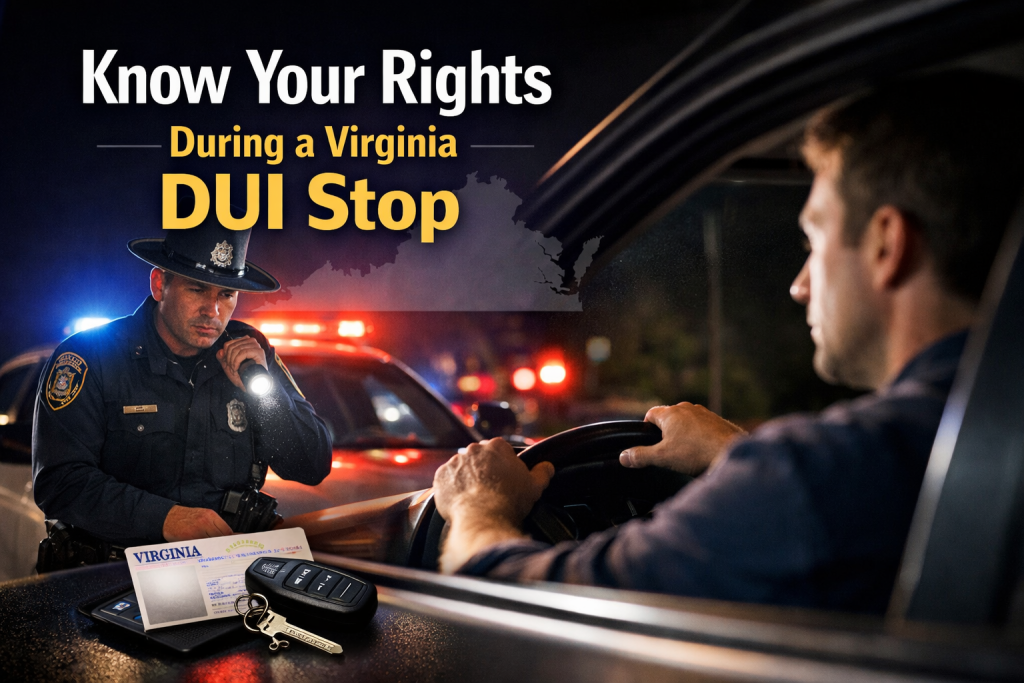
Know Your Rights During a Virginia DUI Stop
Being pulled over on suspicion of drunk driving can be stressful and confusing. Many people are unsure what they must do, what they can refuse, and what they should say. If you are stopped by police in Virginia for a suspected DUI, knowing your rights can help you avoid making the situation worse while still complying with the law.
This article explains what drivers should know about their rights during a Virginia DUI stop, what officers may ask you to do, and why early legal guidance matters if you are charged.
Why This Matters in Virginia
Virginia takes DUI allegations seriously. A conviction can lead to fines, license suspension, ignition interlock requirements, higher insurance costs, and possible jail time in some cases. Even a first offense can have lasting consequences for your job, reputation, and ability to drive.
That is why understanding your rights before, during, and after a traffic stop is so important. While every case is different, drivers in Virginia should know that they still have constitutional protections during a DUI investigation.
What Gives Police the Right to Stop Your Car?
Police generally need a lawful reason to stop your vehicle. In many DUI cases, that reason may be a traffic violation such as speeding, drifting between lanes, running a red light, or driving without headlights at night. Sometimes an officer may also rely on observations that suggest impaired driving, such as weaving or unusually slow responses.
If there was no valid reason for the stop, your attorney may later challenge whether the officer lawfully pulled you over. This can be an important issue in a criminal defense case.
You Have the Right to Remain Calm and Silent
During a stop, you should remain polite and avoid arguing with the officer. You must typically provide your driver’s license and vehicle information when requested. However, you do not have to answer potentially incriminating questions such as:
Have you been drinking tonight?
How many drinks have you had?
Where are you coming from?
You have the right to remain silent. Many people think they can talk their way out of a DUI stop, but statements made at the roadside are often used against them later. A respectful response such as, I would prefer not to answer questions, may be safer than guessing or admitting to alcohol consumption.
Field Sobriety Tests in Virginia
Officers often ask drivers to perform field sobriety tests during a DUI investigation. These may include standing on one leg, walking heel to toe, or following an object with your eyes. These tests are designed to give police more evidence of alleged impairment.
Many drivers do not realize that roadside field sobriety tests are often subjective. Nervousness, fatigue, medical conditions, age, uneven pavement, poor lighting, and weather can all affect performance. Even sober drivers may struggle with balance or coordination under pressure.
Can You Refuse Field Sobriety Tests?
In many situations in Virginia, field sobriety tests are voluntary. That means a driver may decline to perform them. However, officers may still proceed with the investigation based on other observations, and they may still arrest you if they believe there is probable cause.
Because these tests can create damaging evidence, many defense attorneys view them as risky for drivers. Whether refusing is the right choice depends on the facts of the stop, but it is important to understand that these tests are not always required.
Preliminary Breath Tests at the Roadside
An officer may also ask you to blow into a handheld breath device at the scene. This is often called a preliminary breath test. In Virginia, roadside preliminary breath testing has limited legal use, and the rules surrounding it differ from the official chemical test that may be requested after an arrest.
Drivers should understand that the roadside breath device is not necessarily the same as the formal post arrest breath or blood test. The legal consequences can depend on when the test is requested and under what authority.
Post Arrest Chemical Testing and Implied Consent
After a lawful DUI arrest in Virginia, the implied consent law may apply. This means that by driving on Virginia roads, motorists are deemed to have consented to certain breath or blood testing after arrest if the legal requirements are met.
Refusing a post arrest evidentiary test can carry separate consequences, including license suspension and additional legal issues, even if the DUI charge itself is later challenged. This is one reason why the distinction between roadside testing and post arrest testing matters so much.
If you are unsure what type of test an officer is requesting, do not argue on the roadside. Comply as required, remain calm, and contact a defense attorney as soon as possible.
Your Rights During Questioning and Arrest
If police arrest you for DUI in Virginia, you still have important rights. You have the right to remain silent and the right to seek legal counsel. It is usually best not to explain, justify, or debate the facts of the evening once you are in custody.
For example, a driver may think saying, I only had two drinks, sounds harmless. In reality, that statement may be presented in court as an admission of alcohol consumption. A simple choice to remain silent may better protect your defense.
Do Not Consent to Searches Without Understanding Your Rights
In some situations, officers may ask for consent to search your vehicle. You have rights regarding searches. While there are circumstances where police may search without consent, you do not have to voluntarily agree to a search if asked.
A respectful statement such as, I do not consent to any searches, may help preserve legal issues for your attorney to review later. Never physically resist an officer, even if you believe the search is improper.
Common Mistakes People Make During a DUI Stop
Many DUI cases become harder to defend because of avoidable mistakes. Common examples include:
Talking too much and admitting to drinking
Arguing with police or becoming confrontational
Agreeing to perform roadside tests without understanding they may be voluntary
Confusing roadside breath testing with post arrest chemical testing
Posting details about the arrest on social media before speaking with a lawyer
Staying calm, limiting what you say, and getting legal advice quickly can make a real difference.
Practical Example of a Virginia DUI Stop
Imagine a driver leaving a restaurant in Arlington, Virginia after having one or two drinks with dinner. On the way home, the driver briefly touches a lane marker, and an officer initiates a stop. The officer asks whether the driver has been drinking and requests field sobriety tests.
If the driver admits to drinking, performs poorly on balancing exercises because of nerves, and then continues answering questions, the officer may build a stronger case from those roadside interactions alone. By contrast, a driver who provides identification, remains respectful, declines to answer incriminating questions, and understands the distinction between voluntary roadside testing and required post arrest testing may better protect important legal defenses.
What to Do After a DUI Arrest in Virginia
If you are arrested, take the situation seriously right away. Write down everything you remember as soon as possible, including where the stop happened, what the officer said, whether any tests were requested, and whether there were witnesses. Small details can matter later.
You should also avoid discussing the case with friends, coworkers, or online. Statements made outside court can still hurt your defense. The best next step is to speak with a criminal defense attorney familiar with Virginia DUI law.
How a Defense Attorney Can Help
An attorney may review whether the traffic stop was lawful, whether the officer had probable cause, how field sobriety tests were administered, whether any chemical testing complied with Virginia law, and whether your rights were violated at any stage of the investigation.
In some cases, legal challenges may result in reduced charges, suppression of evidence, or other favorable outcomes. Early representation is especially important when deadlines apply to license issues or court appearances.
Protecting Your Rights in Virginia
A DUI stop can move quickly, and the choices you make in a few minutes may affect your case for months or longer. Knowing your rights during a Virginia DUI stop does not mean refusing lawful orders or acting disrespectfully. It means understanding how to protect yourself while complying with the law.
If you were stopped or arrested for DUI in Virginia, speaking with an experienced criminal defense lawyer can help you understand your options and build the strongest defense possible. Legal advice tailored to your situation is the best way to protect your rights and your future.