
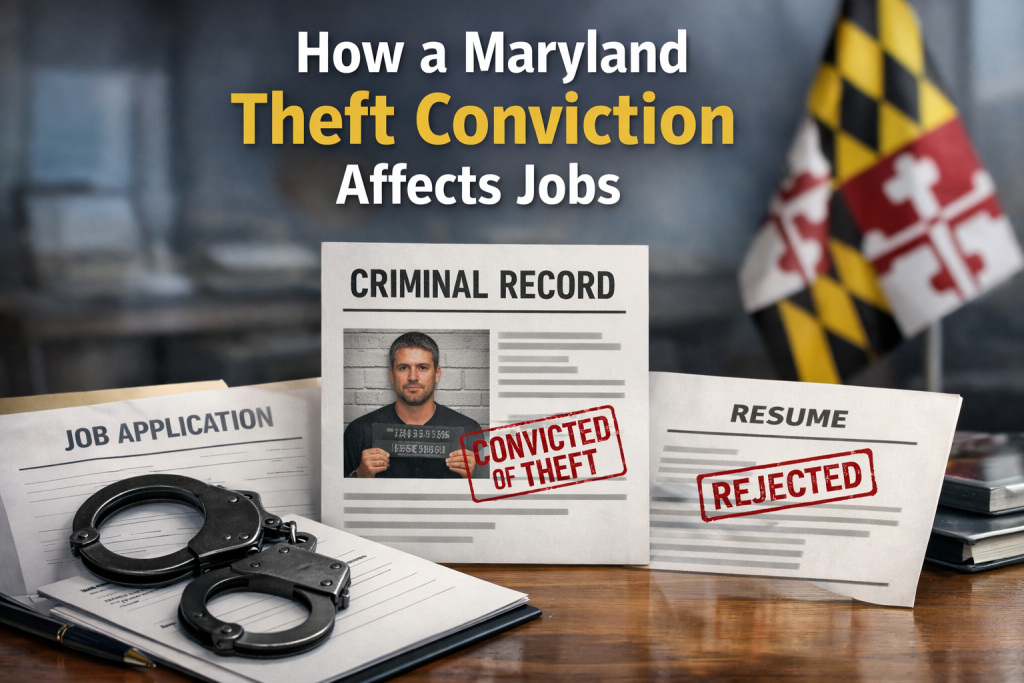
How a Maryland Theft Conviction Can Affect Your Future
A theft charge may seem like a short term legal problem, but a conviction can create lasting consequences that reach far beyond court. In Maryland, even a misdemeanor theft conviction can affect employment, professional licensing, housing opportunities, and personal reputation. Many people searching for legal help are not only worried about fines or jail time. They are also concerned about what happens after the case ends.
If you are facing theft charges in Maryland, it is important to understand that the consequences of a criminal conviction can follow you for years. Employers, landlords, licensing boards, and schools may all view theft related offenses as crimes involving dishonesty. That label can make it harder to move forward, even after you have completed your sentence.
This article explains how a Maryland theft conviction may affect your life, why these cases should be taken seriously, and when speaking with a criminal defense lawyer may help protect your future.
Why Theft Convictions Raise Serious Long Term Concerns in Maryland
Under Maryland law, theft offenses can include shoplifting, employee theft, taking property without permission, possessing stolen property, or obtaining property through deception. The exact charge often depends on the value of the property involved and the facts of the case.
Some people assume a lower level theft offense is not a major issue if it is charged as a misdemeanor. In reality, a theft conviction often carries consequences that are out of proportion to the immediate penalty. That is because theft is commonly viewed as an offense involving trustworthiness and honesty. When someone has a theft conviction on a background check, decision makers may question whether that person can be trusted with money, confidential information, access to property, or customer interactions.
For many clients, these collateral consequences are just as important as avoiding jail.
Employment Problems After a Maryland Theft Conviction
Background checks can reveal the conviction
Many employers in Maryland run criminal background checks before making hiring decisions. A theft conviction may appear during that process, especially if the record has not been cleared where legally possible. Even if the offense happened years ago, it can still raise concerns for employers.
Jobs that involve handling cash, financial records, merchandise, deliveries, client property, or sensitive information may be especially difficult to obtain after a theft conviction.
Current employment may also be at risk
The consequences are not limited to job seekers. A person who is already employed may face disciplinary action, suspension, or termination after a conviction. This can happen when an employer believes the offense reflects poor judgment or creates a risk to the business.
For example, a retail worker convicted of shoplifting may face immediate termination. An office employee with access to company purchasing accounts may also face serious scrutiny, even if the alleged theft had nothing to do with work.
Professional reputation can suffer
In some industries, reputation matters as much as qualifications. A theft conviction can damage professional credibility and make it harder to earn trust from employers, clients, or business partners. This can be especially harmful for people in banking, healthcare, education, government, and positions involving fiduciary duties.
Professional License Consequences in Maryland
Many licensed professionals do not realize that a criminal conviction can trigger reporting requirements or board review. Depending on the profession, a Maryland theft conviction may affect licenses held by nurses, teachers, real estate professionals, security workers, contractors, and other regulated occupations.
Licensing boards may look at whether the offense relates to the duties of the profession, whether it reflects dishonesty, and whether it raises concerns about public trust. In some cases, a person may have to disclose the conviction during a license application or renewal process.
A board could respond with additional investigation, probation, suspension, denial of a license, or other discipline. Even if the board does not revoke a license, the process itself can be stressful and time consuming.
Housing and Rental Application Issues
Landlords often conduct screening before approving rental applications. A theft conviction can become a problem during that review, especially in competitive housing markets. A landlord may worry about reliability, compliance with lease terms, or the safety of the property.
In Maryland, this can make it harder to secure an apartment or rental home, particularly if multiple applicants are being considered. Someone with a theft conviction may find that they are passed over without much explanation, asked for additional deposits, or required to provide more documentation.
This issue can become even more serious for individuals already dealing with financial stress caused by arrest, court appearances, or job loss.
Immigration Concerns for Non Citizens
For non citizens, any criminal case should be handled with great care. A theft conviction may create immigration consequences depending on the charge, sentence, and individual immigration status. These consequences can include problems with visa applications, green card renewals, travel, or removal proceedings.
Because criminal and immigration law can overlap in complicated ways, it is important for non citizen defendants to raise these concerns with defense counsel as early as possible. What may seem like a routine plea deal can have serious immigration effects later.
College, Security Clearance, and Other Hidden Consequences
A conviction can also affect educational and personal opportunities. Colleges, graduate programs, and scholarship committees may ask about criminal history. Government jobs and contractors may review criminal records during security clearance evaluations. Volunteer organizations and youth serving programs may do the same.
In the Maryland and Washington DC region, where many jobs involve federal agencies, contractors, and positions of trust, a theft conviction can become a significant obstacle. Even when a person has strong skills and experience, the presence of a theft related offense may raise questions that other applicants do not face.
Example Scenario: A First Offense That Creates Lasting Problems
Imagine a college student in Maryland is charged with shoplifting merchandise worth a relatively small amount. The student has no prior record and assumes the matter will not have much impact if they simply pay a fine and move on. Later, after a conviction, the student applies for internships with financial firms and government contractors. Each application asks about criminal history. The theft conviction now stands in the way of opportunities that may have shaped the student’s career.
This example shows why even a first offense should be taken seriously. The immediate court penalty may be manageable, but the long term effects can be much harder to fix.
Can a Maryland Theft Record Be Cleared?
In some situations, Maryland law may allow certain criminal records to be shielded from public view or removed through legal processes such as expungement. However, eligibility depends on the outcome of the case, the charge involved, and other legal factors. Not every conviction qualifies, and waiting periods may apply.
This is one reason the earliest stages of a criminal case are so important. Avoiding a conviction when possible may provide better protection than trying to address the damage afterward. A defense strategy may involve challenging the evidence, negotiating for a different outcome, or seeking a resolution that better protects future opportunities.
Why Early Legal Help Matters in Maryland Theft Cases
People often focus only on whether they will go to jail. A more complete view looks at the full picture, including employment, licensing, housing, immigration status, and long term reputation. A criminal defense lawyer can evaluate the charge, explain the possible direct and collateral consequences, and work toward an outcome that minimizes the impact on your life.
In Maryland theft cases, the right legal approach may depend on issues such as intent, ownership, mistaken identity, surveillance evidence, witness statements, or the value of the property. Every case is different, and early intervention can sometimes make a meaningful difference.
Speak With a Criminal Defense Lawyer About Maryland Theft Charges
If you have been charged with theft in Maryland, do not assume the case is minor just because the value is low or the charge is a misdemeanor. A conviction can affect your job, license, housing, and future opportunities for years to come. Understanding the consequences of criminal convictions is an important first step, but taking action to protect yourself is just as important.
Speaking with an experienced criminal defense attorney can help you understand your options and make informed decisions about your case. For many people, the goal is not only to address the charge in court, but also to protect the future they have worked hard to build.