
Understanding Drug Paraphernalia Charges in Virginia
If you are facing a drug paraphernalia charge in Virginia, you may be wondering how serious the allegation is and what it could mean for your future. Many people are surprised to learn that items such as pipes, scales, syringes, small baggies, grinders, or other objects can lead to criminal accusations even when no large quantity of drugs is found. In Virginia, paraphernalia allegations often appear alongside other drug charges, but they can also arise on their own depending on the facts of the case.
For people in Northern Virginia and throughout the Commonwealth, understanding how these charges work is important. A conviction can affect employment, professional licensing, housing opportunities, and your reputation. The specific facts matter, and early legal guidance can make a meaningful difference.
What Is Considered Drug Paraphernalia in Virginia?
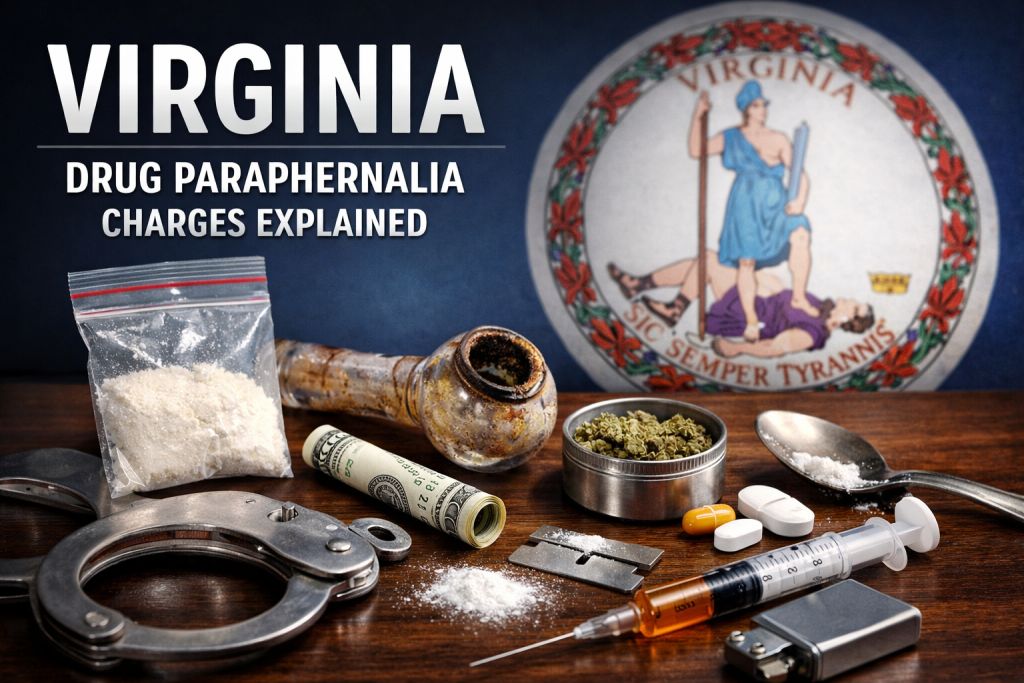
Drug paraphernalia generally refers to items that are allegedly used to grow, manufacture, process, package, store, test, or consume illegal drugs. The issue is often not just the object itself, but how police and prosecutors claim the item was intended to be used.
Common examples may include:
- Pipes or bongs
- Rolling papers linked to controlled substances
- Scales or measuring devices
- Small plastic baggies or containers
- Syringes
- Objects used to ingest, inhale, or prepare narcotics
Some of these items can also have lawful uses. For example, a scale may be used in a kitchen or business. A small container may be completely ordinary. Because of this, many cases turn on context, statements made to police, where the item was found, and whether any residue or controlled substances were allegedly present.
How Prosecutors Try to Prove a Paraphernalia Case
In a Virginia criminal case, the prosecution must present evidence that connects the item to illegal drug activity. Police may point to residue, the location of the object, text messages, statements during a stop, or nearby drugs. Officers may also rely on their training and experience to explain why they believe the object was intended for unlawful use.
However, suspicion is not the same as proof. An officer’s interpretation may be challenged. A lawful object does not automatically become illegal just because police say it looks suspicious. The defense may question whether the item actually belonged to the accused, whether it was properly tested, whether residue was confirmed by a lab, and whether the stop or search itself was legal.
Why Intent Matters
Intent can be one of the most important issues in a paraphernalia case. In many situations, the government is trying to prove not simply that an item existed, but that it was possessed with an unlawful purpose. That can be difficult when the item has everyday uses or was found in a shared space such as a car, apartment, or dorm room.
For example, if police find a scale in a vehicle occupied by several people, the prosecution may still need to show who possessed it and what it was intended for. If there are no drugs, no residue, and no incriminating statements, the case may be weaker than it first appears.
Penalties and Consequences Beyond Court
The penalties for a paraphernalia related offense in Virginia depend on the precise allegation and whether other charges are involved. Even when a case seems minor, it should be taken seriously. A criminal conviction can lead to fines, possible jail exposure in some circumstances, probation conditions, court costs, and a permanent record.
There may also be collateral consequences that continue long after the case ends. These can include:
- Difficulty passing background checks
- Problems with college admissions or student discipline
- Concerns for security clearance holders
- Professional licensing issues
- Immigration consequences for non citizens
Because these effects can be significant, it is important not to treat a paraphernalia allegation as a small matter. Even a first offense may deserve a careful legal strategy.
Common Defense Issues in Virginia Drug Paraphernalia Cases
Every case is unique, but several defense issues arise often in Virginia drug paraphernalia prosecutions.
Illegal Stop or Search
If police stopped a car, searched a person, or entered property without proper legal grounds, the defense may seek to suppress the evidence. If the search was unconstitutional, the prosecution may lose the key evidence needed to continue the case.
Lack of Possession
Possession is not always straightforward. If an item was found in a shared location, prosecutors may have trouble proving it actually belonged to the accused. Simply being near an object is not always enough.
Lawful Purpose
Many objects have innocent explanations. A defense attorney may present evidence that an item was used for a lawful purpose unrelated to drug activity.
Insufficient Evidence of Intent
The government may claim an object was meant for illegal use, but assumptions alone may not be enough. The defense can challenge the reliability of officer opinions, the lack of testing, or the absence of supporting evidence.
Practical Example of How a Charge Can Arise in Virginia
Imagine a college student in Fairfax, Virginia, is pulled over for a traffic violation. During the stop, the officer claims to smell marijuana and searches the vehicle. The officer finds a grinder and rolling papers in a backpack, but no measurable quantity of drugs. The student insists the backpack is shared property and denies using the items for illegal substances.
In that situation, several legal questions may matter. Was the stop lawful? Was the search justified? Who actually possessed the backpack? Can the prosecution prove the grinder was linked to unlawful drug use instead of a legal or unproven purpose? A case like this may be more defensible than the charge initially suggests.
What To Do If You Are Charged in Northern Virginia
If you are charged with a paraphernalia related offense in Northern Virginia, it is wise to act quickly. Do not assume the case will simply disappear or that explaining your side to police will help. Statements made early can later be used against you.
Helpful steps may include:
- Do not discuss the allegations with law enforcement without counsel
- Preserve any documents, receipts, or messages that support lawful use or ownership issues
- Write down what happened during the stop, search, or arrest while your memory is fresh
- Appear at all court dates
- Speak with a criminal defense lawyer as soon as possible
Early case review may uncover weaknesses in the evidence, procedural errors, or opportunities to pursue dismissal, reduced charges, or another favorable outcome.
Why Local Knowledge Matters in Virginia Criminal Cases
Criminal cases can play out differently depending on the court, prosecutor, and local procedures involved. A defense strategy in Arlington may not look exactly the same as one in Fairfax, Alexandria, or Loudoun. Familiarity with local practices in Virginia courts can be valuable when evaluating plea options, diversion possibilities, evidentiary issues, and trial strategy.
For potential clients searching online for answers, one of the most important things to know is that a paraphernalia charge should never be judged only by the name of the offense. The underlying facts, the way evidence was obtained, and the long term impact on your record are all critical.
Speak With a Virginia Criminal Defense Attorney
Drug paraphernalia charges in Virginia may seem narrow, but they can carry serious consequences. If you were arrested or charged in Fairfax, Arlington, Alexandria, or another Virginia jurisdiction, getting informed legal advice promptly can help you understand your rights and options.
A careful review of the stop, search, evidence, and alleged intent may reveal important defenses. For many people, the goal is not only to address the immediate court case but also to protect their future. Speaking with an experienced Virginia criminal defense attorney is an important first step.