
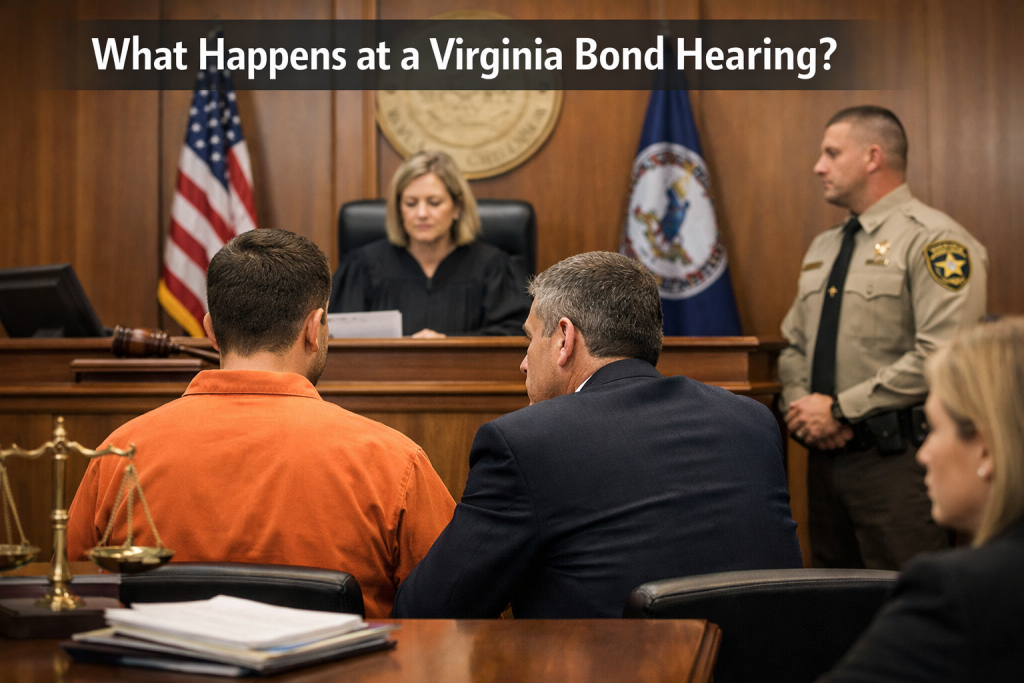
If you or a loved one has been arrested, one of the first urgent questions is whether release from custody is possible before trial. In many cases, that question is addressed at a bond hearing. Understanding how this process works can help you make informed decisions early in a criminal case. In Virginia, bond decisions can affect your job, your family responsibilities, and your ability to help prepare your defense.
This article explains what happens at a Virginia bond hearing, what judges consider, and how an experienced criminal defense lawyer may help argue for release on favorable terms.
Virginia Bond Hearings: Why They Matter Early in a Criminal Case
A bond hearing is a court proceeding where a judge decides whether a person charged with a crime should be released while the case is pending. The judge may release the person on a promise to appear, set conditions of release, require a secured bond, or deny bond in some situations.
For many people, this hearing happens very soon after arrest. That makes it one of the most important stages in the criminal defense process. A strong presentation at this point can make a major difference in the weeks or months ahead.
Being released pending trial often allows a person to return to work, care for children, obtain medical treatment, and meet with counsel more effectively. Remaining in custody, by contrast, can create serious pressure and disruption even before any conviction has occurred.
When a Bond Hearing Happens in Virginia
After an arrest in Virginia, the person may first appear before a magistrate, who can make an initial decision about bail. If release is not granted, or if the terms are too difficult to meet, the issue can often be brought before a judge in the appropriate court.
The timing depends on the charge, the court schedule, and whether the case is in Juvenile and Domestic Relations Court, General District Court, or Circuit Court. In some cases, defense counsel can request a bond hearing promptly and present facts that support release.
Because the timeline can move quickly, it is often important to speak with a lawyer as soon as possible after an arrest. Early preparation may help gather records, contact family members, and present the judge with a clearer picture of the person’s background and community ties.
What the Judge Considers at a Virginia Bond Hearing
Risk of Flight
One of the judge’s main concerns is whether the person is likely to return to court. This is often called risk of flight. The court may look at how long the person has lived in Virginia, whether they have local family, stable housing, and a record of appearing for prior court dates.
For example, a person with long term residence in Northern Virginia, steady employment, and close family nearby may be in a better position to argue that they are not likely to leave the area.
Public Safety Concerns
The judge may also consider whether release would create a danger to the public or to a specific person. This issue may receive added attention in cases involving alleged violence, firearms, repeat offenses, or accusations involving a protected party.
The prosecution may argue that the facts of the alleged offense show a risk of harm. The defense may respond by pointing to the person’s lack of criminal history, the specific circumstances of the accusation, or the availability of conditions that reduce concern.
Nature of the Charge
Some offenses lead courts to examine bond more closely than others. A serious felony charge may result in more scrutiny than a low level misdemeanor. That said, a charge alone does not always determine the outcome. Judges often consider the full situation, not just the label of the offense.
Criminal Record and Past Court History
If the person has prior convictions, prior failures to appear, or a history of violating probation or release conditions, the judge may treat that as a sign of increased risk. On the other hand, a limited or clean record can be helpful in arguing for release.
Ties to the Community
Judges often want to know whether the accused has roots in the area. Useful facts may include employment, school enrollment, military service, ownership or rental of a home, caregiving responsibilities, and support from family members or community leaders.
Common Outcomes of a Bond Hearing in Virginia
Release on Recognizance
This means the person is released based on a promise to return to court and follow any conditions imposed. No upfront payment may be required. This is often called being released on personal recognizance.
Unsecured Bond
With an unsecured bond, the person may be released without paying money immediately, but could owe a stated amount if they fail to appear or violate the terms of release.
Secured Bond
A secured bond requires the posting of money or property as a condition of release. For many families, this can be financially difficult, which is why the amount and type of bond matter so much.
Release with Conditions
The court may impose conditions such as no contact with an alleged victim, travel restrictions, alcohol monitoring, drug testing, reporting requirements, or electronic monitoring. In some cases, these conditions help address the judge’s concerns and make release possible.
Bond Denied
In certain cases, the judge may deny bond. This can happen when the court finds a serious concern about public safety, witness intimidation, or failure to appear. A denial does not always end the issue permanently. In some situations, the defense can seek another hearing later if circumstances change or if stronger evidence in favor of release becomes available.
How a Defense Lawyer Can Help at a Bond Hearing in Virginia
Bond hearings move fast, but careful preparation still matters. A criminal defense attorney may help by gathering documents and presenting facts that humanize the client and reduce the court’s concerns.
This can include proof of employment, letters of support, medical information, school records, evidence of military service, and details about family responsibilities. Counsel can also address weaknesses in the prosecution’s position and argue that less restrictive conditions would be enough.
In a Fairfax, Virginia bond hearing, for instance, a lawyer may present evidence that the accused has lived in the area for years, supports children at home, and can continue treatment or counseling while released. Specific, credible facts often matter more than broad statements.
Practical Steps Families Can Take Before the Hearing
Gather Important Documents
Families can often help by locating pay stubs, employer letters, lease documents, school enrollment records, or medical records that show stability and responsibility.
Identify Potential Custodians or Support Persons
In some cases, it helps to identify a responsible family member who can provide housing, transportation, and accountability during the case.
Be Careful About Public Statements
Loved ones should avoid posting details about the case on social media or contacting alleged witnesses without legal guidance. Well intended actions can sometimes create new problems.
Contact a Lawyer Quickly
Because the first hearing can shape the course of the case, prompt legal advice is often important. Even a short delay can mean less time to prepare a strong presentation for release.
Example Scenario: How Bond Arguments May Be Framed
Imagine a person is arrested in Arlington, Virginia for a nonviolent felony and has no prior record. They have lived in the area for ten years, work full time, and care for an elderly parent. The prosecution may focus on the seriousness of the charge. The defense, however, may argue that the person has every reason to remain in the community, no history of missing court, and strong family support. The court may decide that release with conditions is sufficient.
Now consider a different situation involving prior failures to appear. Even then, the defense may still argue for bond by explaining the past circumstances, proposing stricter reporting rules, and presenting evidence of current stability.
Why Early Bond Decisions Can Affect the Entire Criminal Defense Process
The outcome of a bond hearing can influence how a case unfolds. A person who is released may be better able to meet with counsel, gather evidence, continue treatment, and maintain normal responsibilities. That can improve both legal strategy and personal stability.
For that reason, bond is not just an administrative issue. It is a critical part of the criminal defense process in Virginia. Taking it seriously from the start can matter a great deal.
Speak With a Virginia Criminal Defense Lawyer About a Bond Hearing
If you or a family member is facing a bond hearing in Virginia, getting legal guidance early may help you understand your options and prepare the strongest possible request for release. Every case is different, and the facts presented to the judge can make a meaningful difference.
A Virginia criminal defense attorney can evaluate the charge, explain the bond process, and advocate for fair conditions tailored to the circumstances of the case.