
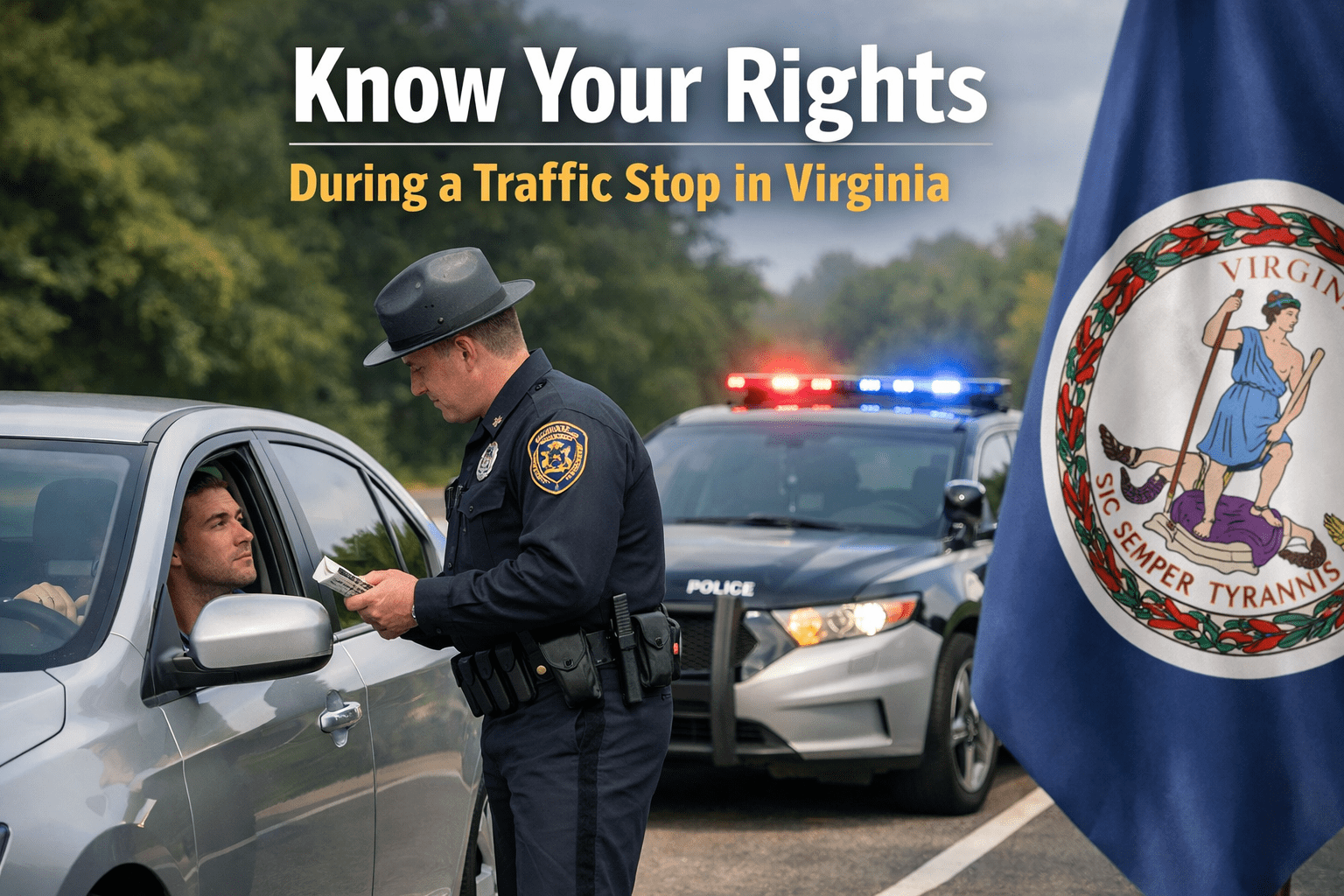
Know Your Rights During a Traffic Stop in Virginia
A traffic stop can be stressful, even for careful drivers. Flashing lights in your mirror often bring a rush of anxiety and uncertainty. Many people are not sure what they must do, what they may refuse to do, and when a routine stop can turn into a criminal investigation. In Virginia, understanding your rights during a traffic stop can help you stay calm, protect yourself, and avoid making mistakes that could affect your case later.
This guide explains what drivers and passengers should know about their rights during a traffic stop in Virginia. It covers basic legal principles, common police requests, search issues, and what steps to take after the encounter if you believe your rights were violated.
Why Knowing Your Rights Matters in Virginia
In Virginia, a traffic stop may begin with a simple alleged violation such as speeding, a broken taillight, or expired registration. But once a vehicle has been stopped, officers may ask questions that go beyond the original reason for the stop. In some cases, they may suspect drunk driving, drug possession, illegal weapons, or other criminal offenses.
Many people unintentionally make the situation worse by arguing on the roadside, volunteering too much information, or agreeing to searches they did not have to allow. Knowing your rights does not mean being difficult or disrespectful. It means understanding how to respond politely while protecting your legal interests.
What You Must Do During a Traffic Stop
Pull Over Safely
If an officer signals you to stop, pull over as soon as it is safe to do so. Use your turn signal and choose a safe location if possible. Remaining calm and visible can help reduce tension during the encounter.
Provide Required Documents
In Virginia, a driver is generally expected to provide a valid driver’s license and vehicle registration when requested by law enforcement. You may also be asked for proof of insurance. Failing to provide these documents can lead to additional legal issues.
Follow Lawful Instructions
An officer may instruct you to keep your hands visible, step out of the vehicle, or remain inside the vehicle. Courts have generally allowed officers significant authority to control the scene of a traffic stop for safety reasons. Even if you believe the stop is unfair, it is usually best to comply with lawful instructions and address any violations later through an attorney and the court system.
What You Have the Right to Remain Silent About
You Do Not Have to Answer Investigative Questions
One of the most important rights in any criminal law context is the right to remain silent. During a Virginia traffic stop, you may be asked questions such as:
Where are you coming from?
Have you had anything to drink?
Is there anything illegal in the car?
Whose bag is that?
Do you know why I pulled you over?
You generally do not have to answer questions designed to gather evidence against you. You can respond politely by saying, I would like to remain silent or I do not wish to answer questions without a lawyer. This approach is often wiser than guessing, making excuses, or offering statements that may later be used against you.
Passengers Also Have Rights
Passengers in Virginia also have the right to remain silent in many situations. A passenger may be asked for identification in certain circumstances, but not every request requires a detailed explanation of travel plans or personal background. The exact legal obligations may depend on the facts of the stop and the officer’s stated reason for requesting information.
Can Police Search Your Car During a Virginia Traffic Stop?
Consent Searches
Police often ask for permission to search a vehicle. A common question is, You do not mind if I take a look inside, do you? Many people feel pressure to agree, especially when they have done nothing wrong. However, if an officer asks for consent, that usually means consent is being requested rather than automatically allowed.
In Virginia, you generally have the right to refuse a consent search. You can do so calmly and clearly by saying, I do not consent to any searches. Refusing consent does not automatically give police the right to search. It also helps preserve legal arguments later if evidence is found.
When Police May Search Without Consent
There are circumstances in which law enforcement may search a vehicle without your permission. For example, if officers have probable cause to believe the car contains evidence of a crime, a weapon, or contraband, they may claim authority to search under an exception to the warrant requirement. Searches may also occur after an arrest or under other limited legal doctrines.
This is why it is so important not to physically resist a search, even if you believe it is unlawful. Instead, clearly state that you do not consent and contact a criminal defense attorney as soon as possible afterward.
Field Sobriety Tests and DUI Investigations
When a Stop Turns Into a DUI Investigation
A routine traffic stop in Virginia can quickly become a DUI investigation if an officer believes there are signs of alcohol or drug use. The officer may say they smell alcohol, notice bloodshot eyes, or claim your speech sounds unusual. At that point, they may ask you to step out of the vehicle and perform field sobriety tests.
Know the Risks of Roadside Statements
Drivers often try to explain away what the officer is seeing by saying they only had one drink, are tired, or are coming from dinner. These statements can become evidence. Even comments that seem harmless may later be presented in court as admissions.
Because every DUI stop is fact specific, anyone facing possible charges in Virginia should speak with a lawyer right away. Early legal advice can be critical in protecting your license, reviewing police procedures, and preparing a defense.
Can You Record a Traffic Stop?
In many situations, recording a traffic stop can be helpful, especially if you are concerned about what happened or want an accurate record of the interaction. If you choose to record, do so in a way that does not interfere with the officer’s duties. Keep your movements limited and let the officer know if necessary. A calm, nonconfrontational approach is usually best.
A recording may later help clarify whether instructions were given, whether consent was requested, or whether the stop expanded beyond its original purpose.
Common Mistakes People Make During Virginia Traffic Stops
Talking Too Much
Many drivers believe they can talk their way out of trouble. In reality, unnecessary statements often give officers more information to investigate.
Consenting to a Search Without Thinking
Agreeing to a search removes an important legal protection. If you do not want your car searched, say so clearly and respectfully.
Arguing on the Roadside
Even if you believe the officer is wrong, the roadside is not the best place to fight the accusation. Court is the proper place to challenge the stop, the search, or the charge.
Resisting Physically
Never physically resist an officer during a stop. Doing so can result in additional charges and make the situation far more serious.
Example Scenario: A Search Request After a Minor Stop
Imagine a driver in Northern Virginia is stopped for allegedly failing to signal before changing lanes. The officer asks for license and registration, then begins asking where the driver has been and whether there is anything illegal in the car. The officer then asks, Can I search your vehicle?
In this situation, the driver may provide the required documents, remain polite, and state, I do not consent to a search. If the officer searches anyway, that does not mean the search was lawful. It means the legality of the search may need to be challenged later by a defense attorney.
What to Do After the Traffic Stop
Write Down What Happened
As soon as it is safe, make notes about the stop. Record the time, location, reason given for the stop, what the officer said, whether a search occurred, and whether any witnesses were present. Small details can become important later.
Save Any Evidence
Keep copies of tickets, warnings, court paperwork, dash camera footage, and any recordings made during the stop. If a passenger witnessed the event, ask them to write down what they observed.
Contact a Virginia Criminal Defense Lawyer
If you were arrested, searched, charged, or believe your rights were violated during a Virginia traffic stop, speak with an attorney promptly. A lawyer can review whether the stop was lawful, whether police exceeded the scope of the stop, and whether any statements or evidence may be challenged.
Protecting Your Rights Starts With the Right Response
Knowing your rights during a traffic stop in Virginia can make a major difference. You should comply with basic legal requirements, remain calm, avoid unnecessary statements, and never consent to a search unless you truly wish to do so. Most importantly, if the stop leads to criminal charges or a questionable search, get legal advice quickly.
For many people, one traffic stop is their first contact with the criminal justice system. Understanding your rights is the first step toward protecting your future.