
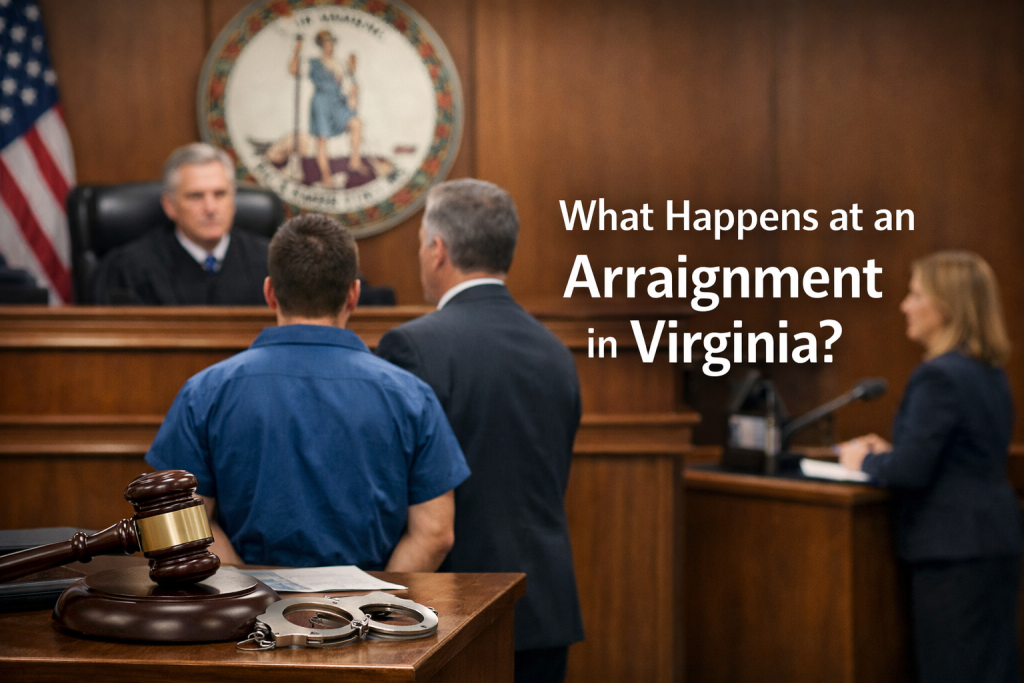
If you or a loved one has been charged with a crime, one of the first court dates you may face is an arraignment. For many people, this is also one of the most confusing parts of the criminal defense process. You may be wondering whether you have to speak, whether you can go to jail that day, and what steps come next.
Understanding what happens at an arraignment in Virginia can help reduce some of the stress and uncertainty. While every case is different, arraignments generally follow a similar structure in Virginia courts. Knowing what to expect can help you make informed decisions and avoid mistakes that could affect your case.
What Is an Arraignment in Virginia?
An arraignment is an early court proceeding where the judge formally advises a defendant of the criminal charge or charges against them and explains certain legal rights. In many Virginia criminal cases, this is not the trial and it is not the hearing where guilt or innocence is decided.
Instead, the arraignment is often a brief appearance focused on procedure. The court may confirm that you know the charge, advise you of your right to a lawyer, and set future dates. In some situations, issues related to release conditions or bond may also be addressed.
In Virginia, arraignments commonly take place in General District Court for misdemeanors and preliminary felony matters, or in Juvenile and Domestic Relations District Court for certain family related criminal charges. Felony cases can later move to Circuit Court.
When Does an Arraignment Happen?
The timing depends on how the charge began. If you were arrested and taken before a magistrate, you may already have received some information about the accusation and release conditions. Your arraignment usually follows soon after, often at the next scheduled court date.
If you were charged by summons instead of being arrested, the arraignment may be your first court appearance. The summons should list the date, time, and courthouse. Missing this court date can lead to serious consequences, including a possible capias or arrest warrant.
Because court procedures can vary by jurisdiction, it is important to review your paperwork carefully and speak with a criminal defense lawyer familiar with the local Virginia court where your case is pending.
What Happens at an Arraignment in Virginia Court?
The Judge Calls the Case
At the beginning of the hearing, the judge will call your name and case. You may be standing with many other defendants waiting for your matter to be addressed. This can feel intimidating, but arraignments are often short and routine from the court’s perspective.
You Are Informed of the Charge
The court will identify the offense you are accused of committing. This may be done by reading the charge aloud or by referring to the criminal complaint, warrant, or indictment. The purpose is to make sure you understand what offense is pending against you.
You Are Advised of Your Right to Counsel
One of the most important parts of an arraignment is the court’s advisement regarding legal representation. The judge may ask whether you plan to hire a lawyer, whether you want to request a court appointed attorney if you qualify, or whether you intend to represent yourself.
Even if the arraignment seems minor, having legal counsel early in the process can matter. A defense attorney can review the charge, assess possible defenses, protect your rights, and guide you on the next steps.
A Plea May or May Not Be Entered
In some Virginia cases, the court may ask for a plea at arraignment. In others, the matter is continued for another date. Whether a plea is required immediately can depend on the court and the type of offense.
It is important not to assume that pleading guilty is the fastest or easiest way to move on. A guilty plea can carry long term consequences, including jail exposure, fines, probation, license suspension, immigration consequences, and a permanent criminal record.
Future Dates May Be Scheduled
The court may set a trial date, a preliminary hearing date, or another status date. If your attorney is present, scheduling may be coordinated at that time. You should make sure you understand any date given by the court before leaving the courtroom.
Bond or Release Issues May Be Discussed
In some cases, especially after an arrest, the court may address whether you remain on bond, whether conditions should be modified, or whether additional restrictions apply. This can be especially important if the charge involves allegations of violence, protective orders, or repeat offenses.
Do You Have to Speak at the Arraignment?
Usually, defendants answer basic questions from the judge, such as confirming their name, whether they understand the charge, and whether they have or want a lawyer. In many cases, you do not need to explain what happened or argue the facts of the case at the arraignment.
In fact, speaking too freely can create problems. Statements made in court may affect your defense later. If you are unsure how to respond, a lawyer can help you avoid saying something that could be misunderstood or used against you.
What Should You Bring to a Virginia Arraignment?
It helps to arrive prepared. You should bring your court paperwork, a photo ID if available, and any documents your attorney has asked you to provide. You should also dress neatly and arrive early. Court staff and judges notice whether a person appears respectful and organized.
If you are asking for a court appointed lawyer, you may need information about your income and financial situation. If bond issues are expected to come up, relevant documents about employment, family responsibilities, or community ties may also be helpful.
Common Mistakes to Avoid
Missing Court
Failing to appear can lead to an additional criminal charge or a warrant for your arrest. Even if you think the matter is minor, you should treat every court date seriously.
Talking About the Facts in Open Court
An arraignment is usually not the right setting to tell your side of the story. Trying to explain everything to the judge without legal advice can backfire.
Assuming the Case Is Minor Because the Hearing Is Short
A brief arraignment does not mean the case itself is unimportant. Misdemeanor and felony charges in Virginia can have lasting personal and professional consequences.
Waiting Too Long to Contact a Lawyer
The earlier a defense attorney gets involved, the more opportunity there may be to investigate the allegation, preserve evidence, identify witnesses, and build a strategy.
Example Scenario: First Court Date After a Virginia DUI Arrest
Imagine a driver in Fairfax, Virginia is arrested for DUI after a traffic stop. After appearing before a magistrate, the driver is released on bond and given a court date. At the arraignment, the judge advises the driver of the DUI charge and the right to counsel. The judge then sets a later trial date. The case is not decided at that first appearance, but what happens next can be critical, including reviewing the stop, the field sobriety testing, and the breath or blood evidence.
This example shows why arraignments matter. Even though the hearing may seem procedural, it marks the start of a timeline that can shape the defense.
Why Local Experience Matters in Virginia Criminal Defense Process Cases
While Virginia law applies statewide, local court practices can differ from one jurisdiction to another. A case in Arlington may move differently from one in Richmond or Fairfax. Judges may handle scheduling, advisements, and routine procedure in slightly different ways.
That is one reason people charged with crimes often benefit from speaking with a lawyer who understands both the law and the local court system. Early guidance can make the criminal defense process more manageable and help you avoid preventable errors.
How a Defense Lawyer Can Help After an Arraignment in Virginia
After the arraignment, your case may move quickly. A criminal defense attorney can help by reviewing the charging documents, obtaining discovery when available, examining whether the police had lawful grounds for the stop or arrest, and preparing for motions, negotiations, or trial.
Depending on the facts, a lawyer may also identify alternatives to conviction, challenge weak evidence, seek a reduction in charges, or present mitigating information to the court. The right strategy depends on the specific allegation, your record, and the available evidence.
Speak With a Virginia Criminal Defense Attorney
If you are facing charges, understanding what happens at an arraignment in Virginia is only the beginning. The decisions made early in a criminal case can affect everything that follows. Getting legal advice as soon as possible can help you protect your rights and approach the process with a clearer plan.
A Virginia criminal defense attorney can explain what to expect at your arraignment, appear with you in court when appropriate, and help you prepare for the next stage of your case.