
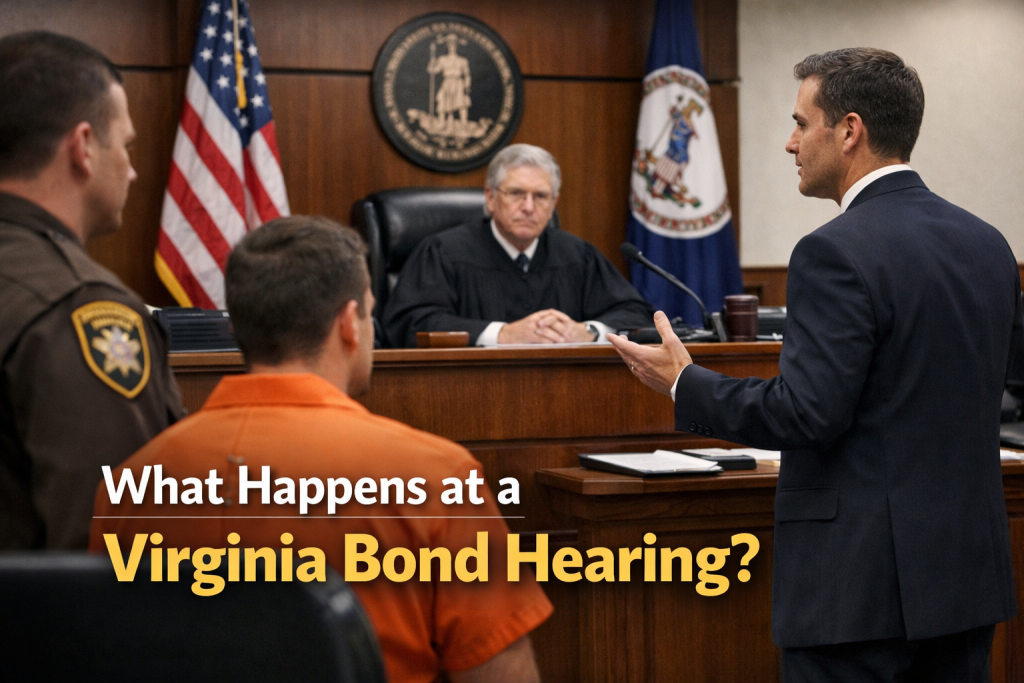
After an arrest, one of the first questions most people ask is simple: Will I be able to go home while my case is pending? In Virginia, that question is often decided at a bond hearing. For many people, this is one of the most important early stages in the criminal defense process because it can affect work, family responsibilities, finances, and the ability to prepare a defense.
If you or a loved one has been arrested, understanding how a bond hearing works can help reduce uncertainty. This article explains what happens at a bond hearing in Virginia, what judges look at, what conditions may be imposed, and how legal representation can make a difference.
Understanding Bond Hearings in Virginia
A bond hearing is a court proceeding where a judge decides whether a person charged with a crime can be released from custody before trial. The judge also decides what conditions will apply to that release. In Virginia, bond may also be called bail, although people often use the terms interchangeably.
The purpose of bond is not to punish someone before a conviction. Instead, the court is trying to decide whether the person will return to court as required and whether release would pose a risk to the public. This is a critical distinction. A bond hearing is about future risk, not guilt or innocence.
In many cases, a person is initially seen by a magistrate shortly after arrest. The magistrate may set a bond, deny bond, or place conditions on release. If bond is denied or set at an amount that is not realistic, the defense may request a bond hearing before a judge.
When a Bond Hearing Matters Most in Virginia
Bond hearings are especially important when a person is charged with a serious misdemeanor or felony, when there is an allegation of violence, when the accused has a prior criminal record, or when prosecutors argue that the person is a flight risk. In some cases, even a first-time offender may face bond concerns if the facts are unusual or if the court believes supervision is necessary.
For example, someone arrested in Northern Virginia for a drug offense may have strong ties to the area, steady employment, and no record. Even so, the prosecutor may ask for strict conditions based on the nature of the charge. At the same time, a person charged with a nonviolent offense could still face detention if they have missed court in the past. This is why bond decisions are highly fact specific.
What Judges Consider at a Virginia Bond Hearing
At a Virginia bond hearing, the judge reviews a variety of factors before deciding whether release is appropriate. No single factor controls every case, but several issues come up repeatedly.
Nature and Circumstances of the Charge
The judge will look at the alleged offense, including whether violence is involved, whether a weapon was used, and whether anyone was injured. More serious charges often receive closer scrutiny, though a serious charge does not automatically mean bond will be denied.
Criminal History
A prior record can influence the court, especially if it includes similar offenses, probation violations, or prior failures to appear. However, context matters. A defense lawyer may be able to explain older convictions, show rehabilitation, or distinguish the current case from prior allegations.
Community Ties
Strong ties to Virginia can help support release. Judges often consider whether the accused lives locally, has family in the area, maintains employment, attends school, or has long-term residence in the community. These facts can suggest that the person is likely to return to court.
History of Appearing in Court
If someone has missed court before, the judge may be reluctant to grant an unsecured bond or low bond. On the other hand, a clean record of appearing as required can be a strong point in favor of release.
Public Safety Concerns
The court will consider whether release may create a danger to an alleged victim, a witness, or the broader public. In some situations, a judge may address these concerns by setting conditions such as no-contact orders, GPS monitoring, or substance testing instead of denying release outright.
Possible Outcomes of a Bond Hearing in Virginia
There are several possible outcomes at a bond hearing. The judge may release the accused on personal recognizance, meaning no upfront payment is required and the person promises to return to court. The judge may also set a secured bond, which requires money or collateral. In other cases, the court may impose an unsecured bond, where money is owed only if the person fails to appear.
Judges can also attach conditions to release. These may include:
Regular check-ins with pretrial services
Drug or alcohol testing
Mental health treatment requirements
No contact with an alleged victim or witness
Travel restrictions
Surrender of firearms
Electronic monitoring
If the judge finds that no set of conditions can reasonably assure court appearance and public safety, bond may be denied.
How the Defense Can Present a Strong Bond Argument
A bond hearing may move quickly, but preparation still matters. A criminal defense attorney can gather information that helps the court see the person behind the charge rather than just the accusation. This may include proof of employment, letters of support, evidence of medical needs, enrollment in school, or details about childcare responsibilities.
In Virginia courts, a lawyer may also address weaknesses in the prosecution’s argument without turning the bond hearing into a full trial. For example, if the facts are less severe than suggested in the charging papers, that context may be relevant. If the accused has stable housing and a reliable family member willing to assist with transportation and compliance, that can also help.
Consider a common scenario. A person is arrested after an argument that led to a domestic assault allegation. The accused has no prior record, works full time in Fairfax County, and supports two children. At the bond hearing, the defense may propose release with a no-contact order and alternative housing. That gives the judge a concrete option to address safety concerns while allowing the person to remain employed and involved in the defense.
Why Early Legal Representation Is Important in Virginia
What happens in the first few days after an arrest can shape the direction of the case. If someone remains in custody, it may be harder to meet with counsel, collect records, and maintain normal life obligations. Early release can improve communication with counsel and make it easier to prepare for court.
This is one reason many people seek legal help immediately after an arrest in Virginia. A defense lawyer can request a bond hearing, prepare arguments tailored to the court’s concerns, and advocate for practical release conditions. In some cases, counsel can also identify procedural issues or present information that was not available when the magistrate first reviewed the case.
Common Questions About Bond Hearings in Virginia
Is bond guaranteed after an arrest?
No. While many people are released, bond is not automatic. The court decides whether release is appropriate based on the facts of the case and the individual’s background.
Can bond be changed later?
Yes. If bond was denied or set too high, the defense may seek another hearing in some circumstances. New information, changed circumstances, or a more developed release plan may support a different result.
Does paying bond end the case?
No. Bond only addresses release while the criminal case is pending. The person must still appear in court and respond to the charges.
What if I cannot afford the bond amount?
Depending on the situation, your lawyer may ask the court to reconsider the amount or request a different type of release. The court may also look at whether nonfinancial conditions would be sufficient.
Bond Hearings in Virginia Can Affect the Whole Case
A bond hearing is often the first real opportunity to present the court with a fuller picture of the accused’s life, responsibilities, and ties to the community. In Virginia, the outcome can have immediate consequences for employment, family stability, and the ability to work with a defense attorney.
If you or a loved one is facing criminal charges in Virginia, it is important to act quickly and understand your options. A strong presentation at the bond stage can sometimes make a meaningful difference in how the criminal defense process unfolds.
Because every case is different, legal advice should be based on the specific facts, the court involved, and the charges at issue. Speaking with a criminal defense lawyer as early as possible can help you better understand the bond process and the best next steps for your situation.