
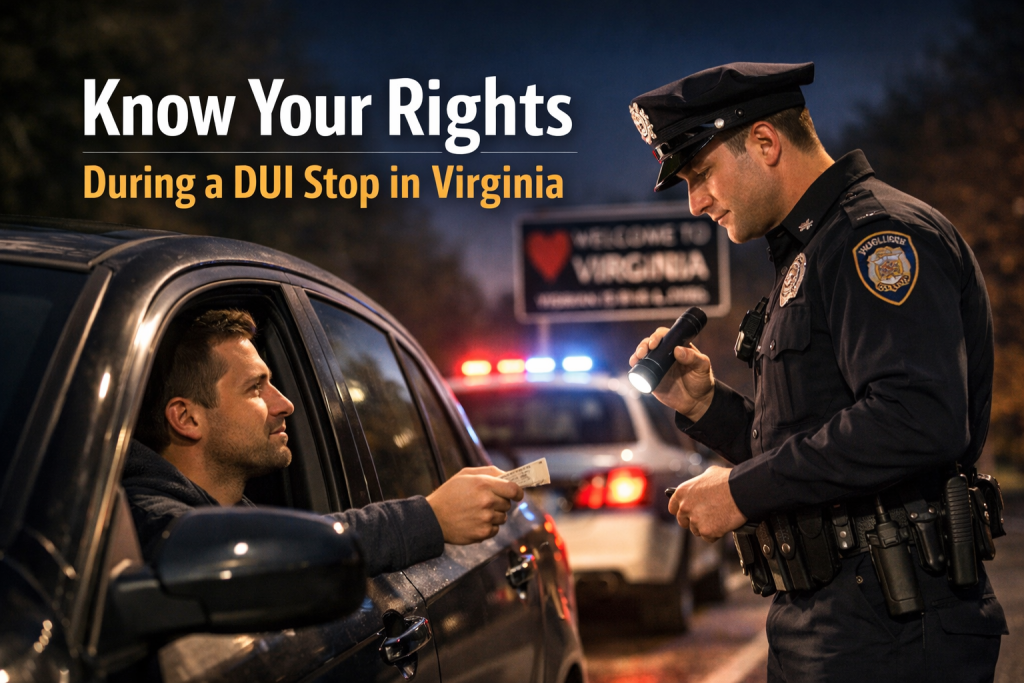
Know Your Rights During a DUI Stop in Virginia
Being stopped by police on suspicion of driving under the influence can be stressful and confusing. Many people are unsure what they must do, what they can refuse, and what rights they still have during the encounter. If you are pulled over for a suspected DUI in Virginia, understanding your rights can help you avoid making the situation worse and protect your legal position.
This article explains what happens during a Virginia DUI stop, what law enforcement may ask of you, and what steps you can take to protect yourself. While every case is different, knowing the basics can make a major difference.
Why Knowing Your Rights Matters in Virginia DUI Cases
A DUI stop often moves quickly. An officer may observe your driving, ask questions, request field sobriety tests, and eventually arrest you if they believe there is probable cause. What you say and do during those moments may later be used in court. That is why it is important to know your rights during a DUI stop in Virginia before you ever find yourself in that situation.
Virginia takes DUI allegations seriously. A conviction can lead to fines, license suspension, mandatory alcohol education, installation of an ignition interlock device, and even jail time in some cases. Even a first offense can have lasting consequences for your job, insurance rates, and reputation.
What To Do When You Are Pulled Over
Pull Over Safely and Stay Calm
If an officer signals for you to stop, pull over safely as soon as possible. Turn off the vehicle, keep your hands visible, and avoid sudden movements. Staying calm and respectful is important. Arguing with the officer or making sudden gestures can create unnecessary tension.
Provide Required Identification
In Virginia, you are generally required to provide your driver’s license and vehicle registration when lawfully stopped. You should comply with these basic requests. Refusing to identify yourself during a lawful traffic stop can create additional problems.
Be Careful About What You Say
One of the most important rights you have is the right to remain silent. That does not mean you should be rude or refuse every question, but you are not required to answer potentially incriminating questions such as whether you have been drinking, how much alcohol you consumed, or where you are coming from.
A polite response such as, I would prefer not to answer questions, may help you avoid giving statements that could later be used against you. Many people believe they can talk their way out of a DUI stop, but in reality, casual statements often become evidence.
Your Rights During Police Questioning
You Have the Right To Remain Silent
The right to remain silent applies during a DUI investigation just as it does in other criminal matters. If an officer asks questions designed to gather evidence of impairment, you are not required to give detailed answers. You should still remain polite and nonconfrontational.
For example, if an officer asks whether you had a couple of drinks with dinner, admitting alcohol consumption may provide a basis for further investigation. Even if you believe you are under the legal limit, your statement could still be used to support the officer’s decision to arrest you.
You Can Ask if You Are Free To Leave
During a traffic stop, you may ask whether you are free to leave. If the officer says no, you should not try to drive away. If the officer says yes, you may leave calmly. This question can help clarify whether the stop has become a more serious investigation.
Field Sobriety Tests in Virginia
Are You Required To Take Field Sobriety Tests?
In many Virginia DUI stops, officers ask drivers to perform field sobriety tests such as walking in a straight line, standing on one leg, or following an object with their eyes. These roadside tests are often presented as routine, but they are usually voluntary.
Many drivers do not realize that field sobriety tests are not always reliable. Medical conditions, anxiety, fatigue, uneven pavement, poor lighting, age, and even ordinary nervousness can affect performance. A person may appear unsteady for many reasons unrelated to alcohol or drug impairment.
Because these tests are often used to build a case against the driver, some people choose to decline them. If you do so, it is usually best to remain polite. For example, you might say that you respectfully decline roadside tests.
Preliminary Breath Tests at the Roadside
An officer may also ask you to take a preliminary breath test on the roadside. In many situations, this roadside screening differs from the post arrest chemical test. The roadside result may help the officer decide whether to arrest you, but the legal consequences for refusing it can differ from refusing an official evidentiary test after arrest.
The details matter, and the law can be complex. If you are unsure what happened during your stop in Virginia, an experienced criminal defense attorney can review whether your rights were respected.
What Happens After an Arrest for DUI in Virginia
Implied Consent Law
Virginia has an implied consent law. In general, if you are lawfully arrested for DUI, you may be required to submit to a chemical test, such as a breath or blood test. Refusing the post arrest test can lead to separate penalties, including license consequences, even if you are not ultimately convicted of DUI.
This is an area where many people become confused. A driver may have more flexibility during the roadside investigation than after a lawful arrest. Understanding that distinction is important.
You Have the Right To a Lawyer
If you are arrested, you have the right to seek legal representation. While officers may continue certain procedures without waiting for your attorney to arrive, you should clearly state that you want a lawyer and that you do not wish to answer further questions without legal counsel.
Early legal advice can be critical. A lawyer may identify problems with the traffic stop, arrest procedure, chemical testing, or the officer’s observations. In some cases, those issues can significantly affect the outcome.
Common Mistakes To Avoid During a Virginia DUI Stop
Talking Too Much
Many drivers feel pressure to explain themselves. They may admit to drinking, estimate how much they consumed, or guess when they last had alcohol. These statements are often harmful, even when made casually.
Being Disrespectful or Resistant
Protecting your rights does not mean resisting the officer. Stay calm, avoid physical resistance, and do not argue on the roadside. Legal challenges should be handled later through your attorney and the court process.
Assuming You Have No Defense
Some people assume that a DUI arrest automatically means a conviction. That is not true. There may be valid defenses involving the legality of the stop, the reliability of field sobriety tests, the maintenance of breath testing equipment, or whether the officer had probable cause.
Practical Example of a DUI Stop in Virginia
Imagine a driver leaving a restaurant in Northern Virginia after having one drink with dinner. An officer stops the vehicle for briefly touching a lane marker. The officer asks whether the driver has been drinking, and the driver says, Just one glass of wine. The officer then requests roadside tests. The driver is nervous, tired, and wearing dress shoes that make balancing difficult. After performing poorly on the tests, the driver is arrested.
In this scenario, several issues may matter. Was the initial stop lawful? Were the roadside tests fairly administered? Did the officer rely too heavily on a vague admission and ordinary nervousness? A defense attorney may examine each step closely. This example shows why knowing your rights during a DUI stop in Virginia is so important.
How a Defense Attorney Can Help in Virginia
A criminal defense lawyer can do more than appear with you in court. An attorney may obtain police reports, body camera footage, testing records, and witness statements. They can evaluate whether your rights were violated and whether the evidence is reliable. In some cases, a lawyer may be able to challenge the stop, negotiate for reduced charges, or seek dismissal based on weaknesses in the prosecution’s case.
If your case involves a DUI stop in Virginia, fast action can help preserve important evidence and give you a clearer understanding of your options.
Protect Your Rights After a DUI Stop in Virginia
If you were stopped or arrested for suspected DUI in Virginia, do not assume the situation is hopeless. You still have rights, and the way the stop was handled can have a major impact on your case. Remain polite, avoid self incriminating statements, understand the difference between roadside testing and post arrest testing, and contact an attorney as soon as possible.
Knowing your rights during a DUI stop in Virginia can help you make informed decisions and protect your future. If you have questions about a recent arrest, speaking with a knowledgeable criminal defense attorney is often the best next step.