
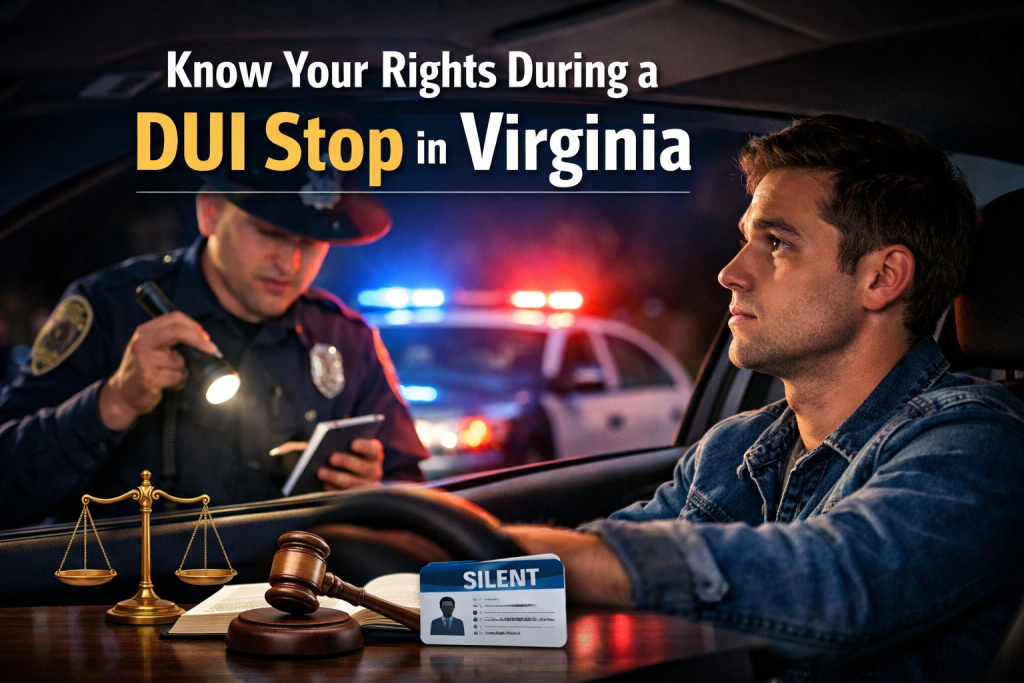
Being stopped by police on suspicion of driving under the influence can be stressful and confusing. Many people are unsure what they must do, what they can refuse, and how a single decision during the stop may affect a later criminal case. If you are facing a DUI investigation, understanding your rights can help you avoid mistakes and protect your future. This guide explains what drivers should know about their rights during a DUI stop in Virginia, including what officers may ask, what tests may be requested, and when it is time to contact a defense lawyer.
Know Your Rights During a DUI Stop in Virginia
A DUI stop often begins with an officer claiming to observe swerving, speeding, a broken taillight, or some other traffic issue. In Virginia, police generally need a lawful reason to stop a vehicle. That reason may be a traffic violation or reasonable suspicion that the driver is impaired. However, a lawful stop does not mean you give up all of your rights.
During the encounter, you still have constitutional protections. You have the right to remain silent when answering potentially incriminating questions. You also have the right to be free from unreasonable searches and seizures. At the same time, there are situations where refusing a request can carry legal consequences, especially when it comes to chemical testing after an arrest.
The key is to stay calm, be polite, and avoid making statements that may later be used against you.
What to Expect When Police Stop You
Initial questions from the officer
After approaching your vehicle, the officer may ask for your license, registration, and proof of insurance. In most cases, you should provide these documents if requested. The officer may also ask questions such as where you are coming from, whether you have been drinking, or how much alcohol you consumed.
You are not required to answer questions that may incriminate you. Many drivers mistakenly believe that being cooperative means explaining everything. In reality, statements like I only had two drinks or I am just tired can become evidence in court. A respectful response such as, Officer, I would like to remain silent, may help protect your rights.
Observations the officer may make
Police are trained to look for signs they associate with impairment. These may include the smell of alcohol, red or watery eyes, slurred speech, fumbling with documents, or confusion. Innocent explanations may exist for many of these observations, but they are often included in police reports to justify further investigation.
For example, a person with allergies may have watery eyes, and a nervous driver may struggle to find registration paperwork. Even so, these details can influence whether the officer asks the driver to step out of the vehicle.
Field Sobriety Tests in Virginia
Are field sobriety tests mandatory?
Field sobriety tests are the roadside exercises officers use to assess balance, coordination, and attention. Common examples include standing on one leg, walking heel to toe, and following an object with your eyes. In Virginia, these roadside tests are generally voluntary.
This surprises many drivers. Officers may present the tests as routine or imply that refusing makes you look guilty. Still, unlike certain post-arrest chemical tests, field sobriety tests typically are not required by law. Politely declining may limit the amount of evidence the officer gathers.
Why these tests can be unreliable
Field sobriety tests are not foolproof. Medical conditions, anxiety, fatigue, age, uneven pavement, poor weather, and footwear can all affect performance. A sober person may appear unsteady or confused under pressure, especially late at night on the side of the road.
Because of this, these tests often become a point of challenge in DUI cases. Video footage, body camera recordings, and the officer’s instructions may all matter when evaluating whether the tests were administered fairly.
Preliminary Breath Tests and Chemical Testing
Roadside breath test versus post-arrest test
In Virginia, an officer may ask you to take a preliminary breath test at the roadside. This is different from the formal chemical test that may be required after a lawful DUI arrest. The roadside test is generally used to help the officer decide whether there is probable cause to arrest you.
The legal consequences can differ depending on the stage of the investigation. The roadside test is treated differently from the breath or blood test requested after arrest under Virginia’s implied consent law.
Understanding implied consent in Virginia
Virginia has an implied consent law. This means that by driving on Virginia roads, drivers are considered to have consented to a breath or blood test if they are lawfully arrested for DUI under qualifying circumstances. Refusing a post-arrest chemical test can lead to separate penalties, including license consequences, even before the DUI charge itself is resolved.
This area of law can be complicated. A driver may have the right to refuse certain roadside requests, but refusing a post-arrest chemical test may trigger additional problems. That is one reason why anyone arrested for DUI in Virginia should speak with a criminal defense lawyer as soon as possible.
Your Right to Remain Silent
When silence can protect you
Many DUI cases are built not only on test results but also on the driver’s own words. Saying you drank earlier, admitting you are tired, or explaining that you were texting can all strengthen the prosecution’s case. You have the right to remain silent, and using that right is not an admission of guilt.
A practical approach is to provide basic identifying information and required documents, then decline to answer investigative questions. Staying calm matters. Arguing, becoming hostile, or refusing basic lawful instructions can make the situation worse.
Requesting a lawyer
If you are arrested, clearly state that you want to speak with a lawyer. Once you request counsel, avoid discussing the incident with police or anyone else in custody. Phone calls from jail may be recorded, and statements to friends or family can sometimes find their way into a case.
Can Police Search Your Car?
Drivers often wonder whether officers can search a vehicle during a DUI stop. The answer depends on the circumstances. Police may search if you consent, if they have probable cause, or under certain exceptions recognized by law. If an officer asks for permission to search your car, you generally have the right to refuse consent.
Refusing consent does not mean the search will never happen, but it may preserve important legal issues for your defense. For example, if police search a vehicle without a valid legal basis, evidence found during that search may later be challenged in court.
Common Mistakes to Avoid During a Virginia DUI Stop
Talking too much
Trying to talk your way out of a DUI stop often backfires. Casual comments may be treated as admissions.
Consenting without thinking
Drivers sometimes agree to vehicle searches or roadside tests without realizing they may have a choice. Understanding the difference between a request and a legal requirement is important.
Becoming confrontational
Even if you believe the stop is unfair, the roadside is not the place to argue your case. Stay respectful and address legal issues later through counsel.
What Happens After a DUI Arrest in Virginia?
After an arrest, you may face criminal charges, court dates, license consequences, and possible administrative issues. The prosecution may rely on the officer’s observations, video footage, chemical test results, and your statements. A defense attorney can review whether the stop was lawful, whether the arrest was supported by probable cause, whether testing procedures were followed, and whether your rights were violated.
For example, if the officer lacked a valid reason to stop your vehicle, or if field tests were administered improperly, those facts may affect the strength of the case. Every detail matters in criminal defense.
Why Legal Advice Matters in Virginia DUI Cases
DUI law in Virginia can move quickly, and early action is important. A lawyer may help protect your license, preserve evidence, and identify defenses before key deadlines pass. Even a first offense can carry serious consequences, including fines, license suspension, mandatory programs, and a lasting criminal record.
If you were stopped or arrested in Northern Virginia or elsewhere in the Commonwealth, do not assume the case against you is automatic. Knowing your rights is the first step, but using them effectively often requires experienced legal guidance.
Final Thoughts on Knowing Your Rights in Virginia
A DUI stop can feel intimidating, but drivers still have important legal protections. In Virginia, you may have the right to remain silent, the right to refuse certain roadside requests, and the right to challenge unlawful police conduct. At the same time, implied consent rules can create serious consequences after an arrest, making it important to understand the difference between voluntary roadside testing and mandatory post-arrest procedures.
If you are facing a DUI investigation or charge in Virginia, speaking with a criminal defense attorney can help you understand your options and protect your rights at every stage of the case.