
If you have been arrested, charged, or contacted by investigators, an initial meeting with a criminal defense lawyer can help you understand your options. You do not need to have every answer or document ready. Bring what you have, explain the situation honestly, and ask how the lawyer would approach the next steps.
A criminal defense consultation in Washington, DC is also your chance to decide whether you feel comfortable discussing a sensitive matter with that lawyer. A little preparation can make the conversation more focused, but do not delay getting legal advice just because you are missing paperwork.
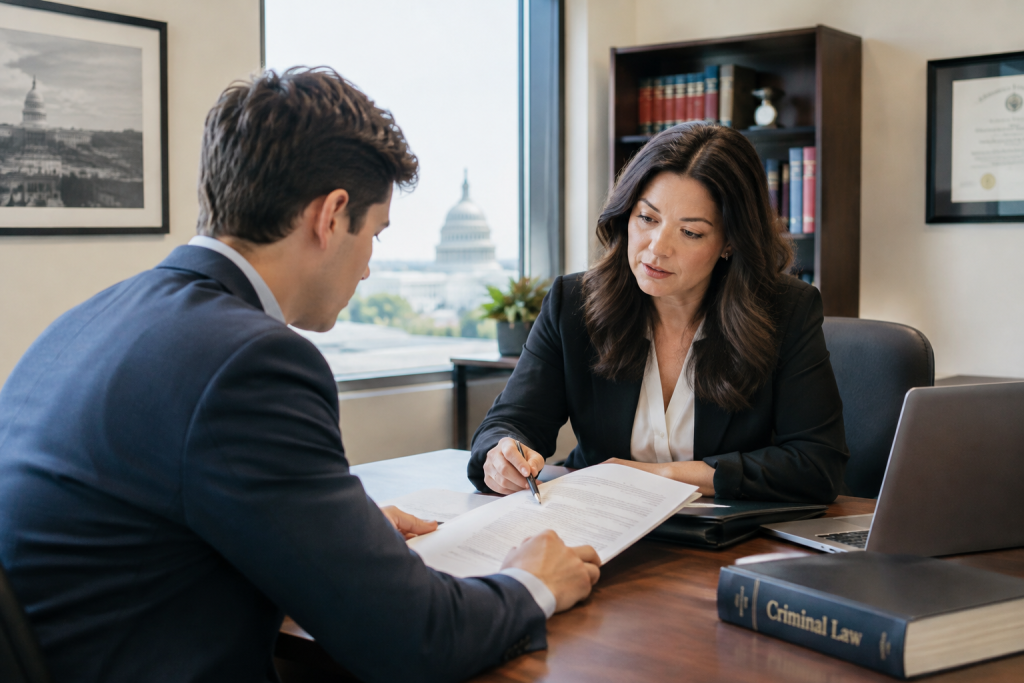
What should you bring to a criminal defense consultation in DC?
Bring documents that may help the lawyer understand what has happened and what deadlines or court events are coming up. If you only have digital copies or photographs, those can still be useful. You can ask the office how it prefers to receive sensitive records.
Depending on your situation, useful items may include:
- Charging papers, a citation, a summons, or paperwork from a court or police agency.
- Any notice showing a hearing date, court location, or reporting requirement.
- Bail or release paperwork, including any conditions you were told to follow.
- Documents related to the incident, such as receipts, messages, photographs, or relevant records.
- A short list of witnesses and their contact information, if you have it.
- Notes about conversations with police, investigators, or other people involved.
Do not try to obtain evidence by contacting a witness, returning to a scene, or accessing someone else’s accounts. Ask the lawyer how to preserve potentially useful information. Keep original records when possible, and do not edit, delete, or post about material related to the case.
What if you do not have court papers yet?
You can still meet with a lawyer. Write down the names of agencies or officers involved, the date and location of important events, and any case or incident number you were given. Tell the lawyer if you were arrested, released, questioned, or asked to come in for an interview.
If you have an upcoming court date or release condition, make that clear at the start of the meeting. A lawyer may need to address an urgent event before discussing the broader case.
What information should you share with the lawyer?
Give a clear and honest account, including facts you think may be unfavorable. A lawyer needs the full picture to identify potential legal issues and advise you about risks. Leaving out an important detail can make advice less useful.
You do not need to tell the story in perfect order. Start with what happened, then explain what occurred before and afterward. Be clear about what you personally saw or heard and what you learned from someone else. If you are uncertain about a detail, say so rather than guessing.
Share relevant context, such as prior contact with police, earlier court cases, immigration concerns, professional or school obligations, and any medical or communication needs. These details do not determine the outcome, but they may affect the advice or practical planning.
Can you speak openly during the consultation?
Ask the lawyer to explain how confidentiality applies to your meeting, especially if another person is with you or helped arrange it. Do not assume that everything shared with anyone who claims to be a lawyer is automatically protected. The details can depend on the circumstances and the relationship formed.
For a productive conversation, avoid discussing the facts of the case in public, on social media, or in messages with people who do not need to know. Do not ask someone else to delete evidence or coordinate an account of events. If you have already shared information, tell the lawyer what was shared and with whom.
What questions should you ask at the first meeting?
You are not expected to know legal terminology. Ask for plain-language explanations and take notes if that helps. Consider asking:
- What should I do, and avoid doing, before the next court date or interview?
- What information or documents would help you assess my situation?
- What are the possible next steps in a case like mine, and what remains uncertain?
- Are there deadlines, release conditions, or other requirements I need to address?
- Who would handle my case and communicate with me?
- How does the fee arrangement work, and what services does it include?
A responsible lawyer should distinguish between what is known and what cannot yet be predicted. Be cautious of anyone who guarantees a dismissal, acquittal, or particular sentence before reviewing the facts and available evidence.
What happens during an initial meeting in Washington, DC?
The lawyer will usually ask about the allegation, your contact with law enforcement, any court paperwork, and what you hope to understand. The lawyer may explain possible procedures and discuss what additional information is needed. The meeting may not produce a final assessment, especially if key records or facts are unavailable.
For example, a person who received a summons may need to focus first on the listed court appearance and the documents connected to it. Someone contacted by investigators but not charged may need to ask how to respond to further requests and whether to speak with investigators. The right advice depends on the specific facts, so a general example is not a substitute for legal guidance.
The lawyer may also explain whether they can represent you and what the next steps would be if you choose to hire them. You can ask for time to review a fee agreement. Do not assume that a consultation means the lawyer has formally agreed to represent you; clarify the arrangement directly.
What should you do before and after the consultation?
Before the meeting, make a brief timeline and write down your most important questions. Bring a way to take notes. If the office asks you to send documents in advance, use the method it provides and avoid sending sensitive material through an insecure channel without checking first.
Afterward, follow any immediate instructions you understood, and ask for clarification if something is unclear. Keep court paperwork and notices together. If the lawyer is not representing you, make sure you still understand any dates or requirements shown on official documents, and promptly seek other legal help if needed.
When should you seek legal advice promptly?
Consider contacting a qualified criminal defense lawyer soon if you have been charged, arrested, served with a summons, asked to attend an interview, or given release conditions. Prompt advice can help you understand what a request or document means before you respond. If a date is close, say so when you contact a lawyer.
Preparing does not mean you must solve the case before the meeting. Bring available records, explain the facts candidly, and ask direct questions about next steps. A focused criminal defense consultation in Washington, DC can help you understand what you know, what remains uncertain, and what decisions may require legal advice.