A felony conviction does not always prevent someone from voting in Maryland. In general, a person who is no longer serving a sentence of imprisonment for a felony may register and vote, even if they are still on parole or probation. The key question is whether the person is currently incarcerated and serving that sentence, not simply whether a felony appears on their record.
Because individual circumstances and election deadlines matter, check your eligibility and registration status before an election. If you are unsure how a sentence or an unusual conviction affects you, ask an election official or a qualified attorney.
When does a felony conviction affect voting rights in Maryland?
Maryland generally bars a person from voting while they are serving a sentence of imprisonment for a felony conviction. Once released from incarceration, the person may generally register and vote, including while serving a period of parole or probation. Completing parole or probation is not generally required before voting rights return.
This means a felony conviction does not create a permanent voting ban for most people in Maryland. The rule focuses on a person’s current status. Someone who has finished the custodial part of a sentence may be eligible even though supervision continues.
What if I am on probation or parole?
Being on probation or parole alone does not generally prevent a person with a felony conviction from voting in Maryland. If you have been released from incarceration and are living in the community under supervision, you can generally register, as long as you meet the other voting requirements.
For example, someone released from prison who still has several months of probation may generally register and vote. They should still check that their registration is active and that they meet the ordinary requirements for Maryland voters.
What if I am awaiting trial or have not been convicted?
An arrest or pending criminal case is not the same as a felony conviction. A person who is eligible to vote does not generally lose voting rights simply because they have been arrested or charged. If the person is in jail while awaiting trial, they may still be eligible, but practical steps may be needed to register or cast a ballot from detention.
Detention does not automatically answer every eligibility question. If you are incarcerated and have a pending case, ask the facility or your attorney about voting options and confirm your status with the local election office.
How can voting rights be restored after a Maryland felony?
For most people, restoration follows release from incarceration. Maryland generally does not require a separate application for a pardon just to regain voting eligibility after serving the incarceration portion of a felony sentence. Parole and probation do not, by themselves, require a person to wait until supervision ends.
That does not mean an old registration automatically becomes active again. You may need to register, update your information, or confirm that your record is current. Treat eligibility and registration as separate questions: being legally eligible to vote does not necessarily mean you are already registered.
Some convictions or circumstances may involve additional rules. For example, Maryland law separately addresses certain election-related crimes, including offenses involving buying or selling votes. If your conviction involved election conduct, or you are unsure how a specific sentence applies, get guidance from the Maryland State Board of Elections or a lawyer rather than relying on a general explanation.
How do I check my Maryland voter registration before an election?
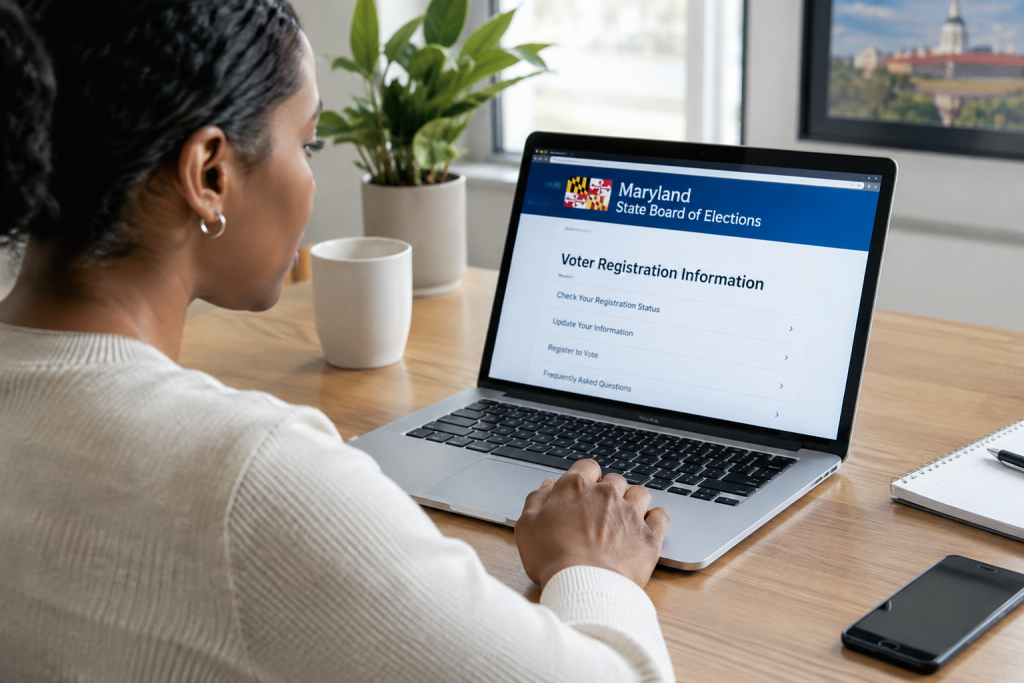
Use the Maryland State Board of Elections’ official voter lookup or contact your local board of elections. Check that your name, address, and registration status are correct. If you recently moved, changed your name, or have not voted for a long time, confirming your record early can help prevent problems when you try to vote.
If you are not registered, the state election website explains the available registration methods and current deadlines. Registration deadlines and voting procedures can vary by election, so do not wait until Election Day to investigate a question about your status.
When contacting election officials, you can ask directly: “I have a felony conviction and have been released from incarceration. Am I eligible, and is my registration active?” You do not need to assume that parole or probation makes you ineligible. If you are concerned about sharing personal details, ask what information the office needs to check your record.
What should I do if my registration is marked inactive or missing?
Contact your local election office as soon as possible. Ask whether you need to update your registration, provide documentation, or follow another process. Keep any confirmation you receive and note the date of your conversation.
If you believe you are eligible but are turned away or told you cannot vote, calmly ask for the specific reason and what options are available. Election procedures may permit a provisional ballot in some situations, but whether that option applies depends on the circumstances. Follow the instructions of election officials and seek prompt help if the issue is not resolved.
Common misunderstandings about felony convictions and voting
- “A felony conviction permanently removes my right to vote.” Generally, that is not the rule in Maryland. Many people regain eligibility after release from incarceration.
- “I have to finish probation or parole first.” In general, continuing supervision does not by itself prevent voting after release from incarceration.
- “If I am eligible, I must still be registered.” Eligibility and registration are different. Check both before an election.
- “An arrest means I cannot vote.” An arrest alone is not a felony conviction. A pending case does not automatically remove voting eligibility.
These are general explanations, not a decision about any individual’s legal status. The details of a sentence, custody status, and type of conviction can matter. Official election guidance is the best place to confirm registration rules, while an attorney can help assess how a particular criminal case affects your rights.
What if I am still incarcerated?
If you are currently incarcerated and serving a sentence of imprisonment for a felony conviction, you are generally not eligible to vote during that period. If your situation is different, such as detention before trial or a sentence that does not involve incarceration, ask an election official to review the facts. Do not assume that every person held in a correctional facility has the same eligibility status.
People who are eligible but cannot go to a polling place may have other ways to participate, depending on their location and circumstances. Ask the facility’s election contact or local election board about registration, ballot access, and any deadlines that apply.
Practical next steps
If you have a Maryland felony conviction and want to vote, first identify whether you are currently serving a sentence of imprisonment. If you have been released, do not assume that ongoing parole or probation disqualifies you. Then check your registration with the Maryland State Board of Elections or your local election office, and address any missing or outdated information well before the election.
If the conviction involved election-related conduct, your sentence is unclear, or an official questions your eligibility, seek specific guidance. A short conversation with an election official or qualified attorney can help clarify the rules that apply to your circumstances.