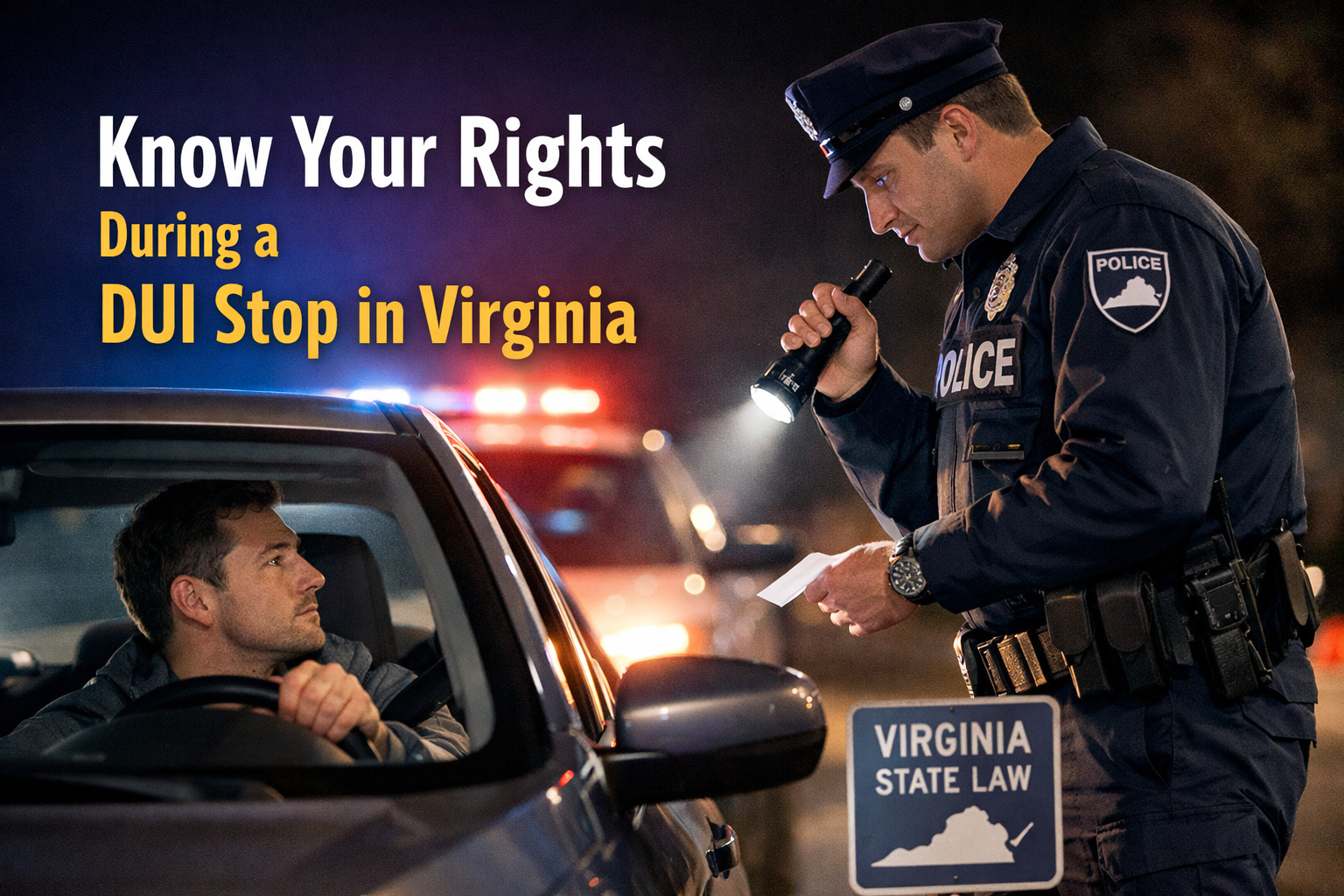
Know Your Rights During a DUI Stop in Virginia
Being stopped by police on suspicion of driving under the influence can be stressful and confusing. In the moment, many people are not sure what they must do, what they can refuse, and what could make the situation worse. If you are facing a DUI investigation in Virginia, understanding your rights can help you protect yourself while still complying with the law.
This guide explains what generally happens during a Virginia DUI stop, what rights you have, and why speaking with a criminal defense lawyer as soon as possible can make a major difference in your case.
Why DUI Stops Happen in Virginia
In Virginia, an officer must usually have a reason to stop a vehicle. That reason may be a traffic violation, such as speeding, drifting between lanes, running a red light, or having a broken taillight. In some cases, law enforcement may also operate a lawful checkpoint.
After the stop, the officer may begin looking for signs of impairment. These often include the smell of alcohol, slurred speech, red or watery eyes, delayed responses, or an open container in the vehicle. What begins as a routine traffic stop can quickly turn into a criminal investigation.
Your Rights During a Virginia DUI Stop
You have the right to remain silent
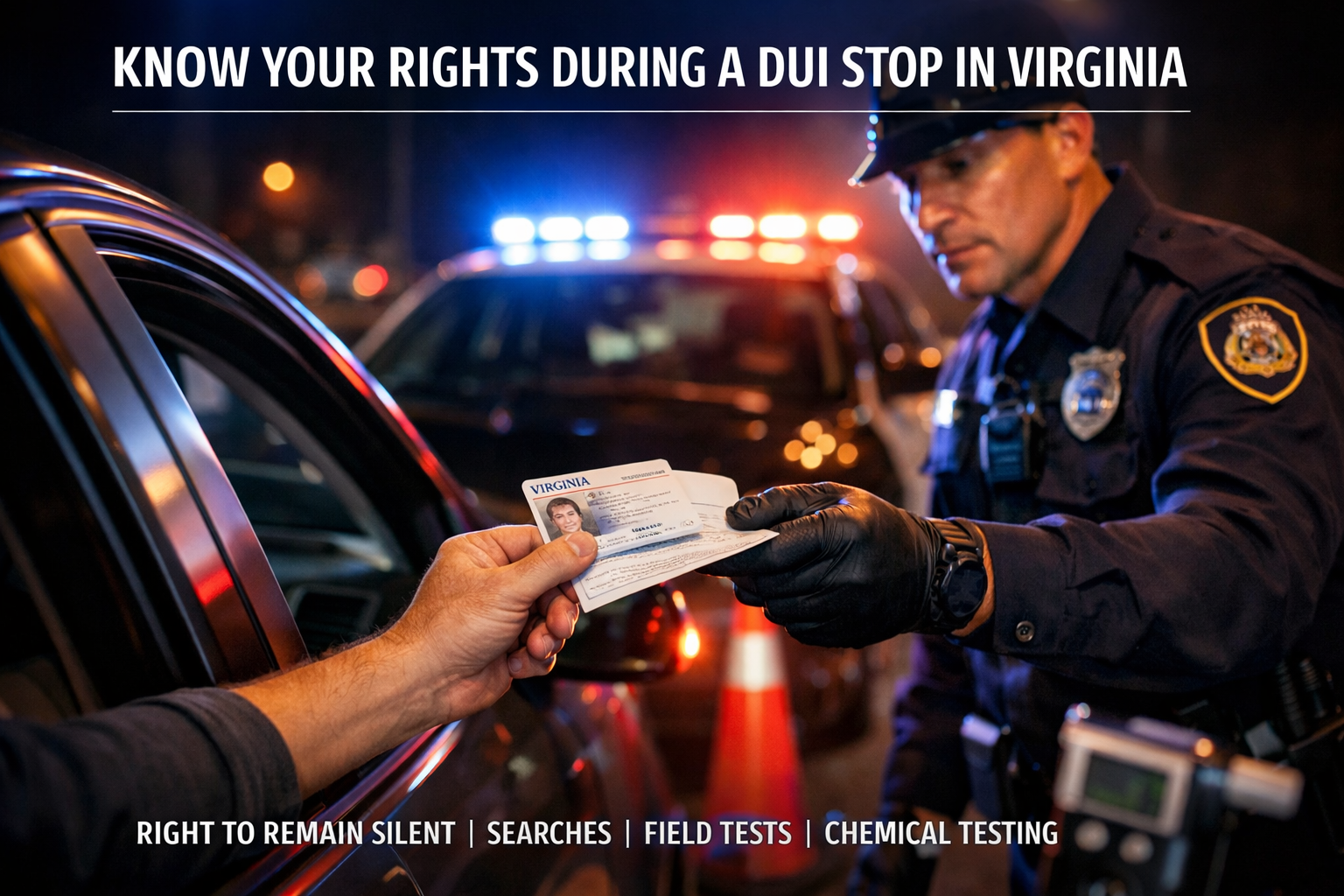
You must provide basic identifying information such as your license and registration when requested. However, you generally do not have to answer potentially incriminating questions such as how much you had to drink, where you were coming from, or whether you feel intoxicated.
A polite response like, I would like to remain silent and speak with an attorney, may be appropriate. Staying calm and respectful is important. Arguing with the officer or making sudden movements can create additional problems.
You have the right to refuse consent to a vehicle search
In many situations, you may refuse consent to a search of your car. If an officer asks, you can clearly and calmly say, I do not consent to any searches. That does not mean the officer will never search the vehicle. There are exceptions that may allow a search under certain circumstances. Still, refusing consent can help preserve legal issues for your defense.
You have the right to know why you were stopped
Although the officer may not explain every detail immediately, you can ask why you were pulled over. Knowing the basis for the stop may become important later if your attorney challenges whether the officer had legal grounds to stop your vehicle in the first place.
You have the right to speak with a lawyer
If you are arrested, you should ask to speak with an attorney as soon as possible. A lawyer can review the stop, the arrest, the testing procedures, and whether law enforcement followed proper legal steps. In DUI cases, small details often matter.
Field Sobriety Tests: Are You Required to Take Them?
During a Virginia DUI stop, an officer may ask you to perform field sobriety tests. These may include standing on one leg, walking in a straight line, or following an object with your eyes. These tests are often presented as routine, but many people do not realize they can be difficult even for sober individuals.
Medical conditions, anxiety, poor lighting, uneven pavement, fatigue, age, and weather can all affect performance. Field sobriety tests are also subjective. The officer is evaluating your balance, coordination, and ability to follow instructions, but that evaluation may not always be fair or accurate.
Whether a person is legally required to perform these tests can depend on the exact circumstances. In many cases, these roadside tests are not mandatory in the same way as certain post-arrest chemical testing rules. Because the consequences and legal standards can be complicated, it is wise to discuss your situation with a Virginia DUI defense attorney immediately.
Breath Tests and Virginia Implied Consent Law
One of the most important issues in a Virginia DUI case is chemical testing. Virginia has an implied consent law. This generally means that by driving on Virginia roads, drivers are considered to have agreed to certain breath or blood tests after a lawful arrest for DUI.
This area creates a lot of confusion. A roadside preliminary breath test and an official post-arrest chemical test are not always the same thing. What happens before an arrest may be treated differently from what happens after an arrest at the police station or medical facility.
Refusing an official test after a lawful DUI arrest can lead to separate legal consequences, including a license suspension. Prosecutors may also try to use a refusal against you. At the same time, there may be defenses related to whether the arrest was lawful, whether proper procedures were followed, or whether the officer gave accurate notice of the consequences.
Because implied consent issues can be complex, never assume that refusal automatically means there is no defense. A lawyer can evaluate whether the stop, arrest, and testing process complied with Virginia law.
What You Should Do During the Stop
Stay calm and keep your hands visible
Turn off the car if instructed, keep your hands where the officer can see them, and avoid sudden movements. This helps reduce tension and prevents misunderstandings.
Provide required documents
Give the officer your driver’s license, registration, and proof of insurance when requested. Failing to provide basic information can lead to additional complications.
Be polite but careful with your words
You do not need to argue or try to talk your way out of the stop. Casual statements such as I only had two drinks can later be used as evidence. Many people think they are helping themselves by explaining, but they may actually be strengthening the prosecution’s case.
Do not resist
If you are arrested, do not resist physically or verbally escalate the situation. You can challenge the arrest later through your attorney.
Common Examples of Rights Issues in DUI Cases
Example 1: The questionable traffic stop
A driver in Northern Virginia is stopped late at night after briefly touching a lane marker. If dash camera footage shows the driving was otherwise normal, the defense may argue the officer lacked sufficient reason for the stop.
Example 2: The medical explanation
A person with a knee injury struggles with balance tests on the roadside in Arlington or Fairfax. The officer may treat this as a sign of intoxication, but medical records could help explain the poor performance.
Example 3: The improper chemical test process
A driver arrested in Virginia Beach claims the officer did not properly explain the consequences of refusing an official test. That issue may become important in both the DUI charge and any related license suspension matter.
Why Early Legal Help Matters in Virginia DUI Cases
DUI cases often move quickly, and important evidence can be lost if no one acts promptly. A defense lawyer may seek police reports, body camera footage, dash camera video, dispatch records, breath machine maintenance records, and witness statements. These materials can reveal inconsistencies or procedural mistakes that are not obvious at first glance.
Early legal representation also helps you understand what to expect in court, what penalties may apply, and what strategies may be available. Depending on the facts, a defense may focus on the reason for the stop, the officer’s observations, the field sobriety tests, the breath or blood test, or constitutional concerns.
Know Your Rights and Protect Your Future
A DUI stop in Virginia can feel overwhelming, but you still have important rights. You have the right to remain silent, the right to decline consent to certain searches, and the right to legal counsel. You also have the right to challenge whether law enforcement followed proper procedures from the moment the stop began.
If you were stopped, arrested, or charged with DUI in Virginia, do not assume the case is straightforward. The facts, timing, and police conduct all matter. Speaking with an experienced criminal defense attorney can help you understand your options and take steps to protect your license, your record, and your future.
If you need guidance after a DUI stop in Virginia, our firm can evaluate the circumstances of your case and explain your rights in clear, practical terms.