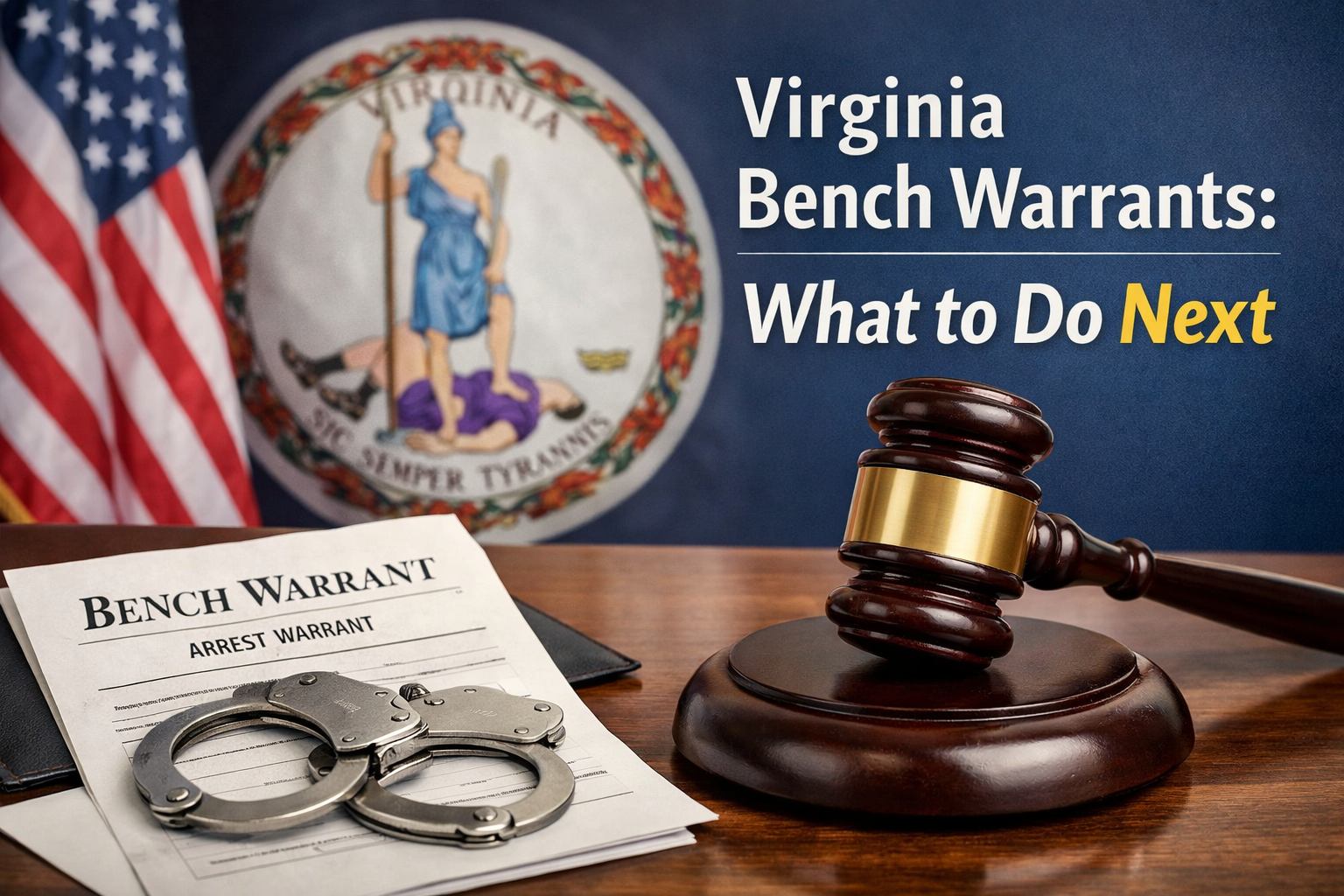
Understanding Bench Warrants in Virginia
A bench warrant can be confusing and frightening, especially if you did not realize one had been issued in your case. In Virginia, a bench warrant is typically issued by a judge when someone fails to appear in court, does not comply with a court order, or violates a condition set by the court. While many people assume a bench warrant only applies to serious criminal cases, that is not always true. It can arise from a missed hearing in a misdemeanor case, a probation issue, or even a failure to complete a required court obligation.
For potential clients searching online, one of the most important things to know is that a bench warrant in Virginia does not usually go away on its own. Waiting can lead to arrest, additional charges, higher bond amounts, and more stress. Taking prompt action with the help of a criminal defense lawyer can often improve the situation and may help you address the warrant in a controlled way.
What Is a Bench Warrant?
A bench warrant is an order from the court authorizing law enforcement to take a person into custody and bring that person before a judge. It is different from an arrest warrant that may be issued after police investigate an alleged crime. A bench warrant often comes directly from something that happened, or did not happen, in court.
Common reasons a Virginia judge may issue a bench warrant include missing a court date, failing to pay court-ordered fines, violating probation, or failing to complete community service or other required conditions. In some cases, a person may not have received proper notice of the hearing, moved to a new address, or misunderstood the date. Even so, the warrant can still be active until the court addresses it.
Common Reasons for a Bench Warrant in Virginia
Failure to Appear in Court
The most common reason for a bench warrant is failure to appear. For example, someone charged with reckless driving in Northern Virginia may believe a traffic case is minor and miss court because of work or family obligations. If the person does not appear, the judge may issue a bench warrant immediately. Missing court can also result in a separate criminal charge in some situations.
Probation Violations
If a person is on probation and does not report as required, fails a drug test, misses classes, or does not complete court-ordered programs, the court may issue a bench warrant. Probation violations are taken seriously in Virginia because judges expect strict compliance with sentencing terms.
Failure to Follow a Court Order
A bench warrant may also be issued when someone does not follow a direct order from the court. This might involve unpaid fines and costs, uncompleted community service, or failure to attend a required program such as anger management or substance abuse treatment.
What Happens If You Have an Active Bench Warrant?
If you have an active bench warrant in Virginia, you can be arrested during a traffic stop, at home, at work, or while appearing in court for another matter. In some situations, law enforcement may actively look for you. In others, the warrant remains in the system until contact with police occurs.
After arrest, you may be held until you can appear before a judge. Depending on the circumstances, the judge may set bond, deny bond, or require additional conditions before release. A missed court date that may have seemed minor can quickly become a larger legal problem.
An active warrant can also create practical issues in daily life. It may affect employment, professional licensing, travel plans, and peace of mind. Many people live with ongoing anxiety once they learn a warrant has been issued. Addressing it quickly is usually the best course.
How to Find Out Whether a Bench Warrant Exists in Virginia
Check With the Court or an Attorney
If you suspect you missed a hearing or did not complete a court requirement, it is wise to act immediately. In many cases, a criminal defense attorney can help determine whether a bench warrant has been issued and what court is handling the matter. An attorney may also be able to contact the clerk’s office, review the case history, and explain the likely next steps.
Some people try to call the court on their own. While this can sometimes confirm scheduling information, it may not provide a complete picture of the legal risk. Speaking with a lawyer first can help you avoid mistakes and prepare a strategy before taking action.
Do Not Ignore Warning Signs
If you received notice of a missed court date, learned that your probation officer filed a violation report, or discovered that your license was affected after a court issue, do not assume the matter will resolve itself. These can all be signs that a bench warrant or related court action is already in motion.
What to Do If You Have a Bench Warrant in Virginia
Contact a Criminal Defense Lawyer Promptly
One of the best first steps is to speak with an experienced Virginia criminal defense attorney. A lawyer can evaluate why the warrant was issued, whether there are additional charges, and whether there may be a way to arrange a voluntary court appearance or surrender. Judges often view proactive efforts more favorably than avoiding the issue.
Gather Helpful Documents
If possible, collect paperwork related to your case, including summonses, bond paperwork, probation documents, payment receipts, program completion certificates, and any notices you received. If you missed court because of a medical emergency, car accident, hospitalization, or another serious event, documents supporting that explanation may be important.
Consider a Voluntary Appearance
In some cases, an attorney can help arrange for you to appear before the court voluntarily instead of waiting to be arrested unexpectedly. This may allow your lawyer to present mitigating information, explain the reason for the missed appearance, and request that the judge recall the warrant or set reasonable bond conditions.
For example, if a Maryland resident had a pending Virginia court date but never received mailed notice after moving, that information may help explain the absence. It does not guarantee the warrant will disappear, but it can give the court important context.
Possible Defenses and Mitigating Factors
Every case is different, but there are situations where a lawyer can present defenses or mitigating facts. A person may have had inadequate notice of the hearing, a genuine emergency, or proof that a required obligation was actually completed. In other cases, the focus may be on reducing the consequences rather than contesting that the failure occurred.
Judges may consider whether the person has a history of appearing in court, whether the underlying charge is minor or serious, whether the person made efforts to fix the issue quickly, and whether there is a reasonable explanation for what happened. These details can matter when the court decides bond, future court dates, and possible penalties.
Can a Bench Warrant Lead to Additional Criminal Charges?
Yes, sometimes it can. Depending on the underlying case and the facts, a failure to appear may result in a separate charge in addition to the original matter. That means a person could be dealing with both the underlying offense and a new allegation connected to missing court. This is one reason it is so important to take a Virginia bench warrant seriously and get legal advice as soon as possible.
For instance, someone charged with a DUI in Virginia who misses a required court appearance may face a more difficult legal situation than before. The missed appearance can affect the judge’s view of reliability and may complicate bond or plea negotiations.
How Legal Representation Can Help in Virginia
Strategic Guidance at Every Step
An attorney can do more than explain the warrant. Legal counsel can communicate with the court, prepare you for what to expect, identify favorable facts, and advocate for the least disruptive resolution possible. In some situations, a lawyer may be able to limit unnecessary time in custody or help present a strong argument for release.
Protection Against Costly Mistakes
People often make their situation worse by ignoring the warrant, speaking carelessly about the case, or assuming they can handle the matter informally. A criminal defense lawyer can help you understand your rights and reduce the chance of avoidable errors.
Take Bench Warrants Seriously in Virginia
If you believe there may be a bench warrant for your arrest in Virginia, the safest approach is to address it quickly and with reliable legal guidance. Whether the issue began with a missed court date, a probation concern, or failure to complete a court order, early action can make a meaningful difference.
A bench warrant does not necessarily mean the worst-case outcome will happen, but ignoring it can increase the risk of arrest and more severe consequences. By learning your options and working with a defense attorney, you can take practical steps toward resolving the matter and moving forward.