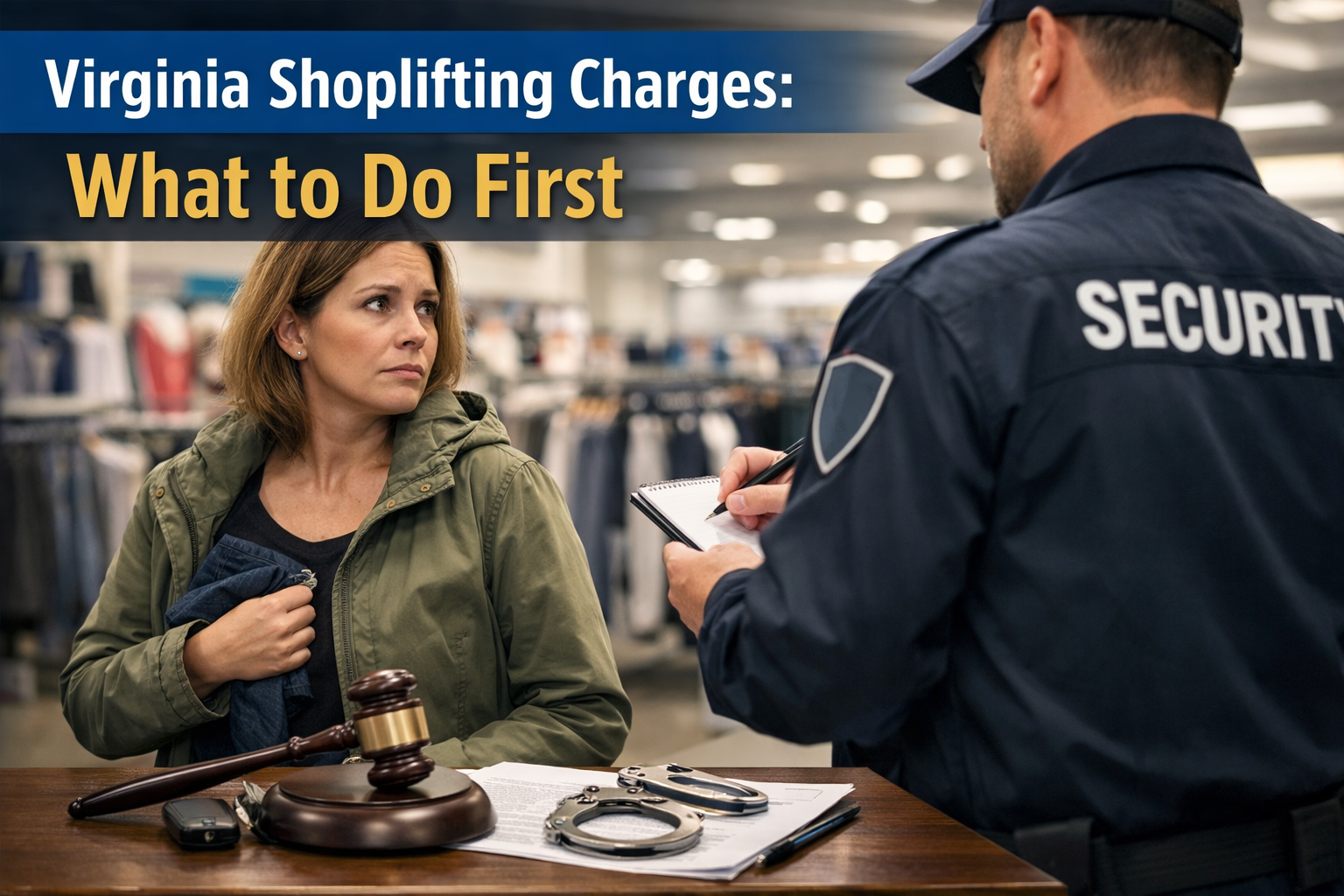
Virginia Shoplifting Charges: A Practical Guide
Being accused of shoplifting can be overwhelming, especially if you have never been involved in the criminal justice system before. In Virginia, a shoplifting allegation can lead to criminal charges, court appearances, fines, a permanent record, and even jail time in some cases. Many people are surprised to learn that a seemingly minor incident at a retail store can quickly become a serious legal matter.
If you or a loved one is facing a shoplifting charge in Virginia, it is important to understand what the accusation means, what penalties may apply, and what steps can help protect your future. This overview explains the basics in plain language and highlights why early legal guidance can make a significant difference.
How Shoplifting Is Charged in Virginia
In Virginia, shoplifting cases are often prosecuted under the state larceny laws. A person may be accused of shoplifting for actions such as concealing merchandise, altering price tags, switching packaging, or leaving a store without paying for an item. Store security, surveillance footage, and witness statements are commonly used as evidence.
Virginia law does not treat every retail theft allegation the same way. The value of the property involved often plays a major role in determining whether the case is charged as a misdemeanor or a felony. That distinction matters because the consequences of a conviction can be dramatically different.
Misdemeanor Shoplifting Charges
If the value of the allegedly stolen merchandise is below the felony threshold, the case may be charged as petit larceny, which is generally a misdemeanor offense. Even though a misdemeanor may sound less severe, it can still carry serious consequences, including possible jail time, fines, court costs, and a criminal record that may affect employment and housing opportunities.
Felony Shoplifting Charges
If the value of the merchandise is high enough, or if there are related facts that increase the seriousness of the accusation, the case may be charged as grand larceny, which is a felony. A felony conviction can have long term effects on civil rights, background checks, professional licensing, and future opportunities. In many situations, the difference between a misdemeanor and felony charge may depend on how the value of the goods is calculated and what evidence the prosecution can actually prove.
Common Situations That Lead to Arrests in Virginia Stores
Shoplifting accusations do not always arise from obvious theft. In many Virginia cases, people are charged after misunderstandings, rushed decisions, or disputed observations by store personnel. Some common scenarios include:
- Placing an item in a purse, backpack, or stroller while continuing to shop
- Using the wrong barcode at a self checkout station
- Forgetting to pay for an item left underneath a shopping cart
- A teenager following friends into questionable behavior
- Switching packaging or moving items between boxes
- Leaving a store during a stressful or distracted moment
For example, a person may be stopped after walking past the registers with unpaid merchandise while talking on the phone or managing children. In another case, a customer may scan some items but miss one during self checkout. While prosecutors may still pursue charges, the surrounding facts can be very important in building a defense.
What the Prosecution Usually Must Prove
To convict someone of a shoplifting related offense in Virginia, the government generally must prove more than the simple fact that merchandise was not paid for. In many cases, intent is a key issue. Prosecutors often try to show that the person intentionally took or concealed property with the purpose of permanently depriving the store of it.
This is important because not every mistake is a crime. Accidental conduct, confusion, lack of intent, mistaken identity, and unreliable store observations may all become relevant in a criminal defense case. Video footage may not show the full context. Store employees may make assumptions. Witnesses may remember events differently. A careful review of the evidence can uncover weaknesses that are not obvious at first.
Evidence Often Used in Shoplifting Cases
Evidence in these cases may include surveillance video, receipts, store security reports, price tags, employee testimony, police body camera footage, and statements made by the accused. In some situations, what a person says at the store or to law enforcement can have a major impact on the case. That is one reason it is often wise to speak with a defense attorney as soon as possible.
Penalties and Collateral Consequences
A shoplifting conviction in Virginia can lead to more than a fine. Depending on the charge and the person’s record, the court may impose jail time, suspended sentences, probation, community service, restitution, and theft education programs. But the courtroom penalties are only part of the picture.
A conviction can also create lasting problems in everyday life. Employers often ask about theft related offenses. Colleges, graduate programs, and licensing boards may conduct background checks. Immigration consequences may also apply for some noncitizens. Even when the item involved had relatively low value, the impact of a conviction can be much greater than people expect.
Why First Time Offenders Still Need a Strong Defense
Many first time offenders assume the court will automatically be lenient. While some judges may consider a clean record favorably, there is no guarantee of a dismissal or minimal punishment. The outcome depends on the facts, the jurisdiction, the evidence, and the quality of the legal strategy. Early action can help identify opportunities to pursue reduced charges, diversion type outcomes when available, or other favorable resolutions.
What To Do After a Shoplifting Arrest in Virginia
If you are charged with shoplifting in Virginia, the steps you take early on can matter. A few practical guidelines include:
- Do not discuss the incident with store employees, police, or others without legal advice.
- Keep any paperwork you received, including summonses, receipts, and notices from the store.
- Write down your memory of what happened while the details are still fresh.
- Avoid posting about the incident on social media.
- Speak with a criminal defense attorney promptly.
People sometimes believe they can explain everything and clear up the misunderstanding on their own. Unfortunately, statements made in the heat of the moment can later be used in court. It is usually better to get guidance before trying to resolve the issue yourself.
Possible Defense Strategies in Virginia Shoplifting Cases
Every case is different, but several defenses may be relevant depending on the facts. A defense attorney may examine whether there was actual intent to steal, whether the merchandise value was properly calculated, whether store personnel lawfully handled the stop, and whether the evidence is reliable.
Lack of Intent
If the incident resulted from distraction, confusion, or mistake, lack of criminal intent may be a key issue. This can be especially important in self checkout cases or situations involving multiple items during a busy shopping trip.
Disputed Value of Merchandise
The alleged value of the property can affect whether the charge is a misdemeanor or felony. If the prosecution cannot prove the value it claims, that may significantly change the case.
Insufficient or Unclear Evidence
Some cases rely heavily on limited surveillance footage or assumptions by loss prevention staff. If the evidence does not clearly show what happened, that may create reasonable doubt.
When To Contact a Virginia Criminal Defense Lawyer
The best time to speak with a lawyer is as soon as possible after learning about the charge. Early representation can help preserve evidence, protect your rights, and position the case for the strongest possible outcome. This is true whether you were arrested at a major retail chain, received a summons in Northern Virginia, or learned that charges may be filed after an incident at a local store.
A lawyer can also help you understand what to expect at arraignment, whether you may qualify for any alternative resolutions, and how to address concerns about employment, school, or professional licensing. For many clients, peace of mind starts with simply understanding the process and having a plan.
Final Thoughts on Shoplifting Charges in Virginia
Shoplifting charges in Virginia should never be taken lightly. Even a first offense involving low value merchandise can carry significant legal and personal consequences. At the same time, an accusation is not the same as a conviction. The facts matter, the evidence matters, and the strategy matters.
If you are facing a shoplifting allegation in Virginia, getting informed and seeking legal counsel quickly can put you in a better position to protect your record and your future. A careful review of the facts may reveal defenses, negotiating opportunities, or weaknesses in the prosecution’s case that are not apparent at first glance.