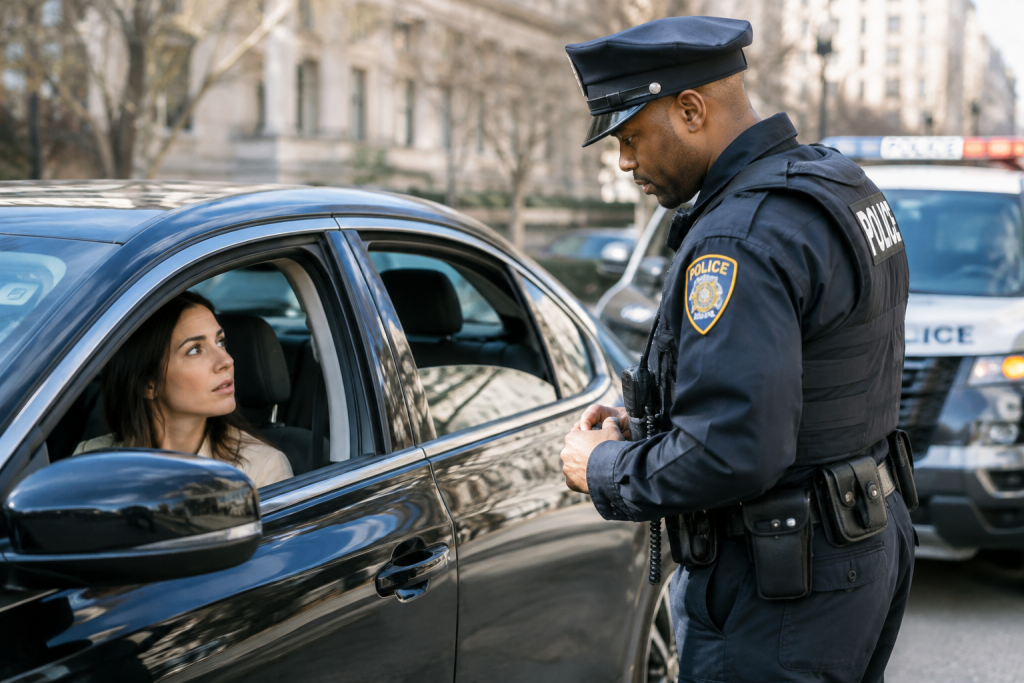
If DC police ask to search your car, you can calmly say that you do not consent. Officers may still search without a warrant in certain situations, such as when they have probable cause or another recognized legal basis. Whether a search was lawful depends on the facts, including what officers knew and what they did.
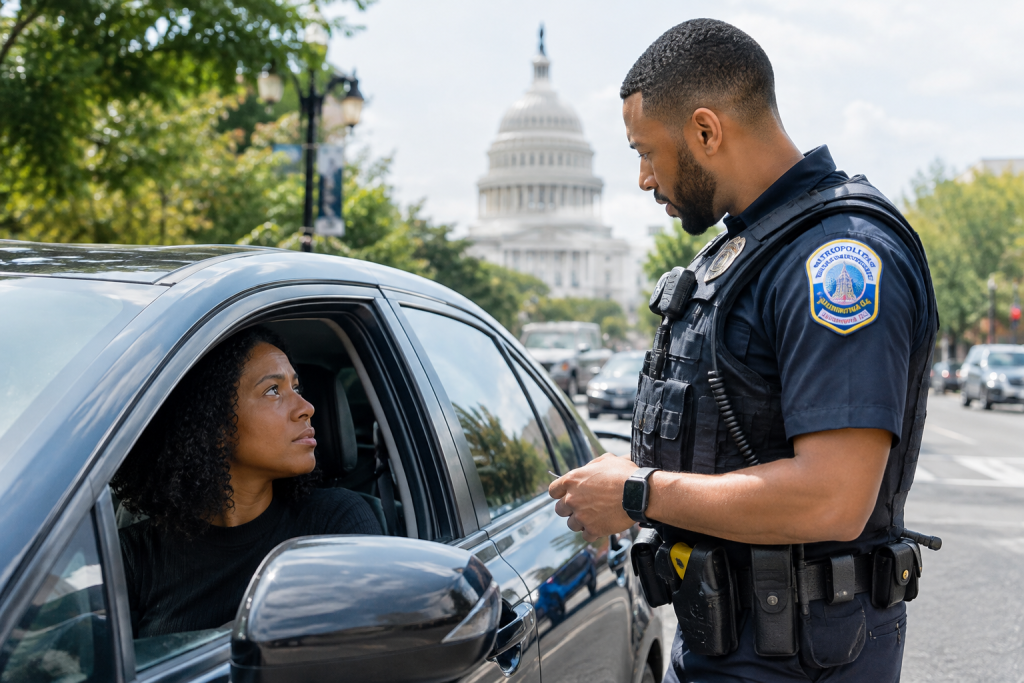
When can police search a car without a warrant in DC?
The Fourth Amendment generally protects people from unreasonable searches. But courts recognize exceptions to the warrant requirement, and some apply to vehicles. A search without a warrant is not automatically illegal. The key question is whether officers had a valid legal reason and kept the search within its limits.
In Washington, DC, police may rely on several possible grounds. Common examples include consent, probable cause, a limited search connected to an arrest, or an inventory search after a lawful impound. Each ground has different requirements. A driver’s circumstances can change which rules apply.
Consent to search
An officer may ask for permission to search. If you voluntarily agree, police can generally search within the scope of that permission. For example, agreeing to let an officer look in the passenger compartment may not necessarily authorize opening every locked container. The exact words and circumstances matter.
You can refuse consent. State your decision clearly and respectfully, such as, “I do not consent to a search.” Do not physically interfere if officers search anyway. Your refusal does not, by itself, give police probable cause, though officers may continue if they believe another legal exception applies.
Probable cause and the vehicle exception
Police may be able to search a vehicle without first getting a warrant if they have probable cause to believe it contains evidence of a crime or contraband. Probable cause means specific facts create a reasonable basis to believe evidence will be found. A hunch alone is not enough.
When this exception applies, the permissible search area generally depends on what officers have probable cause to look for. If they reasonably believe a vehicle contains a particular item, the search may extend to places or containers where that item could fit. It does not provide unlimited authority to search unrelated areas.
For example, an officer who has probable cause to look for a small item may have a different permissible search scope than an officer looking for a large object. The circumstances and the suspected evidence matter.
Searches connected to an arrest
An arrest does not automatically allow police to search the entire car. Under the rules for searches incident to arrest, officers may search the passenger area in certain circumstances, including when the arrested person could reach the car at the time of the search. A search may also be permitted if officers reasonably believe the vehicle contains evidence related to the offense of arrest.
These limits are fact-specific. For instance, whether the person was secured and whether the suspected offense might have evidence in the vehicle can matter. An arrest alone is not a blank check to search the trunk, every container, or the whole vehicle.
Protective searches for weapons
If officers reasonably suspect that someone is dangerous and may gain access to a weapon, they may be allowed to conduct a limited protective search of areas where a weapon could be reached. This is not the same as a general evidence search. The justification and scope must relate to officer safety.
Plain view and inventory searches
If an officer is lawfully in a position to see an item and its connection to criminal activity is immediately apparent, the officer may be able to seize it without a warrant. Seeing something from outside a car does not always authorize a broader search of the vehicle. The officer still needs a legal basis for any additional searching.
Police may also conduct an inventory of a vehicle after a lawful impound. An inventory is meant to document property and protect against loss claims or safety risks, not to investigate a crime. Officers generally must follow established procedures. Whether an impound and inventory were proper depends on the circumstances and applicable rules.
What should you say or do during a vehicle search?
Keep your movements calm and follow lawful directions. Do not reach toward a pocket, glove compartment, or other area without first making your movements clear. If you are unsure whether you must comply with a request, ask calmly whether you are being detained or are free to leave.
If an officer asks to search, you can say, “I do not consent to a search.” You do not need to argue about the law at the roadside. If officers search despite your refusal, do not block them, grab anything, or try to leave unless you are told you may go. Physical resistance can create safety risks and may lead to separate legal trouble.
Do not lie, threaten officers, or try to hide or destroy anything. You can ask why the search is happening, but an explanation at the scene may be brief. If you are arrested or questioned about a suspected crime, you can clearly state that you want to remain silent and want to speak with a lawyer. Avoid answering questions about the alleged offense without legal advice.
What if police searched beyond their authority?
If you believe officers exceeded the lawful scope of a search, make a note of what happened as soon as you safely can. Record the date, location, officers’ names or badge numbers if known, what they said, where they searched, and what they took. Preserve any citations, paperwork, photographs, or messages related to the stop.
Do not post detailed accounts or potential evidence on social media. If there were witnesses, note their contact information. Do not secretly record or confront officers in a way that creates a safety risk. A lawyer can help assess what information is useful and how to preserve it.
If criminal charges result, a defense attorney can review the reason for the stop, what officers observed, whether consent was voluntary, and how the search was carried out. Depending on the facts and the case, the defense may be able to ask a court to exclude evidence obtained through an unlawful search. That outcome is never automatic, and the proper legal steps depend on the case.
Common misunderstandings about car searches
“Police need a warrant for every car search.” Not necessarily. Several exceptions may allow a warrantless search, but officers still need a valid legal basis.
“If I refuse consent, the search must stop.” Refusing consent prevents police from relying on your permission. They may proceed if they have another lawful basis.
“An arrest means police can search everything.” Arrest-related searches have limits. The person’s access to the car and the connection between the suspected offense and possible evidence may matter.
“I can stop an unlawful search by physically resisting.” Do not try to enforce your rights through force. Keep your objection clear and address the legality later with a lawyer.
When to speak with a DC criminal defense attorney
Consider getting legal advice if police searched your vehicle and seized property, questioned you about suspected criminal activity, or filed charges. A lawyer can examine the stop and search, explain possible options, and identify deadlines or court requirements that apply to your situation. Bring any paperwork and your account of events, and be candid about what happened.
The practical rule is straightforward: you can refuse consent, stay calm, and avoid interfering with officers. If they search anyway, document what you remember and get legal advice before making decisions about a criminal case.